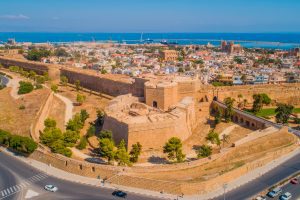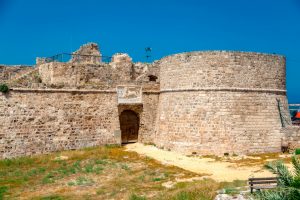
Othello Castle, also known as Othello’s Tower, is a medieval fortress in Famagusta in in the Turkish-occupied part of Cyprus. The castle sits at the northeastern corner of the city’s fortified walls, directly controlling access to the historic harbor. This location made it both the primary defensive stronghold and the main entrance to the walled city during the medieval period.
The site had fortifications even before the current castle. A tower and defensive works were built here by the Prince of Tyre around 1310. The Lusignan rulers of Cyprus recognized the strategic importance of this harbor entrance and constructed a more substantial fortress in the 14th century. Originally called the Harbour Citadel, it served dual purposes as a military stronghold and possibly a residence for members of the royal family and their entourage.
The castle’s position allowed defenders to monitor all ship traffic entering or leaving Famagusta. In medieval times, a massive iron chain could be stretched across the harbor mouth to block enemy vessels. Modern ships continue to use the same harbor entrance that was active during Famagusta’s golden age from 1300 to 1400.
Historical Background
When Cyprus was sold to the Republic of Venice in 1489, Famagusta became essentially a military base. The Venetians immediately recognized the need to upgrade the city’s defenses against the threat of Ottoman artillery. In 1492, just three years after acquiring Cyprus, they undertook major renovations of the Harbour Citadel under the direction of Captain Niccolò Foscari.
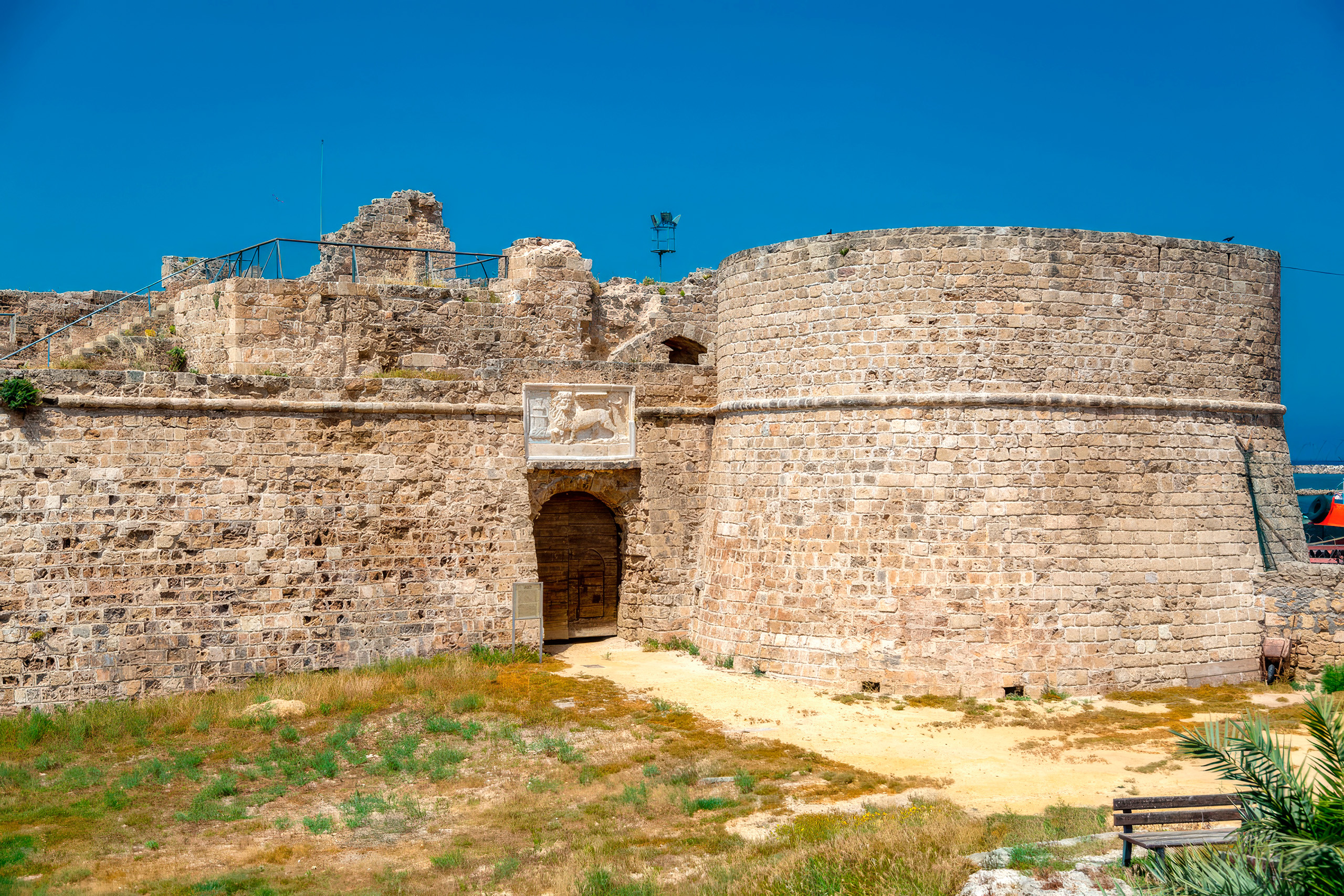
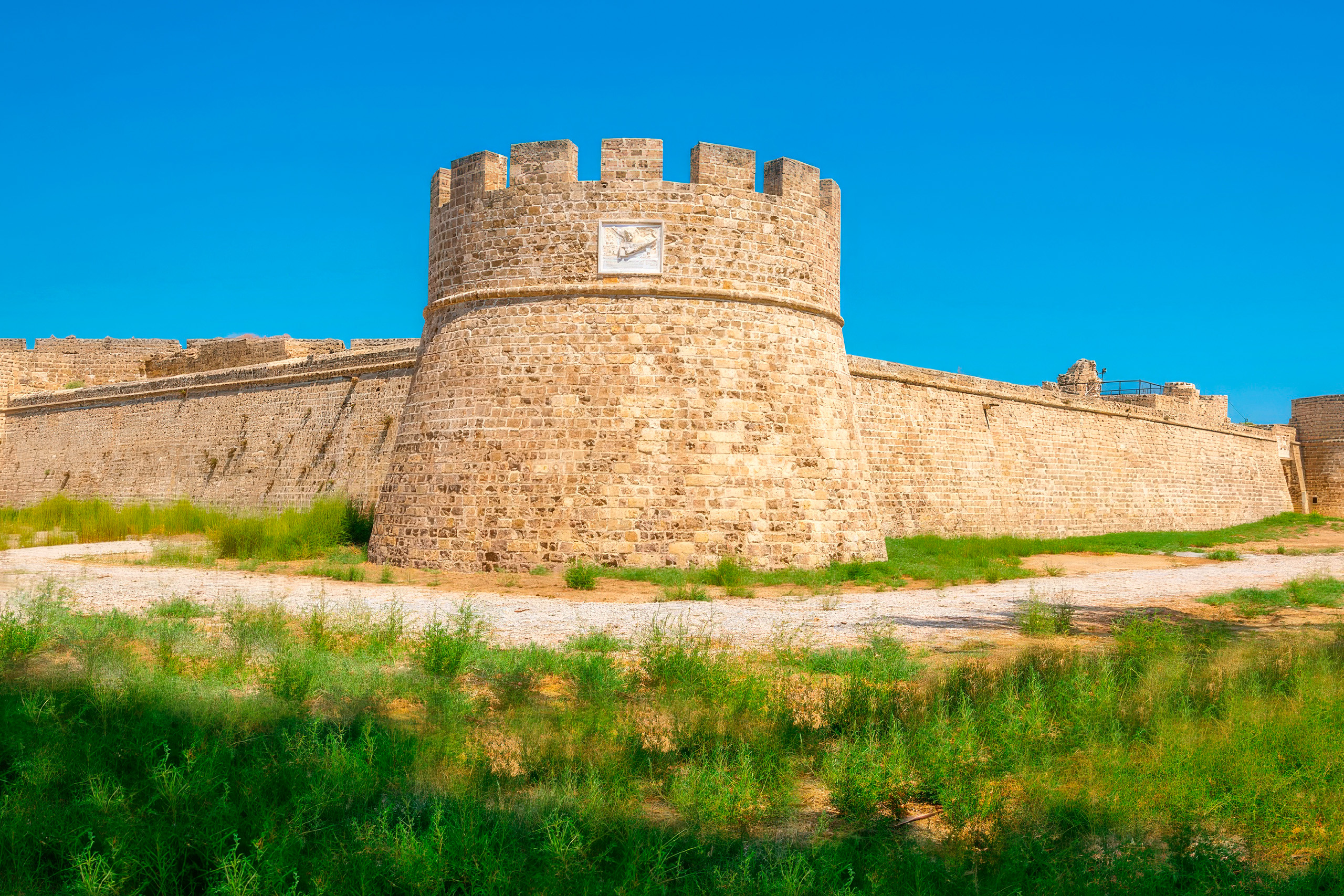
The most significant change was replacing the original square towers with circular ones. This modification was essential for defending against cannon fire. Round towers deflected cannonballs more effectively than square corners, which tended to crumble under bombardment. The Venetians also thickened the walls to absorb artillery impacts, representing a crucial shift from medieval to early modern military architecture.
According to some accounts, Leonardo da Vinci advised on the fortification upgrades around 1481, though this connection remains debated by historians. What is certain is that after the renovations, a marble relief of the Lion of Saint Mark, Venice’s emblem, was carved above the main entrance. The inscription includes Captain Foscari’s name and the date 1492, directly linking the structure to Venetian rule.
The fortress walls stretch approximately 3.5 kilometers, constructed roughly 4 meters thick and rising about 10 meters high. These massive fortifications made Othello Castle part of one of the most formidable defensive systems in the Mediterranean. The castle was often called an impenetrable fortress because of the deep ditches surrounding it, which made direct assault nearly impossible.
Inside the Castle
The castle was built around a central oblong courtyard originally with four square towers, one at each corner. After the Venetian modifications, these became four circular towers connected internally through corridors. These passages allowed soldiers to move quickly between towers during battle without exposing themselves to enemy fire.
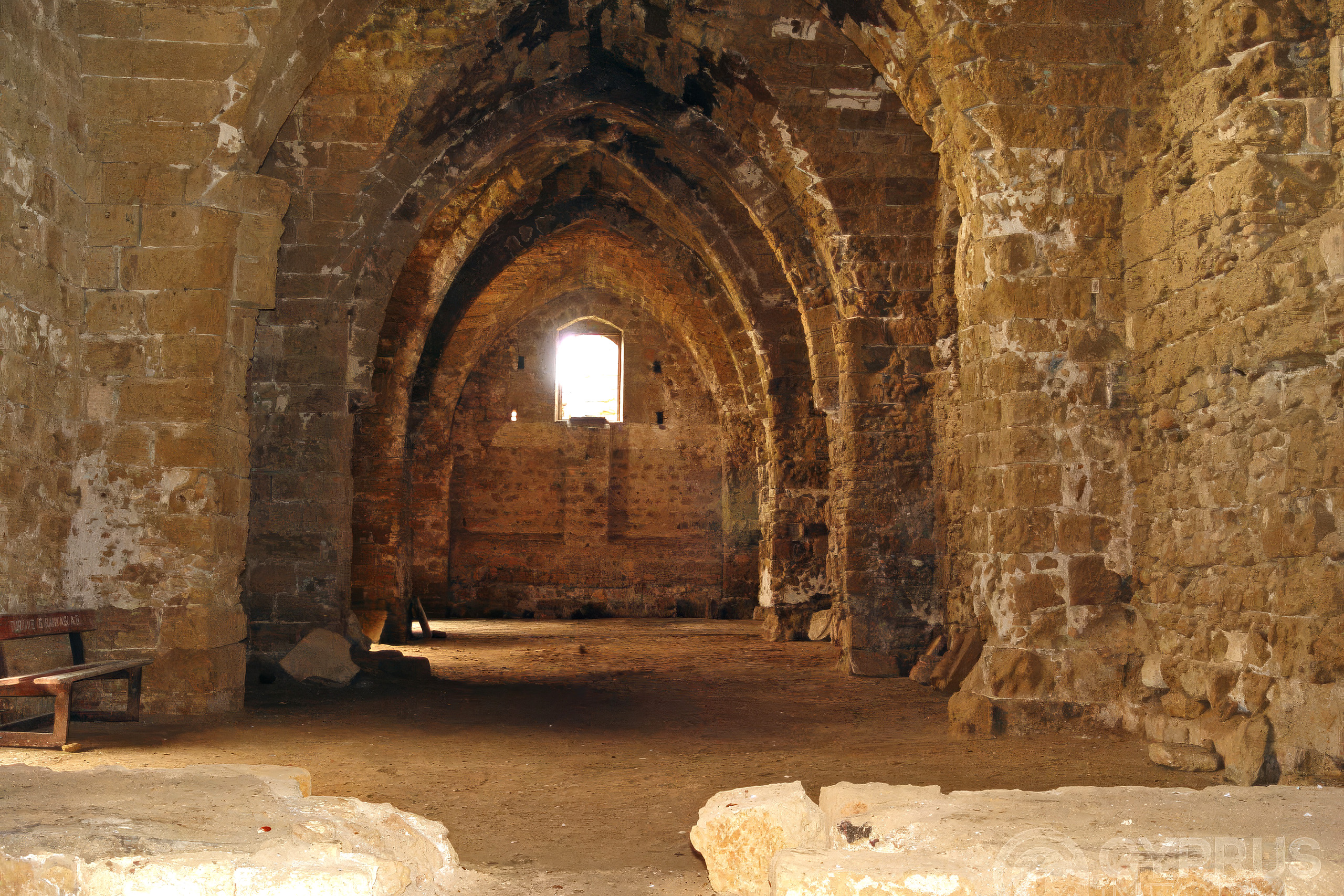
To the north and south of the rectangular courtyard are five ribbed vaulted chambers, constructed between 1300 and 1310 during the Lusignan period. These rooms served as dormitories and a refectory for the garrison. The Great Hall measures 92 feet by 25 feet, a size that rivals the refectory at Bellapais Abbey near Kyrenia.
The ground floor contained a great hall, kitchens, storerooms, and servants’ quarters. Reception rooms and bedrooms were located on the floor above. The windows are deliberately small, providing safety for residents while limiting vulnerability to attack. In medieval times, glass was not used in windows. Instead, pieces of fabric or carpets were hung as protection from rain and wind.
Steps from the courtyard lead up to the battlements, providing views of both the ancient and modern harbors. Elevated towers and gun platforms offered strategic viewpoints over land and sea, enabling early detection of approaching vessels and armies. The gun ports and smoke holes from the artillery chambers remain clearly visible today.
The Shakespearean Connection
The castle gained its modern name from William Shakespeare’s tragedy Othello, the Moor of Venice, written in 1603. Shakespeare’s play is set in a harbor town in Cyprus, and the British colonial administration formally named the fortress Othello’s Tower in the 19th century. A small garden between the sea wall and a nearby patisserie was even named after Desdemona, Othello’s tragic wife.
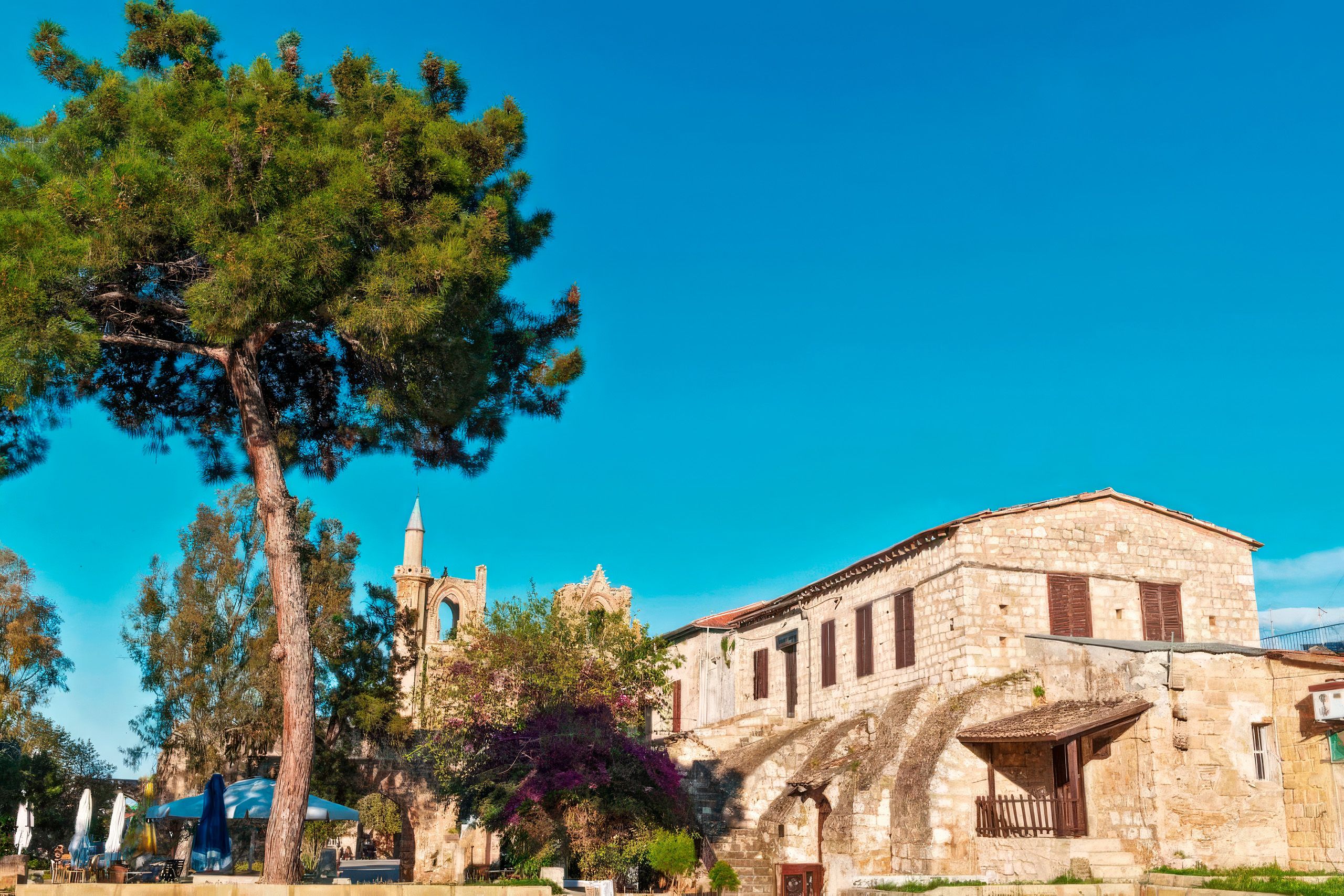
Shakespeare never visited Cyprus, but he likely drew inspiration from real events at Famagusta. The most accepted theory connects the play to Christoforo Moro, who served as lieutenant-governor of Cyprus from 1506 to 1508. In Italian, “moro” can mean either a moor or refer to a mulberry tree, the emblem of the Moro family crest.
Different versions of the story exist. Some accounts claim Christoforo Moro’s wife died during their voyage home at the end of his term. Others suggest he killed her out of jealousy in 1508, was imprisoned, and spent the rest of his life in captivity. A second possible inspiration is Francesco da Sessa, known as Il Moro or Il Capitano Moro because of his dark complexion.
The Ottoman Siege
Othello Castle played a crucial role during the Ottoman siege of Famagusta in 1570–1571. As part of the city’s defensive network, it functioned as a frontline fortification. The siege began on September 15, 1570, when Ottoman forces surrounded Famagusta, the last Venetian stronghold on Cyprus.
The castle’s artillery chambers and thick walls proved their worth during the siege. Soldiers could quickly move through internal corridors to reinforce threatened positions. The fortress absorbed tremendous punishment but held firm. The courtyard today still contains cannonballs left behind by the Spaniards and Ottomans. Some are made of bronze and are over 400 years old. Stone balls used in trebuchets also lie scattered about.
Despite determined resistance, Famagusta eventually capitulated in August 1571 after holding out for 11 months. The Venetians repaired damaged sections of the walls but made no major alterations to Othello Castle afterward.
Later History and Preservation
In 1566, during early Ottoman rule, the castle was converted into a prison. This use continued intermittently through the Ottoman period. By 1900, under British administration, the castle’s ditch was drained of water to reduce the risk of malaria.
The city of Famagusta began to expand outside its walls during the late Ottoman period, and this expansion increased after Cyprus fell under British rule in 1878. The fortress itself fell into gradual decline but was never completely abandoned due to its historical importance and literary connection.
The castle underwent major restoration work starting in 2014 and reopened to the public on July 3, 2015, as a museum dedicated to its military past.
Visiting Othello Castle Today
The castle is located in the center of old Famagusta, with parking available nearby. From the parking area, it is a short walk to the castle entrance.
Visitors enter through the main gate beneath the marble relief of the Lion of Saint Mark and Foscari’s inscription. Inside you can explore:
- The central courtyard
- Ribbed vaulted chambers
- Circular artillery towers
- Battlements and gun platforms
- Internal corridors between towers
From the top, visitors can see the old harbor, the city center, and major landmarks including the former Cathedral of Saint Nicholas.
The castle is open Tuesday through Sunday, with Monday closures. Entrance fees are modest but may change. Some areas have uneven stone surfaces and require careful footing.
Why Othello Castle Matters
Othello Castle combines authentic medieval and Renaissance military architecture with strong literary association. It is both a real defensive fortress and a site linked to one of Shakespeare’s most famous tragedies.
The structure shows how Cyprus’s strategic location made it heavily fortified and frequently contested. Control of Famagusta’s harbor meant control of trade and naval movement, and this castle was the key defensive point.
Today, the fortress allows visitors to experience medieval warfare design, Venetian military engineering, and layered Cyprus history in one place. It connects architecture, conflict, and literature within a single preserved landmark.