Explore Cyprus with Our Interactive Map

Explore our top stories and discover ideas worth your time.

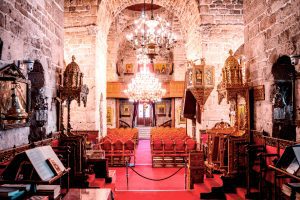
Agios Lazaros Church Larnaca – Key Christian Site Cyprus

Agios Lazaros Church Larnaca – Key Christian Site Cyprus

Agios Lazaros Church stands in central Larnaca, one of the most significant Christian sites in Cyprus. This Byzantine church was built in the late 9th or early 10th century over the believed tomb of Saint Lazarus. Lazarus of Bethany was the man Jesus raised from the dead after four days in the tomb, as described in the Gospel of John. According to Eastern Orthodox tradition, Lazarus fled Judea after his resurrection due to threats on his life and came to Cyprus, where Paul the Apostle and Barnabas appointed him as the first Bishop of Kition. He lived for thirty more years and was buried there for the second and last time. The church measures approximately 31.5 by 14.5 meters and was constructed primarily from limestone. Built by Byzantine Emperor Leo VI, it remains one of the oldest and most important churches on the island. Historical Background The location of Lazarus's tomb was believed to have been lost under Arab rule of the island from 649 AD. In 890, a tomb bearing the inscription "Lazarus, four days dead, friend of Christ" was discovered in Larnaca. In 898, Byzantine Emperor Leo VI had Lazarus's remains transferred to Constantinople. STELLAgloballookpress.com The transfer was apostrophized by Arethas, Bishop of Caesarea, and is commemorated by the Orthodox Church each year on October 17. In recompense…

Read more
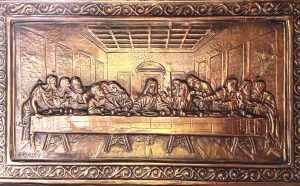
Cyprus Birthplace Mediterranean Copper Trade

Cyprus Birthplace Mediterranean Copper Trade

Long before Cyprus became known for beaches or crossroads of empires, it was known for something far more fundamental. Copper. Drawn from its mountains and carried across open water, this metal placed the island at the center of the ancient Mediterranean world. Cyprus did not merely export a resource. It supplied the material that powered the Bronze Age and, in doing so, helped shape the earliest long-distance trade networks ever formed at sea. wikipedia-com This is not a story of passive geography or accidental wealth. It is the story of how an island learned to move its resources outward, turning stone into influence and distance into connection. An Island Defined by What Lay Beneath Copper was the first metal to change how societies lived. It allowed stronger tools, more effective weapons, and eventually the creation of bronze, the alloy that defined an entire era. Control of copper meant control of technology, agriculture, and military power. Cyprus stood apart because of scale. Its copper deposits, concentrated in the Troodos Mountains, were among the richest and most accessible in the ancient world. Mining was not scattered or marginal. It was continuous, extensive, and organized. The island’s association with copper became so strong that the Latin word cuprum ultimately derived from Cyprus. While the name of the island itself likely predates the metal…

Read more

Sweet Golden Azarole of Cypriot Maquis

Sweet Golden Azarole of Cypriot Maquis

Wander almost any rocky hillside or sunlit maquis in Cyprus during a warm spring day, and you may spot a graceful small tree loaded with clusters of snowy-white flowers that seem to glow against the green. Later in the season those flowers give way to plump, golden-orange fruits that look like miniature apples or medlars hanging like little lanterns among the leaves. This is the azarole hawthorn, a quiet treasure of the island’s wild places that has sweetened Cypriot tables and stories for thousands of years. www.inaturalist.org A Rose-Family Gem of the Mediterranean Crataegus azarolus, commonly known as the azarole, Mediterranean hawthorn or Mediterranean medlar, belongs to the vast Rosaceae family the same clan as apples, roses and cherries. In Cyprus it grows as a deciduous shrub or small tree, usually reaching 3–8 metres tall, perfectly at home in the mosaic of maquis and open woodland that covers so much of the island. Roots Deep in Ancient Soil and Texts The azarole has been part of Cyprus’s landscape since long before recorded history. When Dr F. Unger and Dr Th. Kotschy explored the island in 1862, they recorded it (often under the older name Crataegus aronia) as a common shrub whose tasty fruits were gathered and eaten by locals. Even earlier, the great ancient physician Dioscorides described a “second kind…

Read more