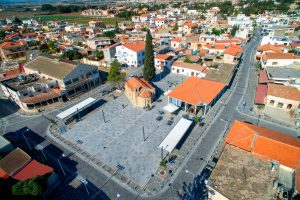
Explore Cyprus with Our Interactive Map

Explore our top stories and discover ideas worth your time.

Why Cypriot Halloumi Holds Global Culinary Status

Why Cypriot Halloumi Holds Global Culinary Status

The global halloumi market is approximately 500 million dollars in sales per year, and the UK is the largest importer, with halloumi accounting for 13.4 percent of exports from the Republic of Cyprus. This semi-hard cheese has transformed from a rural Cypriot staple into a global culinary phenomenon, appearing on restaurant menus from London to Tokyo and dominating barbecue grills across continents. What began as a practical way for Mediterranean shepherds to preserve milk has become one of the world's most distinctive and sought-after cheeses. What Makes Halloumi Physically Unique The production process creates halloumi's distinctive characteristics. The most crucial step involves boiling the pressed curds in hot whey collected during pressing for at least 30 minutes, a process known as scalding. The cooked pieces are then removed from the whey and salted, and fresh or dried mint leaves are added before the pieces are folded and stored in salted whey for one to three days. For mature halloumi, the cheese must remain in brine for at least 40 days at temperatures between 15 and 20 degrees Celsius. The cheese contains approximately 25 percent fat by wet weight and 17 percent protein. Its firm texture when cooked causes it to squeak on the teeth when chewed. Unlike most cheeses that use acid-producing bacteria, halloumi relies on rennet to curdle the…

Read more
Natural Gas Exploration in Cyprus

Natural Gas Exploration in Cyprus

Cyprus entered the offshore natural gas industry in 2011 with the discovery of the Aphrodite field, approximately 160 kilometers south of Limassol. This finding marked a turning point for the small island nation, which had relied entirely on imported energy. The discovery sparked interest from major international energy companies and positioned Cyprus as a potential gas producer in the Eastern Mediterranean. Since then, multiple fields have been discovered across Cyprus's Exclusive Economic Zone, with reserves estimated at over 20 trillion cubic feet. However, transforming these underground discoveries into actual production has proven far more complex than initially expected, with technical challenges, political disputes, and commercial uncertainties creating substantial delays. The Journey From First Discovery to Development Plans American company Noble Energy received the rights to explore Block 12 in October 2008, well before any major discoveries in the region. The company suspected gas accumulations found in Israeli waters might extend northward. In September 2011, the Cyprus A-1 well confirmed these suspicions at the Aphrodite field. Follow-up drilling in 2013 with the A-2 appraisal well confirmed approximately 98 billion cubic meters of contingent resources with potential for an additional 26 billion cubic meters. The field sits in water depths of 1,700 meters and represents the first commercially viable gas discovery in Cypriot waters. Noble Energy later sold stakes to British Gas,…

Read more
The Arabis Species of Cyprus

The Arabis Species of Cyprus

Tucked away in the rocky crevices and mountainous slopes of Cyprus, the Arabis species offer delicate bursts of color amid the island's rugged terrain. These small, resilient rockcresses, with their clusters of white, pink, or purple flowers, are a testament to the unique flora that thrives in this Mediterranean hotspot. Discovering them in the wild feels like finding hidden gems that whisper stories of Cyprus's ancient landscapes. Why is it interesting? Arabis, commonly known as rockcresses, are a genus of flowering plants in the mustard family (Brassicaceae). In Cyprus, there are four notable species, three of which are endemic to the island: Arabis cypria, Arabis purpurea, and Arabis kennedyae, along with the more widespread Arabis verna. These hardy perennials or annuals are adapted to dry, rocky environments, producing charming flowers that attract pollinators in spring. Background and Origins The Arabis species in Cyprus have evolved over millennia in the island's isolated ecosystems, particularly in the Troodos Mountains and northern ranges. Shaped by the Mediterranean climate with hot summers and mild winters, they trace their roots to ancient plant lineages that adapted to limestone cliffs and serpentine soils. Endemic varieties like Arabis purpurea and Arabis kennedyae highlight Cyprus's role as a biodiversity refuge, surviving through geological changes that separated the island from surrounding lands. Description Arabis plants are typically low-growing, forming…

Read more