Explore Cyprus with Our Interactive Map

Explore our top stories and discover ideas worth your time.

Traditional Songs of Cyprus

Traditional Songs of Cyprus

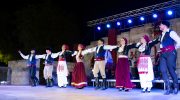
Traditional songs in Cyprus are not preserved in glass cases or frozen in formal performances. They live in memory, in village squares, in family celebrations, and in quiet moments where voices carry stories across generations. Long before recordings and concert halls, music on the island existed as a shared language, passed from person to person, shaped by experience, and reshaped by time. To listen to these songs is to hear how ordinary Cypriots worked, loved, struggled, and remembered. Cyprus, as an island at the crossroads of continents, has always absorbed influences without losing its own identity. Its traditional music reflects centuries of encounters, migrations, and coexistence. Yet beneath the layers of history, the songs remain deeply rooted in everyday life. An Island That Never Sang Alone Cyprus has always been a meeting point of cultures and empires. Byzantines, Franks, Venetians, Ottomans, and British administrators each left traces on the island’s social fabric, and those traces found their way into music. Rather than erasing local traditions, each period added new textures, melodic structures, and storytelling styles. Eastern modal systems blended with Western narrative forms. Sacred chant influenced secular melodies, while village storytelling shaped poetic lyrics. Over time, this layering produced a musical identity that feels familiar to multiple cultures yet remains unmistakably Cypriot. The songs reflect not a single origin, but…

Read more
Bottletrees In Cyprus

Bottletrees In Cyprus

Imagine strolling through a sunlit park in Limassol or Nicosia when suddenly a tree bursts into vivid scarlet flowers, turning the branches into a living flame against the blue sky. These are the Brachychiton trees — Australian visitors that add a splash of dramatic color to our island's gardens and streets, whispering tales of distant lands. Bottle-Shaped Beauties Brachychiton trees are part of the vast Malvaceae family, the same group that gives us cotton, hibiscus, and cacao – plants known for their showy flowers and useful fibers. In Cyprus, they are tall, sturdy trees often grown for their striking looks and shade, fitting right into our warm, dry climate like old friends from afar. From Australian Bush to Cypriot Shores These trees first took root in the wild bushlands of Australia millions of years ago, evolving alongside kangaroos and koalas in a continent shaped by ancient isolation. They arrived in Cyprus during the British colonial era around the early 20th century, planted as hardy ornamentals to beautify towns and provide quick-growing shade, much like the eucalypts that came before them. Today, they stand as quiet reminders of how human wanderings have blended the world's green treasures. Swollen Trunks and Scarlet Spectacles What makes Brachychiton stand out is their bottle-shaped trunks, swollen at the base like natural water tanks to store…

Read more
Golden Wreath Wattle of Cyprus

Golden Wreath Wattle of Cyprus

Picture a roadside verge or coastal slope in late February, when the Mediterranean light turns sharp and warm. Suddenly, whole thickets explode into vivid, butter-yellow spheres that light up the landscape like thousands of tiny suns. These are the wattles of Cyprus Australian guests that arrived with good intentions but have written their own lively, sometimes challenging chapter in the island’s green story. Wattles in the World of Legumes Wattles belong to the enormous Acacia genus within the Fabaceae (legume) family – the same botanical clan as peas, beans, carobs and acacias of the ancient world. Most of the 1,000-plus Acacia species are native to Australia, where they are proudly called “wattles”. In Cyprus the star of the show is Acacia saligna, the golden wreath wattle or orange wattle, though a handful of other species (A. farnesiana, A. ligulata, A. karroo) appear in small numbers. Locally they are simply known as Ακακία (Akakia) – a name that echoes the ancient Greek “akakia”, used two thousand years ago by Dioscorides for the gum of Egyptian acacias. From Australian Shores to Cypriot Soil When British foresters took charge in 1878 they faced an island stripped of much of its woodland by centuries of grazing and fuelwood cutting. Following earlier recommendations by French arborist P.G. Madon (1881), they turned to fast-growing exotics. Acacia…

Read more