Explore Cyprus with Our Interactive Map

Explore our top stories and discover ideas worth your time.

Following Seasons of the Sea Cyprus Fishing

Following Seasons of the Sea Cyprus Fishing

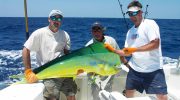
Fishing in Cyprus has never been a matter of going out to sea and taking whatever is available. For centuries, coastal communities shaped their lives around the rhythms of the Mediterranean, fishing when conditions allowed, resting when they did not, and adjusting methods as fish moved, spawned, or disappeared. These seasonal patterns were not written rules but accumulated knowledge, refined through observation and necessity. Understanding traditional fishing in Cyprus means understanding how people learned to work with the sea rather than against it. A Relationship Built on Timing The Mediterranean is not a uniform or endlessly predictable environment. Around Cyprus, subtle seasonal changes in temperature, light, and currents strongly influence where fish gather and how active they become. Traditional fishers understood that the sea does not offer the same opportunities all year. Knowing when to fish mattered as much as knowing how. Fishing activity shifted with the calendar, but also with conditions that could not be reduced to dates alone. A warmer spring, an extended calm period, or a sudden change in wind could alter expectations. Over time, fishers learned to read these signs, developing an intuitive sense of timing that guided their decisions long before modern forecasting existed. Knowledge Passed by Observation, Not Instruction Seasonal fishing knowledge in Cyprus was never formalised in manuals. It was learned through watching…

Read more
Cave of the 40 Martyrs Troodos

Cave of the 40 Martyrs Troodos

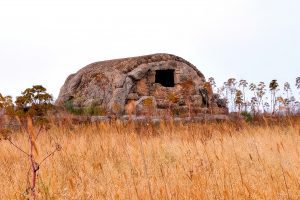
Hidden in the hills near Protaras, the Cave of the 40 Martyrs is a small chapel carved into limestone rock. This place brings together ancient faith, natural geology, and centuries of devotion in one simple, quiet space. The cave church, known locally as Ayioi Saranta, sits in a natural limestone formation on Fanou Hill. The name translates to the Forty Saints, a direct reference to the 40 Martyrs of Sebaste. This is not a grand cathedral with ornate decoration. It is a cave with a white wall, a blue door, and a stone dome above. Inside, rough rock walls hold a few icons and candles. The floor was paved, but otherwise the cave remains much as nature formed it. The Story of the 40 Martyrs The dedication of this cave connects to events that happened over 1,700 years ago. In 320 AD, forty Roman soldiers from the Legio XII Fulminata refused to abandon Christianity during the persecution under Emperor Licinius I. They were stationed near Sebaste in what is now Turkey. Their punishment was brutal. According to Bishop Basil of Caesarea, who documented the story in the 4th century, the soldiers were stripped naked and left to freeze on a frozen lake during a winter night. One soldier gave in to the cold and ran to the warm baths on…

Read more
Tourism-Driven Mobility Patterns Across Cyprus

Tourism-Driven Mobility Patterns Across Cyprus

Cyprus welcomed over 4 million tourists in 2024, marking a 5.1% increase from the previous year. This surge in visitors creates distinct movement patterns across the island, from concentrated coastal resort areas to scattered mountain villages. The way tourists navigate Cyprus differs dramatically from how residents travel, shaped by seasonal preferences, transportation choices, and destination priorities. Tourist arrivals cluster heavily in specific zones rather than spreading evenly across Cyprus. Paphos dominates visitor accommodation with 31.5% of tourists choosing to stay there, followed by Ayia Napa at 15.9%, Larnaca at 14.2%, Limassol at 12.4%, and Paralimni at 11.4%. This concentration reflects both infrastructure development and marketing efforts directed at international markets. The United Kingdom supplies 34% of all tourist arrivals, maintaining its position as Cyprus's primary source market. Israel follows with 10.5%, Poland contributes 8.3%, Germany adds 5.7%, Greece accounts for 4.5%, and Sweden provides 3.7%. Each nationality displays different movement preferences once on the island. British tourists tend toward longer stays in established resort areas, while Israeli visitors often favor shorter, more intensive trips. Travel purpose data reveals that 81.1% of tourists visit for leisure, 11.9% come to see friends and relatives, and 6.9% arrive for business. These different motivations create varied mobility patterns. Leisure tourists typically remain in coastal zones with occasional day trips, while those visiting friends and…

Read more