Explore Cyprus with Our Interactive Map

Explore our top stories and discover ideas worth your time.

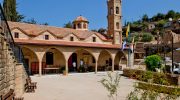
After Work Cafe Culture and Social Life

After Work Cafe Culture and Social Life

Cyprus café culture represents more than just drinking coffee. It functions as essential social infrastructure where friendships form, information spreads, and communities bond. The traditional kafeneio or coffee shop serves as the focal point of Cypriot life, particularly for men who spend hours daily in these establishments.  Unlike modern cafés designed for quick transactions, the traditional coffee shop encourages lingering through comfortable seating, warm hospitality, and unrushed service. Cypriots drink coffee in the morning, afternoon, and evening, treating each cup as an opportunity for connection rather than caffeine delivery. After long days at work or in the fields, the kafeneio becomes the natural refuge where locals gather to relax, debate, play games, and maintain social bonds that hold villages together. The three chair ritual and village hospitality The traditional Cypriot coffee shop operates according to customs passed down through generations. The famous three chair ritual requires one chair for sitting, a second placed opposite for stretching tired legs, and a third to support the coffee cup. Some villages take this further, with Ora village residents using seven chairs, earning them the nickname eftatsaerites. This elaborate seating arrangement reflects the cultural expectation that coffee drinking demands time, comfort, and proper attention.  The kafeneio atmosphere transports visitors back in time, particularly in rural areas where establishments consist of single large rooms with…

Read more
Rural Farming Life in Cyprus

Rural Farming Life in Cyprus

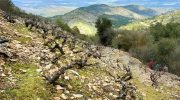
Agriculture constituted the backbone of Cyprus's economy when the country achieved independence in 1960, consisting mostly of small farms and sometimes even subsistence operations. In the early 1970s, Cypriot farms, still overwhelmingly small owner-run units, furnished about 70 percent of commodity exports and employed about 95,000 people, or one-third of the island's economically active population. The traditional rural landscape featured fragmented holdings where families worked terraced hillsides and valley floors, producing grapes, olives, wheat, barley, carobs, and seasonal vegetables. This farming pattern shaped village life for centuries, creating rhythms of planting, harvesting, and communal celebration that defined Cypriot identity as much as the Orthodox church or family structures. How Villages Worked the Land Landholdings remained generally small, highly fragmented, and dispersed under traditional laws of inheritance. When a father died, his land divided equally among all children, creating increasingly smaller parcels with each generation. A single family might own a dozen tiny plots scattered across the village territory, requiring farmers to travel between distant fields throughout the day. This fragmentation made mechanization difficult and reduced efficiency. Traditional irrigation relied on natural springs, small rivers, and rainfall patterns. Farmers channeled spring water through stone aqueducts and earthen channels to reach thirsty crops during summer months. Villages located near reliable water sources prospered, while those depending solely on rainfall struggled during dry…

Read more
Cyprus Eastern Mediterranean Crossroads

Cyprus Eastern Mediterranean Crossroads

Cyprus sits quietly at sea, but its position has never been passive. For thousands of years, the island has stood close to the main maritime routes linking Europe, the Middle East, and North Africa. Empires did not value Cyprus for its size or population, but for its ability to observe, connect, and influence movement across the eastern Mediterranean. To understand Cyprus is to understand the sea around it, because the island’s history, economy, and regional role have always been shaped by passing ships and shared horizons. Where Geography Turns into Influence A strategic maritime position is not about domination; it is about proximity. Cyprus lies near the natural crossroads of the eastern Mediterranean, where east–west and north–south sea routes converge. Ships travelling between the Aegean and the Levant pass close by, as do routes linking southern Turkey with Egypt and the wider gateway of the Suez Canal. This location places Cyprus within easy reach of three continents at once. From its shores, maritime connections extend toward southern Europe, the Middle East, and North Africa with minimal deviation. Few islands occupy such a balanced position — close enough to matter, distant enough to endure. An Island Shaped by Moving Water, Not Borders Cyprus has never been a landlocked power, and it has rarely defined itself through territorial expansion. Instead, its influence…

Read more