Explore Cyprus with Our Interactive Map

Explore our top stories and discover ideas worth your time.

Bread Village Baking Traditions

Bread Village Baking Traditions

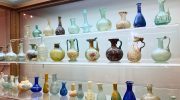
In Cypriot villages, bread has never been just food. It is routine, ritual, and social glue, baked in wood-fired ovens that anchor neighbourhood life. From ancient grain cultivation to communal baking days, village bread and pies reflect how Cypriots learned to survive drought, celebrate faith, and care for one another. This article explores how village baking worked, why it mattered, and how these traditions continue to shape Cyprus today. Where Daily Life Began: Wheat, Fire, and the Village Hearth For centuries, village life in Cyprus revolved around three constants: wheat, fire, and community. Bread was baked not occasionally, but rhythmically, setting the pace of domestic and social life. In rural areas, meals, hospitality, and even religious observance were structured around when the oven was fired and when fresh loaves emerged. Unlike urban bakeries, village baking was never anonymous. Each loaf carried the mark of a household, a season, and a shared oven. The act of baking was as important as the bread itself, turning daily sustenance into a collective ritual. The Land That Fed the Oven Cyprus’s central plains and foothills supported grain cultivation long before written history. Villages relied on locally grown wheat and barley, shaped by climate rather than industrial yield. Stone-milled flour retained bran and germ, producing darker, denser bread that was nourishing and durable. When wheat…

Read more
Panagia Chrysorrogiatissa Monastery

Panagia Chrysorrogiatissa Monastery

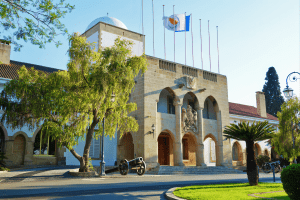
Chrysorrogiatissa Monastery is a historic monastic complex located in the Paphos district of Cyprus, near the village of Pano Panagia. It sits at an altitude of approximately 820 meters on the southern slopes of the Troodos foothills, overlooking forested valleys that lead toward the Paphos region. The site is named Panagia Chrysorrogiatissa, a title that translates as “Our Lady of the Golden Pomegranate.” The name reflects symbolic themes found in Byzantine and post-Byzantine religious art and cultural traditions, where the pomegranate often appears as a motif associated with prosperity and abundance. Historical Background The origins of the monastery are traditionally placed in the 12th century, around 1152. According to later narratives, an icon associated with Byzantine artistic tradition was discovered in the region of Moullia. Such stories reflect broader medieval Cypriot traditions in which natural phenomena and symbolic interpretations were often incorporated into the founding histories of monastic settlements. The 8th and 9th centuries in the Byzantine world were marked by a period in which religious imagery was contested and many icons were removed or destroyed in parts of the empire. Cyprus, like other peripheral regions, preserved its own monastic and artistic traditions during this broader historical context, which influenced later interpretations of its religious sites. The Present Monastery Structure and Treasures The current visible structures of the monastery largely…

Read more
Common Myrtle In Cyprus

Common Myrtle In Cyprus

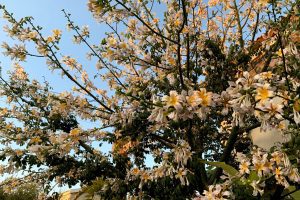
Picture yourself on a sun-drenched slope in Cyprus, where the air carries a sweet, spicy fragrance whenever a breeze stirs the shrubs. Amid the rocky terrain and scattered pines, you encounter clusters of glossy green leaves dotted with delicate white flowers. This is the common myrtle, a quiet but ever-present companion in the island’s wild landscapes. A Shrub Steeped in Mediterranean Grace Myrtus communis, known simply as the common myrtle, belongs to the Myrtaceae family a group that includes fragrant giants like eucalyptus and clove trees. In Cyprus it grows as an evergreen shrub or small tree, reaching up to five metres tall. It is one of only two species in its genus worldwide, the other being a rare Saharan relative. Here on our island it forms part of the classic maquis vegetation, that resilient scrubland of aromatic bushes that cloaks hillsides from sea level right up to 1,500 metres. Tales from Antiquity: Aphrodite’s Favourite Veil Long before botanists catalogued it, the myrtle was woven into the very birth story of Cyprus. Legend tells that when Aphrodite, the goddess of love and beauty, rose from the foaming waves near Paphos, she modestly hid her nakedness behind a myrtle bush. Ever since, the plant has been sacred to her. Ancient brides wore myrtle wreaths and bathed in myrtle-scented water on their…

Read more