Explore Cyprus with Our Interactive Map

Explore our top stories and discover ideas worth your time.

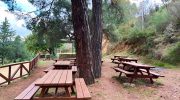
Active Travel Routes for Walkers and Cyclists in Cyprus

Active Travel Routes for Walkers and Cyclists in Cyprus

Cyprus offers diverse terrain for walkers and cyclists, from coastal paths to mountain trails. The island covers 9,251 square kilometers and features everything from sea-level beaches to Mount Olympus at 1,952 meters. With approximately 90 walking trails and 45 designated cycling routes, Cyprus attracts outdoor enthusiasts year-round. The compact size means you can experience dramatic changes in scenery within short distances. Most trails are managed by the Department of Forests, while villages maintain additional local routes. The infrastructure includes marked paths, information boards, and benches at viewpoints, making exploration accessible to various fitness levels. The Historical Development of Active Routes Cyprus developed its trail network gradually over decades. The E4 European Long Distance Path section opened in 2005, connecting Larnaca and Paphos airports across 540 to 660 kilometers. This addition made Cyprus part of a 10,450-kilometer route stretching from Gibraltar to Cyprus through nine countries. Nature trails in areas like Troodos and Akamas existed before the E4, but the long-distance path created a unified system. The European Ramblers Association coordinates the E4 internationally, while the Cyprus Tourism Organisation manages the national cycling network. Many trails follow ancient routes, including old camel trails once used to transport copper from mines to ports. Medieval Venetian bridges from the 15th century mark some historic pathways. The network expansion continues, with new routes added…

Read more
Kantou-Koufovounos

Kantou-Koufovounos

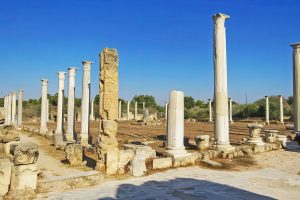
High on a hill near the Kouris River in the Limassol district of Cyprus sits Kantou Koufovounos, one of the island’s most significant Late Neolithic settlements. This archaeological site has quietly rewritten our understanding of life on Cyprus between 4,400 and 3,900 BC. Unlike the dramatic clifftop fortresses or coastal harbors that often capture imaginations, Kantou-Koufovounos was simply a community where people lived, worked, raised families, and built a society that lasted longer than many of its contemporary neighbors. The site takes its name from Koufovounos Hill, where it rests approximately 20 to 50 centimeters below the modern ground surface. This shallow depth speaks to how close we still are to these ancient inhabitants. The settlement sits on the western bank of the Kouris River, positioned in terrain that offered natural protection while remaining accessible to vital resources. Historical Background Excavations at Kantou-Koufovounos began in summer 1992 under the direction of the National and Kapodistrian University of Athens. This marked the first archaeological project the university undertook in Cyprus. The work continued through 1999, with additional periods in 1996, 1998, 2000, and 2001 dedicated to recording and studying the recovered materials. These careful excavations revealed rectangular residential units, storage pits, fire hearths, graves, and an extensive collection of stone tools. What makes this site particularly interesting is how much of…

Read more
Cyprus Kleftiko Dish

Cyprus Kleftiko Dish

Kleftiko is one of the most recognisable dishes in Cyprus, yet its importance has little to do with flavour alone. This slow-cooked lamb, sealed away from air and fire, tells a story of survival, patience, and rural ingenuity. More than a recipe, Kleftiko reflects how Cypriots adapted to hardship and turned necessity into tradition. Understanding it means understanding why time, restraint, and shared meals still matter deeply on the island. A Dish Built on Secrecy and Time At its core, Kleftiko is lamb or goat cooked slowly in a sealed environment. The defining feature is not the meat itself, but the method. By trapping steam and heat, the meat softens gradually, breaking down until it can be pulled apart with little effort. This approach was developed for practical reasons. Cooking openly created smoke and scent that could travel far. Sealing the meat allowed it to cook invisibly, protected from wind, flame, and unwanted attention. Over hours, sometimes an entire day, the process transformed tough cuts into something rich and deeply aromatic. Kleftiko’s slowness is not incidental. It is the point. Time is the primary ingredient, and patience is the main technique. Why It Is Called Kleftiko The name Kleftiko comes from the Greek word kleftis, meaning “thief.” During periods of Ottoman rule, groups of mountain fighters and shepherds relied on…

Read more