Explore Cyprus with Our Interactive Map

Explore our top stories and discover ideas worth your time.

Olive Trees in Cyprus (Olea europaea)

Olive Trees in Cyprus (Olea europaea)

On rocky hillsides and gentle terraces across Cyprus, trees with shimmering silver-green leaves stand like wise elders, their twisted trunks telling stories of centuries under the Mediterranean sun. These are the olive trees, living treasures that have shaped the island’s landscape, diet and culture since the dawn of human settlement here. A Classic Evergreen of the Olive Family Known to science as Olea europaea, the olive belongs to the family Oleaceae within the order Lamiales. In Cyprus it thrives both as the familiar cultivated form in orchards and as the wild oleaster (Olea europaea var. sylvestris), a tougher, smaller-fruited version that grows naturally in maquis and garigue vegetation alongside carob and wild pistachio. Echoes from the Dawn of Cypriot Civilisation Olives have been part of Cyprus since at least the Bronze Age, with ancient pollen records and archaeological finds showing they were already valued for oil and fruit more than 4,000 years ago. Phoenician, Greek and Roman settlers expanded their cultivation, while the wild oleaster formed part of the original maquis shrublands described in 19th-century British forest reports. Over time, centuries of human care turned scattered wild trees into the productive groves that still cloak the island’s lower slopes today. Graceful Form and Enduring Strength The olive is an evergreen tree reaching 8–15 metres, with a short, often gnarled trunk…

Read more
The Pygmalion Legend

The Pygmalion Legend

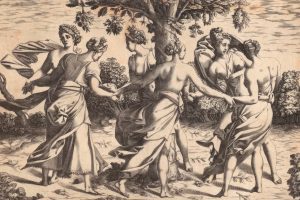
The legend of Pygmalion is one of the most enduring stories of transformation in Greek mythology, and it is closely connected to Cyprus, an island long associated with Aphrodite and the themes of beauty, love, and artistic creation. According to the myth, Pygmalion was a sculptor and, in some traditions, a king of Cyprus who became disillusioned with the behavior of the women around him. Rejecting ordinary human relationships, he devoted himself to his art and carved a statue of a woman so beautiful and perfect that he fell deeply in love with his own creation. This story, set in the sacred landscape of Cyprus, reflects local traditions that linked the island not only to divine beauty but also to the creative power of art under divine influence. Cyprus’s association with Aphrodite, the goddess of love and beauty, makes it a fitting setting for a myth centered on aesthetic perfection and emotional longing. The island’s reputation as a place favored by the goddess reinforces the narrative’s theme that artistic achievement and divine presence are intertwined. In this context, the story of Pygmalion serves as an origin legend that connects Cypriot cultural identity to ideals of beauty, devotion, and sacred transformation. The Sculptor and His Creation Pygmalion’s role as a sculptor is central to the meaning of the myth. Sculpture in…

Read more
Sotira Kaminoudhia

Sotira Kaminoudhia

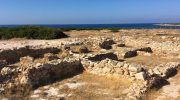
Sotira Kaminoudhia is an Early Bronze Age settlement and cemetery complex located in the Sotira parish and covering an area of approximately one hectare. The site was excavated by Stuart Swiny of the Cyprus American Archaeological Research Institute between 1978 and 1986 as part of a wider regional survey project. The settlement occupies the lower slopes and flat fields north of Teppes hill, where Porphyrios Dikaios had earlier excavated the well known Neolithic site that gave rise to the term Sotira culture. The site spans three distinct phases: Philia, dated to approximately 2500 to 2300 BC, Early Cypriot I to II from 2300 to 2100 BC, and Early Cypriot III from 2100 to 2000 BC. The excavated settlement remains belong exclusively to the EC III phase, while the earlier periods are represented by associated cemeteries located on either side of a small valley. Radiocarbon dating of organic material from well stratified deposits provided the first absolute chronology for the Cypriot Early Bronze Age and resolved long standing debates concerning the duration and internal sequence of this period. Surface survey evidence suggests continuous occupation across all three phases rather than short term or shifting settlement patterns once thought typical of Early Bronze Age Cyprus. This long occupation sequence places Kaminoudhia alongside sites such as Marki Alonia and Alambra Mouttes, which also…

Read more