Explore Cyprus with Our Interactive Map

Explore our top stories and discover ideas worth your time.

Omodos Medieval Architecture

Omodos Medieval Architecture

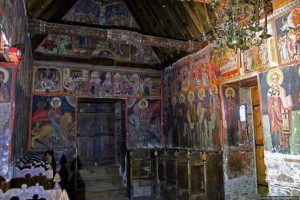
Omodos is a mountain village in the Limassol district of Cyprus, located 42 kilometers northwest of the city at an elevation of 810 meters. The village sits in the heart of the Krasochoria region, a wine-producing area in the Troodos foothills. The village square, covering 3,000 square meters and dating to 1910, stands as one of the largest in Cyprus. The architectural character of Omodos creates what many describe as a living museum, where centuries of building traditions remain visible in everyday structures. This preservation has made the village a protected heritage site and a key destination for those interested in traditional Cypriot architecture. Historical Background The village likely came into existence at the end of the Byzantine period, sometime around the 12th or 13th century. According to historical records, two earlier settlements called Pano Koupetra and Kato Koupetra existed on the east bank of the Cha-potami river. After these settlements dissolved, residents established a new community around the Monastery of the Holy Cross, creating what became modern Omodos. Historical tradition claims that Isaac Comnenos, the Byzantine despot of Cyprus from 1185 to 1191, took refuge in Koupetra after his defeat by the English King Richard the Lionheart, confirming that settlements existed in this area by 1191. Medieval records document the village during the Frankish period when Cyprus was under…

Read more
Nicosia Central Prison

Nicosia Central Prison

Nicosia Central Prison stands as a poignant symbol of Cyprus's colonial past and the island's struggle for independence, evolving from a British-built facility for maintaining order to a site of resistance and remembrance. Constructed in the late 19th century under British rule, this prison in the heart of Nicosia served as the primary detention center for criminals, dissidents, and political prisoners, reflecting the empire's efforts to control a strategically vital Mediterranean outpost. Later, during the mid-20th century Cyprus Emergency, it became synonymous with the anti-colonial fight led by EOKA fighters, who faced imprisonment, torture, and execution within its walls. As the only operational prison in the Republic of Cyprus today, parts of it have been preserved as a museum honoring those who resisted British authority, highlighting themes of repression, resilience, and national identity. This institution underscores Cyprus's complex history, where colonial architecture and punitive systems intersected with the rise of nationalism, shaping the island's path to sovereignty and continuing to evoke reflections on justice and memory in a divided nation. A Key Colonial Institution Nicosia Central Prison, nestled in the capital's urban fabric, emerged as a cornerstone of British colonial governance, designed to enforce law and order while suppressing dissent in a territory acquired from the Ottoman Empire in 1878. Spanning several hectares with fortified walls and watchtowers, the prison's…

Read more
Oriental Plane in Cyprus (Platanus orientalis)

Oriental Plane in Cyprus (Platanus orientalis)

Beside a sparkling mountain stream in the Troodos foothills, tall trees with beautiful patchwork trunks cast deep, cool shade over the water. Their large, hand-shaped leaves rustle gently, while round, spiky fruit-balls dangle like tiny planets through the winter. This is the Oriental Plane, Platanus orientalis – Cyprus’s own river guardian and one of the island’s most majestic native trees. A Member of an Ancient Family Known scientifically as Platanus orientalis, the Oriental Plane belongs to the small but noble Platanaceae family within the order Proteales. The Tree of Hippocrates, under which Hippocrates—the "Father of Medicine"—taught at Kos, is reputed to have been an oriental plane. In Cyprus it is the only native plane tree, perfectly adapted to life along permanent watercourses where it often forms beautiful gallery forests with willows and alders. From Ancient Rivers to Modern Cyprus The Oriental Plane has been part of Cyprus’s landscape since prehistoric times and is listed as fully indigenous in the Flora of Cyprus. It was already noted by 19th-century British foresters in riverine woodlands, and in 2001 the Department of Forests honoured it as one of Cyprus’s Trees of the Year. Today it remains a flagship species of the island’s precious riparian habitats. Distinctive Features That Make It Unmistakable The Oriental Plane is a large deciduous tree reaching 20–30 metres with…

Read more