Explore Cyprus with Our Interactive Map

Explore our top stories and discover ideas worth your time.

Sotira-Teppes, Cyprus

Sotira-Teppes, Cyprus

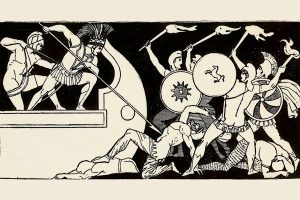
On a hilltop in southern Cyprus, approximately 6.5 kilometers from the coast, archaeologists discovered one of the most important Neolithic settlements in the Mediterranean. Sotira-Teppes stands as the defining site for the Ceramic Neolithic or Sotira Culture, which flourished between 4500 and 3800 BCE. Discovered in 1934 by Porphyrios Dikaios, curator of the Cyprus Museum, the site was excavated during the late 1940s and 1950s. The material culture found here was so distinctive that it gave its name to an entire phase of Cypriot prehistory, marking when island communities embraced pottery production and established new settlement patterns. The Hilltop Settlement The inhabitants chose their location strategically. The hill rises to approximately 330 meters above sea level and offers commanding views of the Kouris River Valley and southern coast. The naturally defensible position featured steep northern and western slopes, while gentler southern slopes provided the main living areas. At least three perennial springs near the settlement ensured reliable water supply. Excavations revealed approximately 47 houses packed onto a plateau covering 0.25 hectares. The northern slopes featured a massive retaining wall built from limestone boulders bound with yellow mud. The wall may have widened the plateau for habitation or provided defense, though the latter seems less likely since inhabited southern areas lacked such protection. Houses and Architecture Sotira-Teppes houses marked a significant…

Read more
Cyprus Scenic Mountain Passes

Cyprus Scenic Mountain Passes

Cyprus mountain roads offer some of the Mediterranean's most spectacular drives, with routes that climb from sea level to nearly 2,000 meters through ancient forests, traditional villages, and panoramic viewpoints. These roads showcase the island's dramatic geography while connecting travelers to centuries of history and natural beauty. Mount Olympus Road The road to Mount Olympus climbs to 1,952 meters above sea level, making it the highest point on the island. Two military bases occupy the summit, one British, limiting public access to the very top. However, roads leading toward the peak provide stunning views of surrounding valleys and forests. The journey starts from several possible directions, with routes from Limassol through Platres being among the most popular. The ascent features countless switchbacks and hairpin turns as the road gains elevation. Dense pine forests cover the mountainsides, giving way to more exposed terrain at higher altitudes. Winter transforms this area into Cyprus's only ski destination, with snow covering the peaks from January through March. Drivers should fill fuel tanks before attempting the climb because petrol stations become scarce above 1,000 meters. The temperature drops noticeably with altitude, sometimes falling 10 degrees Celsius cooler than coastal areas. This makes the mountain roads a welcome escape during summer heat but creates challenging conditions in winter when ice forms on shaded sections. Cedar Valley…

Read more
Panigyria Cyprus Village Saint Summer Celebration

Panigyria Cyprus Village Saint Summer Celebration

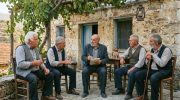
In Cyprus, a panigyri is not simply a festival marked on a calendar. It is a moment when a village gathers itself fully, reconnecting faith, memory, and everyday life into a shared experience. Held in honor of a patron saint, panigyria transforms religious observance into a living social ritual, where prayer flows naturally into food, music, dance, and reunion. These evenings are not for spectacle or tourism. They exist because the community expects them to exist, and because participation itself keeps them alive. To arrive at a panigyri is to step into a rhythm that has been repeated for generations. The setting may vary from village to village, shaped by geography and custom, but the feeling remains familiar. It is welcoming without formality, celebratory without excess, and deeply rooted in a sense of belonging that does not need explanation. What a Panigyri Really Is At its most basic level, a panigyri is a communal celebration held on the feast day of a village’s patron saint. It begins with a religious service, often followed by a procession of the saint’s icon, and gradually expands outward into the shared spaces of the village. Church courtyards, village squares, and nearby streets become places where people gather to eat, talk, dance, and remain together long into the night. What distinguishes this transition is how…

Read more