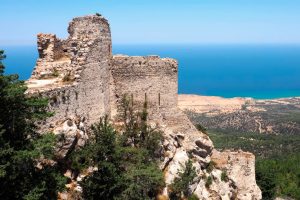
Explore Cyprus with Our Interactive Map

Explore our top stories and discover ideas worth your time.

Research & Environmental Collaboration In Cyprus

Research & Environmental Collaboration In Cyprus

Cyprus has developed into a recognized center for environmental research in the Eastern Mediterranean and Middle East region. Multiple research institutions conduct studies on climate change, air and water quality, biodiversity, energy systems, and agricultural sustainability. These organizations collaborate with international partners from Europe, North America, and the Middle East to address environmental challenges through scientific investigation, technological innovation, and policy development. The research infrastructure spans government agencies, independent research centers, universities, and private sector partners who share data, resources, and expertise. Building the Research Foundation The Cyprus Institute stands as the primary driver of environmental research since its establishment in 2005 under the Cyprus Research and Educational Foundation. Planning occurred between 2000 and 2004, led by international scholars including former U.S. Secretary of Energy Ernest Moniz, former CERN Director-General Herwig Schopper, and founding president Costas N. Papanicolas. A 2002 convocation of world leaders and academics chaired by Hubert Curien endorsed the vision. Operations formally commenced in 2007 with the launch of the first research center. The Energy, Environment and Water Research Center was founded in 2007 in partnership with the Massachusetts Institute of Technology. It focused initially on the energy, environment, and water nexus for the Eastern Mediterranean Middle East region. MIT developed the initial scoping report that articulated the research agenda. The center has since adapted to address…

Read more
Ancient Tamassos

Ancient Tamassos

About 21 kilometres southwest of Nicosia, near the village of Politiko, lies one of ancient Cyprus's most significant city-kingdoms: Tamassos. It was not a coastal city with a grand harbour or a sprawling palace complex. It was something different. Tamassos was an inland powerhouse, built almost entirely around one thing: copper. For centuries, this city sat on some of the richest copper deposits in the eastern Mediterranean, and that single resource shaped everything about it, from its economy to its politics, from its wealth to its eventual decline. Historical Background The land around Tamassos has been occupied since the Chalcolithic period, thousands of years before the city itself took shape. Small farming villages dotted the area well into the Early Bronze Age. But the real turning point came when people started mining and processing copper in large numbers. By the 8th century BC, Tamassos had grown into a formal city-kingdom, one of ten that ruled Cyprus at the time. The earliest written proof of the city comes from an Assyrian inscription dated to 673 BC, on the Prism of Esarhaddon, which mentions a place called "Tamesi" as a city paying tribute to the Assyrian Empire. Around the same time, Homer appears to have referenced Tamassos in the Odyssey, calling it "Temese." In that passage, the goddess Athena tells Odysseus' son…

Read more
Limassol Art Gallery

Limassol Art Gallery

vThe Limassol Municipal Art Gallery stands as one of the most significant cultural institutions in Cyprus. This gallery houses over 600 works of modern Cypriot art, with pieces that span painting, sculpture, pottery, and mixed media. Located on the seafront of Limassol, the gallery offers visitors a comprehensive view of how Cypriot art developed throughout the 20th century and continues to evolve today. The collection represents the artistic journey of Cyprus from early naturalistic trends to contemporary approaches. The gallery features both the foundational works that shaped Cypriot modern art and the innovative pieces created by emerging artists who continue to push boundaries. Historical Background The story of the Limassol Municipal Art Gallery begins with a beautiful building designed by German-Jewish architect Benjamin Ginsburg in 1938. The structure reflects European modernism, particularly the influence of the Bauhaus movement, which was unusual for Cyprus at that time. Its clean lines and functional design made it one of the first modernist buildings on the island. The building originally served as a private residence for the Pavlidis family. It remained in private hands until 1984, when the family donated it to the municipality of Limassol. The donation was officially announced on January 30, 1984. Four years of preparation followed before the gallery opened its doors to the public on June 26, 1988, under…

Read more