Explore Cyprus with Our Interactive Map

Explore our top stories and discover ideas worth your time.

Community Festivals in Cyprus

Community Festivals in Cyprus

Community festivals in Cyprus center on panigyria, traditional religious fairs that combine Orthodox liturgy with secular celebration through music, dancing, and shared meals. These village gatherings honor patron saints on their designated feast days, transforming quiet rural communities into vibrant hubs where extended families reunite, traditional customs are maintained, and social bonds strengthen. The festivals begin with solemn evening Vespers services and icon processions called Litania that wind through village streets, followed by Artoklasia bread blessings where five loaves, wine, and olive oil are consecrated. The next day's Divine Liturgy gives way to festivities featuring folk musicians, tsiattista poetry competitions, traditional circle dances, and food stalls selling loukoumades honey doughnuts, souvla grilled meat, and grape-based sweets. Some panigyria have received UNESCO Intangible Cultural Heritage recognition including the Feast of Saint Fokas in Athienou, acknowledging their role in preserving cultural practices threatened by modernization and rural depopulation. The Sacred Beginning and Litania Procession Panigyria begin on the evening before the actual feast day with Esperinos, the evening Vespers service that marks the liturgical day's beginning in Orthodox tradition. The service includes scripture readings, Byzantine chanting, incense burning, and icon veneration that prepare worshippers spiritually for the saint's celebration. The church fills with villagers, returning emigrants who timed visits to coincide with their ancestral community's patronal feast, and visitors from neighboring settlements.…

Read more
Cyprus Family Social Networks

Cyprus Family Social Networks

In Cyprus, kinship is a social and economic infrastructure, shaping identity, housing, childcare, business decisions, and the way trust is established in everyday life. Extended families often function across multiple homes, keeping resources close through inheritance expectations, shared labour, and rituals that renew obligation and belonging. This article explains how these networks work across communities and the diaspora, why they remain resilient after modernisation and division, and what they still provide when formal systems fall short. Family as the Island’s Social Anchor Cypriot society has long been organised around the household rather than the individual. Historically, survival depended on cooperation between close relatives, particularly in agricultural communities where land, labour, and risk were shared. This produced a culture in which loyalty to family was not optional but essential. What is striking is that this emphasis cuts across communal lines. Greek Cypriot and Turkish Cypriot families, despite religious and linguistic differences, share remarkably similar expectations about kinship. Marriage, inheritance, childcare, and elder care follow parallel logics, revealing a cultural continuity that predates the island’s modern political divisions. Even today, many Cypriots introduce themselves through family references: village of origin, surname, or extended kin connections. These markers still signal trust, reputation, and social positioning. Living Together, Even When Living Apart Although the nuclear family is the standard household unit, the extended family…

Read more
Larnaca Medieval Museum

Larnaca Medieval Museum

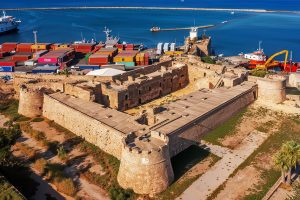
The Larnaka Medieval Museum offers visitors a compact yet fascinating journey through 15 centuries of Cypriot history. Located on the second floor of the Medieval Fort at the end of Foinikoudes promenade, this small museum houses a carefully selected collection that spans from the Early Christian period to Ottoman rule. The museum occupies three rooms within the fort's upper level, a structure that itself tells a story of Cyprus's layered past. The building sits directly on Larnaca's waterfront, where the Mediterranean laps against stone walls that have witnessed centuries of change. The location proves as significant as the exhibits themselves. The fort began as a small Byzantine fortification in the late 12th century, positioned to guard the harbour. Between 1382 and 1398, Lusignan King James I ordered its expansion into a proper defensive castle. This transformation occurred because the Genoese had occupied Famagusta, Cyprus's primary port, and the Lusignans needed an alternative harbour for their kingdom's maritime trade. The Collections on Display Room one focuses on the Early Christian period, presenting antiquities from the 4th to 7th centuries AD. The display includes photographs of Byzantine and post-Byzantine monuments throughout Cyprus, providing context for the island's early Christian heritage. These visual references help visitors understand the wider architectural and religious landscape that shaped medieval Cyprus. The central room showcases Byzantine art…

Read more