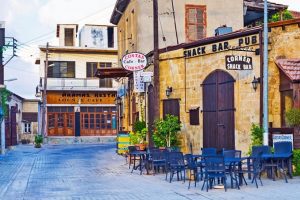
Explore Cyprus with Our Interactive Map

Explore our top stories and discover ideas worth your time.

Cyprus Baked Pasta Tradition

Cyprus Baked Pasta Tradition

Makaronia tou fournou means pasta baked in the oven and is a common dish in Cyprus, often served as a main course with a salad, but in Cyprus, it is an essential dish during all celebrations. The dish consists of three distinct layers: tubular pasta at the bottom, spiced ground meat sauce in the middle, and creamy béchamel on top. Pastitsio takes its name from the Italian pasticcio, a traditional casserole dish with pasta or pie crust that can be made with meat, fish, or pasta. The pasta used is typically bucatini or other long tubular varieties similar to macaroni. The entire assembly gets baked until the top develops a golden-brown crust. The use of halloumi and local spices gives makaronia tou fournou a distinctly Cypriot character. Italian Roots and Cypriot Adaptation The dish evolved from Italian pasta bakes that reached Cyprus through Mediterranean trade routes and centuries of cultural exchange. The Italian word pasticcio itself comes from Latin pastīcium, which means pie. Greek communities adapted this concept into pastitsio, which then traveled to Cyprus, where it underwent further transformation. The Cypriot version developed its own identity through specific ingredient choices and preparation methods. Unlike the Greek version that typically uses beef or veal, pork is typically favored over beef, veal, or lamb in makaronia tou fournou, although it is…

Read more
Traditional Folk Dances of Cyprus

Traditional Folk Dances of Cyprus

Cyprus folk dances represent living traditions that connect modern Cypriots to Byzantine heritage through choreographed movements, traditional costumes, and communal participation. These dances appear at weddings, religious festivals, harvest celebrations, and family gatherings, serving social functions beyond entertainment by reinforcing community bonds, facilitating courtship under supervision, and displaying cultural identity. The basic repertoire includes syrtos and kartzilaumas, performed as paired confrontational dances or circle formations, alongside specialty performances like tatsia where dancers balance wine-filled glasses on sieves, and drepani, the sickle dance demonstrating agricultural skills. Men and women traditionally danced separately, with social conventions restricting female dancing primarily to weddings while men performed at coffee shops, threshing floors, and festivals. The movements emphasize improvisation within communal constraints, with dancers competing to display skill while adhering to strict local standards that discourage excess or showiness that would violate collective norms. The Kartzilaumas Confrontational Tradition Kartzilaumas, the fundamental Cypriot dance from approximately 1910 through the 1970s, consists of six parts performed by confronted pairs of dancers, either two men or two women. The name derives from the Turkish word karşılama meaning greeting, reflecting the face-to-face positioning where dancers mirror and respond to each other's movements. The suite progresses through first, second, third, fourth, fifth or balos stages, with each part featuring slight variations in steps, tempo, and intensity. Between the third and…

Read more
Saint Barnabas Gospels

Saint Barnabas Gospels

The “Saint Barnabas Gospels” refer to a tradition that helped secure the Church of Cyprus’s independence after a late fifth-century discovery near Salamis, where a Gospel of Matthew was said to rest on Saint Barnabas’s chest. Presented to Emperor Zeno, the manuscript functioned as proof of apostolic origin and was used to confirm Cyprus’s autocephaly in a jurisdictional dispute. This article explains the discovery story, why the original book matters even though it is lost, and how later Cypriot Gospel manuscripts carried the same claim through art, script, and ritual display. A Fifth-Century Power Dispute In the late fifth century, Cyprus stood at the centre of a quiet but serious dispute. Powerful church authorities on the mainland sought control over the island's Christian community, challenging its claim to independence. According to tradition, Archbishop Anthemios was guided by a vision to the burial place of Saint Barnabas, near Salamis. When the tomb was opened, the saint’s remains were found holding a copy of the Gospel of Matthew. The discovery was not treated as symbolic. It was evidence.The manuscript was carried to Constantinople and presented to Emperor Zeno. By accepting it, the emperor confirmed that the Church of Cyprus had apostolic origins of its own and therefore did not answer to any external patriarch. From that moment on, Cyprus’s religious independence was…

Read more