Explore Cyprus with Our Interactive Map

Explore our top stories and discover ideas worth your time.

Cyprus Folk Instruments Tradition

Cyprus Folk Instruments Tradition

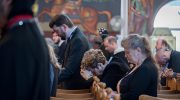
Cypriot folk music is not built around concerts or recordings. It is built around people standing face to face, marking time together, and using sound to guide moments that matter. At the centre of this tradition are two instruments, the viola and the laouto, whose partnership has shaped weddings, village festivals, and communal gatherings for centuries. More than musical tools, they function as social anchors, carrying memory, rhythm, and identity across generations. Understanding these instruments means understanding how music in Cyprus has always been lived, not simply performed. A Musical Language Shaped by Place Cyprus sits at a cultural crossroads, and its traditional music reflects this position clearly. The island absorbed Byzantine chant, Eastern Mediterranean modal systems, and later Western European instruments, but it never allowed one influence to erase the others. Instead, Cypriot musicians adapted what arrived to serve local needs. Music here was never designed for silent listening. It existed to accompany movement, ritual, and spoken word. That practical purpose shaped both the instruments themselves and the way they were played. Precision mattered less than presence. What counted was whether the sound could carry across a village square, guide dancers, and support voices raised in song or improvisation. The Laouto: Rhythm as Structure The laouto is the backbone of Cypriot folk music. Long-necked and steel-strung, it belongs to…

Read more
Limassol as a Financial & Maritime Center

Limassol as a Financial & Maritime Center

Cyprus operates the third largest merchant fleet in the European Union and ranks 11th globally, with over 25 million gross tons registered. From 2023 to 2024 alone, the fleet expanded by 18%, adding 198 newly registered vessels. What makes this particularly impressive is that Limassol manages more than just the flag registry. The city functions as Europe's largest third-party ship management center and ranks among the top three worldwide. More than 200 shipping and maritime-related companies operate from Limassol, handling approximately 20% of the world's third-party ship management market. This fleet consists of 2,200 vessels representing 50 million gross tons under management. The numbers extend beyond ships. These companies employ nearly 40,000 seafarers, of whom 5,000 are EU nationals. The port itself underwent major modernization between 2009 and 2017. Depths increased to 16 meters in the western basin and 17 meters for the entrance channel, allowing modern cargo and passenger vessels to dock. The port was privatized in 2017, with Eurogate managing the container terminal and DP World operating the multipurpose port. Limassol Port now handles approximately 418,000 TEU annually and serves as a critical transshipment point between Europe, the Middle East, and North Africa. A Tax-Friendly Financial Center Cyprus maintains one of the most competitive tax regimes in the European Union, with corporate tax set at 12.5%. The country…

Read more
Agios Nikolaos tis Stegis

Agios Nikolaos tis Stegis

Agios Nikolaos tis Stegis, near Kakopetria in the Solea Valley, is one of Cyprus’s most important painted churches, preserving multiple phases of Byzantine frescoes inside a modest mountain building. Its steep timber roof, added for protection, helped these wall paintings survive centuries of harsh weather and shifting rule. This article explains how the church evolved, what the fresco layers show, and why the site remains a rare visual record of Byzantine life in Cyprus. Agios Nikolaos tis Stegis stands on the western bank of the Karkotis River, near the village of Kakopetria, at an elevation of roughly 700 meters. This mountain setting explains one of the church’s most defining features. Unlike urban Byzantine churches, which display their domes openly, this church is wrapped beneath a steep, timber roof covered in flat tiles. The roof was added in the medieval period to protect the masonry and paintings from heavy rain and winter snow. The solution was practical, not symbolic, yet it transformed the church’s identity. The word Stegis means “of the roof,” and the shelter became so closely associated with the building that it distinguished this Saint Nicholas from countless others across the Orthodox world. What began as a climatic adaptation ultimately became a defining architectural signature unique to the Troodos region. From Monastery to Mountain Archive The church was founded…

Read more