Explore Cyprus with Our Interactive Map

Explore our top stories and discover ideas worth your time.

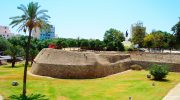
Mesaoria Basin Cyprus

Mesaoria Basin Cyprus

Stand on a small hill just outside Nicosia and look around. To the south the Troodos Mountains rise dark and rugged on the horizon, their volcanic slopes fading into forests. To the north the Kyrenia range appears as a long pale wall of limestone cliffs or rugged forms stretching as far as the eye can see. Between them lies an immense open landscape. This is Mesaoria. In Greek it literally means “between the mountains”. This basin forms a natural wide corridor across the island, a broad open landscape framed by two very different geological worlds. At first glance the region may appear quiet compared with the dramatic mountains that surround it. There are no towering cliffs or deep gorges. Instead, the land spreads outward in broad plains and gentle plateaus where fields stretch toward distant villages. Yet beneath this calm landscape lies one of the most revealing geological chapters of Cyprus.Mesaoria is not simply a plain between mountains. It is the remnant of a vast sea basin that once separated the Troodos massif from the Kyrenia range. For millions of years this basin collected sediments washed from the surrounding highlands while marine life thrived in its waters. Later tectonic movements slowly lifted the seabed, turning the marine basin into dry land. Now imagine travelling ten million years back in time.…

Read more
Cyprus Wild Mammal

Cyprus Wild Mammal

Imagine a rugged hillside in Cyprus, where ancient cedars cling to rocky slopes and the air hums with the distant call of a hidden survivor. This is the realm of the Cyprus mouflon, a wild sheep that has roamed the island's mountains for millennia, embodying the untamed spirit of Mediterranean wilderness. Let’s explore this elusive creature, a living link to Cyprus' prehistoric past that still graces its landscapes today. Sadly, this endemic mammal is listed as Endangered in IUCN Red List. A Gentle Giant of the Hills The Cyprus mouflon, known scientifically as Ovis gmelini ophion, is a subspecies of wild sheep belonging to the broader family of Bovidae, which includes goats, antelopes, and cattle. These animals are ungulates – hoofed herbivores adapted to rugged terrains across Europe, Asia, and Africa and all modern sheep breeds are it’s descendants. Zooming into zoological details, the Cyprus mouflon belongs to the Caprinae subfamily, sharing traits with ibex and wild goats but distinguished by its non-shedding wool and seasonal breeding cycles. Genetic studies reveal close ties to Anatolian and Iranian mouflons, with mitochondrial DNA suggesting a basal lineage from early domestication escapes. In Cyprus, the mouflon stands out as an endemic treasure, perfectly tuned to the island's dry, mountainous environments, where it grazes and navigates steep cliffs with effortless grace. Echoes of Ancient…

Read more
Backbone Grain and Cereal Crops

Backbone Grain and Cereal Crops

Wheat and barley have shaped Cyprus more deeply than many of its monuments or political eras. Grown across central plains and foothills, these cereals supported village life, defined everyday food traditions, and helped communities endure drought, famine, and political change. This article explores how cereal farming developed on the island, why it mattered socially and culturally, and how grain continues to influence Cypriot life today. An Island Fed by Grain, Not Spectacle Cyprus is often described through coastlines, ruins, and mythology, yet for most of its history, the island was sustained by something far more modest. Wheat and barley were not symbols of wealth or power. They were tools of survival. For thousands of years, grain farming shaped daily routines rather than grand narratives. Sowing followed the first autumn rains, harvest arrived before the summer heat became destructive, and storage was as important as production itself. In this sense, cereals formed the island’s quiet infrastructure, supporting life without drawing attention to themselves. Where Grain Grows and Why It Grows There Cereal cultivation in Cyprus has always been closely tied to geography. The broad central lowland known as the Mesaoria Plain lies between the Troodos Mountains and the Kyrenia range. Its relatively flat terrain and workable soils made it the island’s most reliable grain-producing region. Smaller cereal fields also developed in…

Read more