Makronissos Beach
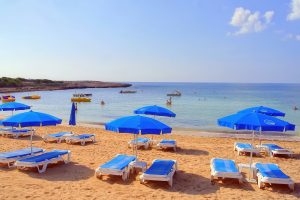
The Makronissos beach takes its name from the small peninsula where it sits. The word Makronissos comes from Greek and means "long island," a reference to the tail-shaped landmass that was once separated from the mainland. The main beach stretches westward, while two smaller bays branch off toward the southwest and southeast. These natural formations create protected swimming areas with calm waters throughout most of the season. The golden sand is fine and soft, without the pebbles or coarse grains common at many Mediterranean beaches. The waters remain shallow for a considerable distance from shore, which allows children to wade and play safely. Parents can relax knowing that the gentle slope of the seabed means their kids can walk quite far out while still touching bottom. The southwestern section falls within a Natura 2000 protected area, part of a European network of conservation sites. This designation reflects the ecological importance of the coastal environment and ensures that development balances tourism with environmental protection. Historical Background The Makronissos Necropolis sits just behind the beach and contains 19 rock-cut tombs from the Hellenistic and Roman periods. The Municipality of Ayia Napa sponsored intensive excavations between November 1989 and January 1990. These tombs had been targets of illegal digging since 1872, which damaged many of the burial chambers and removed valuable artifacts before…
Read more