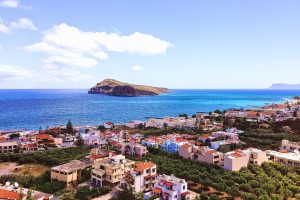
Explore Cyprus with Our Interactive Map

Explore our top stories and discover ideas worth your time.

Cyprus Farming Rhythms and Seasonal Traditions

Cyprus Farming Rhythms and Seasonal Traditions

Cyprus agriculture follows ancient patterns shaped by Mediterranean climate and generations of farming wisdom. The island produces diverse crops throughout the year, from citrus fruits and potatoes to grapes and olives. Over 320 sunny days annually create ideal conditions for cultivation, though water scarcity challenges farmers who consume 70% of the island's resources for irrigation. Small family farms dominate the landscape despite modernization. Agriculture contributes roughly 2% to GDP while employing 7% of the workforce. The sector supports rural communities and preserves village life across mountainous terrain. Traditional methods blend with contemporary techniques as Cyprus maintains its reputation for quality Mediterranean produce. Ancient Roots Shape Modern Agriculture Farming traditions in Cyprus stretch back to the 2nd millennium BC, with archaeological evidence of olive pressing from the 13th century BC. The island cultivated grains, vines, and olive trees for millennia. Ottoman rule introduced land classifications that persisted through British colonial administration until independence in 1960. The Church of Cyprus emerged as the largest private landowner, controlling an estimated 5.8% of arable land before 1974. British authorities reformed ownership laws in 1946, allowing unrestricted private land ownership for the first time. Agricultural cooperatives formed in 1909 after farmers toured Britain and Germany, studying their systems. Today, farming faces mountainous terrain that complicates mechanical cultivation. The government promotes drought-resistant crops and wastewater treatment…

Read more
Environmental Legislation in Cyprus

Environmental Legislation in Cyprus

Cyprus maintains an extensive environmental legal system designed to protect natural resources, manage pollution, preserve biodiversity, and promote sustainable development. As a European Union member since 2004, the island has harmonized national laws with over 300 EU environmental directives and regulations. The framework addresses air and water quality, waste management, nature conservation, climate change, and industrial emissions. This legal infrastructure aims to balance economic development with environmental protection across both public and private sectors. The Evolution of Cyprus Environmental Law Environmental governance in Cyprus formally began in 1986 with the establishment of the Environmental Service, which evolved into the Department of Environment in 2010. The first Director of the Service was appointed in 1992. Early environmental measures focused primarily on basic pollution control and resource management. The country ratified several key international agreements in the early 2000s. Cyprus ratified the UN Convention on Wetlands of International Importance in March 2001. In October 2001, the nation ratified the Barcelona Convention Protocol concerning Specially Protected Areas and Biological Diversity in the Mediterranean, plus the Protocol for the Protection of the Mediterranean Sea against Pollution from Land-Based Sources. Cyprus joined the Washington Convention on International Trade in Endangered Species in 2000 and ratified the Convention on Desertification along with the Convention on the Protection of Migratory Species of Wild Animals. EU accession in…

Read more
Cyprus Ports and Maritime Trade

Cyprus Ports and Maritime Trade

Cyprus operates as one of the Mediterranean's most important maritime hubs, with ports handling approximately 4.7 million tonnes of cargo annually and the island controlling the third largest merchant fleet in the European Union. The strategic location at the crossroads of Europe, Asia, and Africa has made Cyprus a natural transhipment center for European-Far East trade routes. Limassol serves as the main port, processing around 90 percent of the island's exports and imports with capacity for 500,000 twenty-foot equivalent units. The Cyprus ship registry ranks eleventh globally with over 2,200 ocean vessels totaling more than 25 million gross tons. Limassol city has evolved into Europe's largest third-party ship management center, with over 200 shipping companies managing approximately 20 percent of the world's third-party fleet. This concentration of maritime expertise contributes over one billion euros annually to Cyprus's economy, representing approximately seven percent of GDP. The Main Ports That Drive Cyprus Trade Limassol Port dominates Cyprus's maritime infrastructure as the busiest facility in the Mediterranean transit trade. Built after the 1974 Turkish invasion left Famagusta Port inaccessible, Limassol handles containers, iron, roll-on roll-off cargo, dry and liquid bulk, timber, and ferry passengers. Around 4,000 ships, 418,000 TEU, and 381,000 passengers pass through annually. The port can accommodate vessels up to 250 meters in length at berths with 14 meters of water…

Read more