Explore Cyprus with Our Interactive Map

Explore our top stories and discover ideas worth your time.

Agioi Anargyroi Trail

Agioi Anargyroi Trail

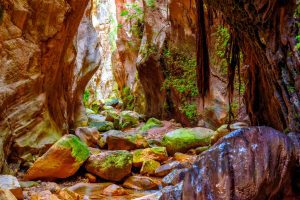
The Agioi Anargyroi Nature Trail sits within the Cape Greco National Forest Park. This area represents the natural beauty of southeast Cyprus. Many people visit this spot to see the contrast between rugged cliffs and the deep blue Mediterranean Sea.  The path provides a direct link to the local heritage and the geological wonders of the island. Visitors often feel a sense of peace as they walk along the coast. The air carries a scent of salt and wild herbs. This trail serves as a perfect escape for those who want to witness the raw landscape of Cyprus. It remains a top choice for nature lovers. Trail Overview Location: Cape Greco National Park, Ayia Napa, Cyprus Distance: 3 miles (4.8 km) Route Type: Point-to-Point Difficulty: Easy Elevation Gain: 40 meters Duration: 1.5 hours Best Time to Visit: March to May or September to November Terrain: Rocky, Coastal, Limestone The Geological Marvels of Cape Greco The Agioi Anargyroi trail follows a path atop ancient limestone formations. These rocks show the history of the earth through their porous texture and sharp edges. The sea hits the base of these cliffs with great force.  Over centuries this water carved deep caves into the stone. You can see these structures from the high vantage points of the trail. The white stone glows under the…

Read more
Nea Paphos Harbor

Nea Paphos Harbor

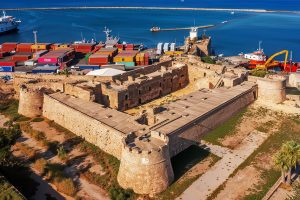
Nea Paphos emerged as one of the most strategically important harbor cities in the ancient Mediterranean. Founded in the late 4th century BC on the southwest coast of Cyprus, this planned city replaced the older settlement of Palaipaphos and quickly became the island's capital. The harbor served dual purposes as both a major naval base and a thriving commercial port, connecting Egypt with the broader Mediterranean world. Today, the archaeological remains spread across 100 hectares near modern Kato Paphos, offering a window into ancient maritime power. Historical Background King Nikokles, the last monarch of Palaipaphos, founded Nea Paphos around 320 BC. After Alexander the Great's death, Cyprus fell under Ptolemaic Egyptian control in 294 BC, where it remained for over 250 years. The site offered exceptional advantages. The city occupied a peninsula between two hills, with a natural bay providing shelter from storms. Strabo reported that the harbor offered protection from winds in all directions. Nearby forests supplied abundant cedar wood for shipbuilding, while the location sat on the critical maritime route between Rhodes and Alexandria. Urban planners designed Nea Paphos according to the Hippodamian grid system, heavily influenced by Alexandria. Regular streets intersected at right angles, creating rectangular blocks called insulae. Defensive walls separated the urban area from the mainland, while public buildings faced the large harbor. The city…

Read more
Olive Trees in Cyprus (Olea europaea)

Olive Trees in Cyprus (Olea europaea)

On rocky hillsides and gentle terraces across Cyprus, trees with shimmering silver-green leaves stand like wise elders, their twisted trunks telling stories of centuries under the Mediterranean sun. These are the olive trees, living treasures that have shaped the island’s landscape, diet and culture since the dawn of human settlement here. A Classic Evergreen of the Olive Family Known to science as Olea europaea, the olive belongs to the family Oleaceae within the order Lamiales. In Cyprus it thrives both as the familiar cultivated form in orchards and as the wild oleaster (Olea europaea var. sylvestris), a tougher, smaller-fruited version that grows naturally in maquis and garigue vegetation alongside carob and wild pistachio. Echoes from the Dawn of Cypriot Civilisation Olives have been part of Cyprus since at least the Bronze Age, with ancient pollen records and archaeological finds showing they were already valued for oil and fruit more than 4,000 years ago. Phoenician, Greek and Roman settlers expanded their cultivation, while the wild oleaster formed part of the original maquis shrublands described in 19th-century British forest reports. Over time, centuries of human care turned scattered wild trees into the productive groves that still cloak the island’s lower slopes today. Graceful Form and Enduring Strength The olive is an evergreen tree reaching 8–15 metres, with a short, often gnarled trunk…

Read more