Archangel Michael Frescoes Pedoulas
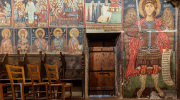
The Church of Archangel Michael in Pedoulas contains one of Cyprus's most complete late-medieval fresco cycles. Painted in 1474 and signed by the artist Minas, the interior preserves an extraordinary collection of wall paintings that provide insight into the artistic traditions, social realities, and cultural identity of mountain communities during the late Byzantine period. Within a modest timber-roofed church, the frescoes combine religious imagery with details drawn from contemporary life. Elements such as Western-style armour appearing in key scenes reveal the political and cultural influences that shaped Cyprus during the fifteenth century. This article explores how the church was adapted to the Troodos climate, how its fresco program was designed to be viewed and understood, and why its artwork remains an important record of local identity, patronage, and historical continuity. A Church Built for Mountain Conditions Pedoulas lies in the Marathasa Valley at an elevation of approximately 1,100 meters. The region experiences cold winters, heavy snowfall, and long periods of isolation from the coastal areas. The church's architecture reflects these environmental conditions. Its steep timber roof protects the stone structure from rain, snow, and moisture, while the compact interior helps preserve warmth and structural stability. Rather than emphasizing size or grandeur, the building was designed to serve the practical needs of a mountain community. The contrast between the plain exterior…
Read more