Stand in a quiet park in Limassol or Nicosia on a sunny day, and you might spot tall, pyramid-shaped trees that look like they stepped out of a prehistoric forest. These are the Araucaria trees ancient conifers from far-away lands that bring a touch of exotic elegance to our island’s urban green spaces.
Ancient Guardians of the Pine Family
Araucaria trees belong to the Araucariaceae family, a group of evergreen conifers that once dominated vast forests across the southern hemisphere. In Cyprus, the most common is Araucaria heterophylla, often joined by its cousin Araucaria columnaris. Locally known as Αρωκάρια (Arokária), a name derived from the genus’s scientific title, which honors the Arauco people of Chile where related species grow wild.
Survivors from a Lost World
These trees trace their lineage back over 200 million years to the time of the dinosaurs, when supercontinents like Gondwana were still united. Native to places like Norfolk Island in the Pacific for A. heterophylla, they arrived in Cyprus during the British colonial era around the early 20th century, planted as striking ornamentals in gardens and along avenues. Like many introduced species, they were chosen for their ability to thrive in our Mediterranean climate, echoing the island’s long history of welcoming plants from distant shores.
Symmetrical Towers of Green
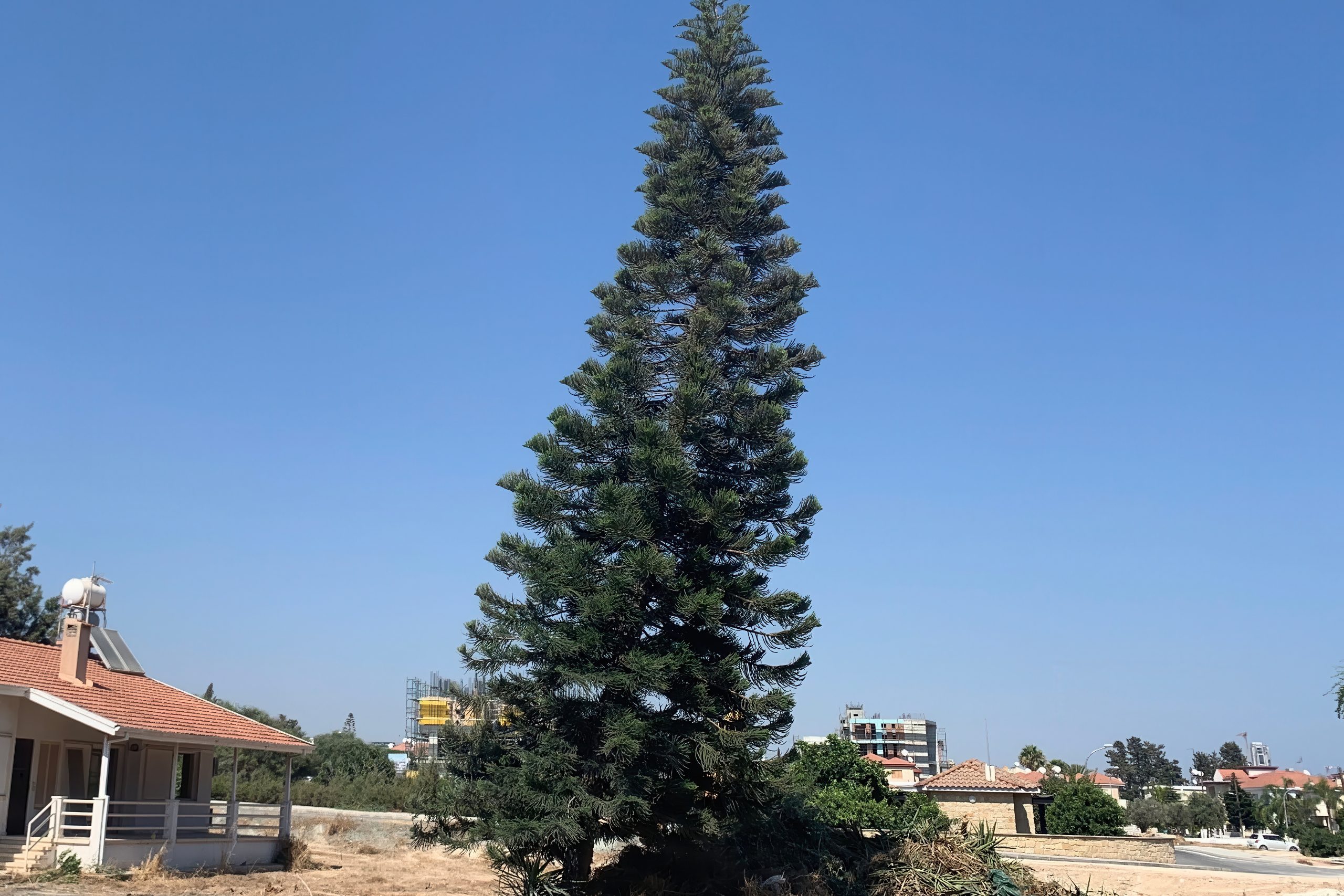
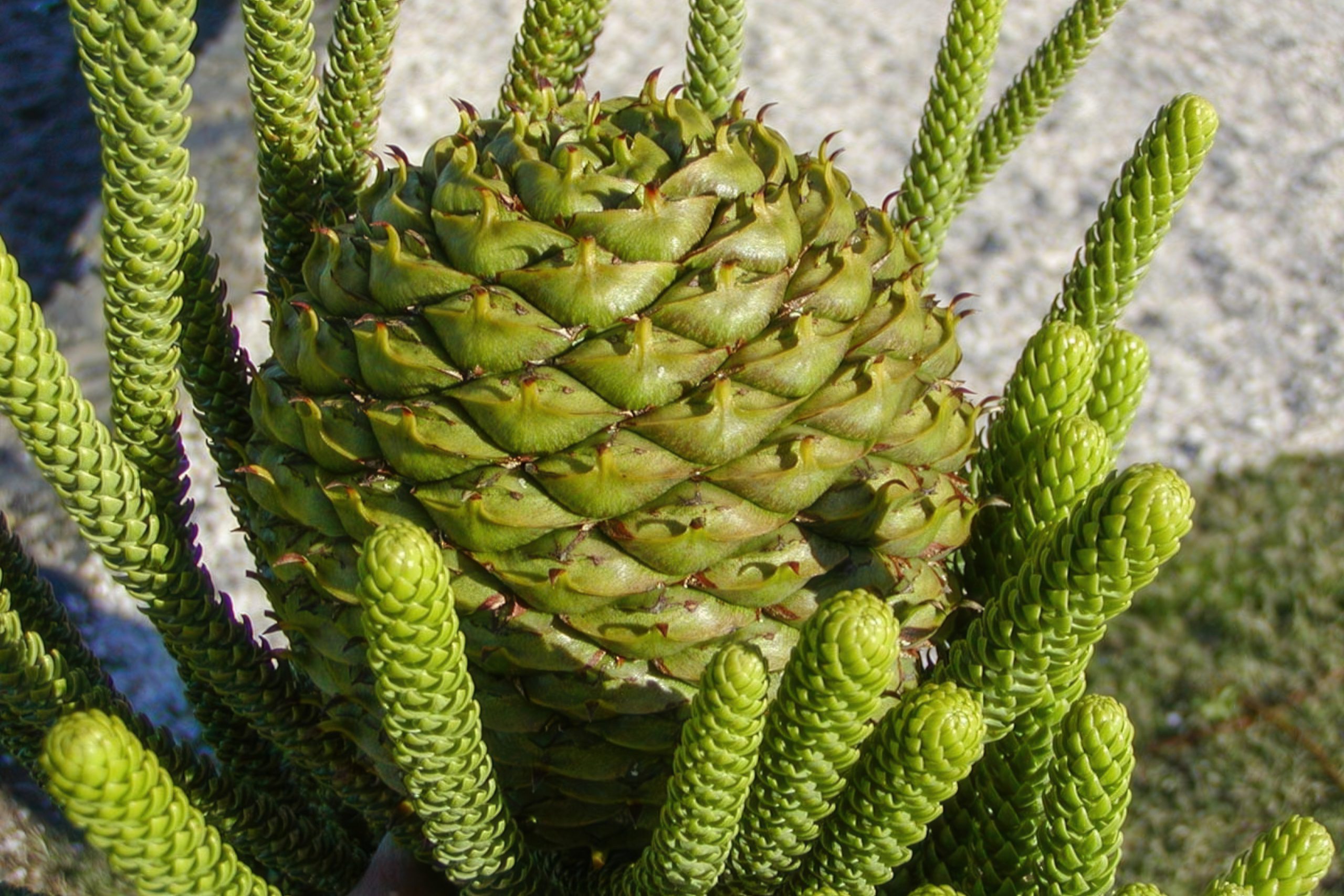
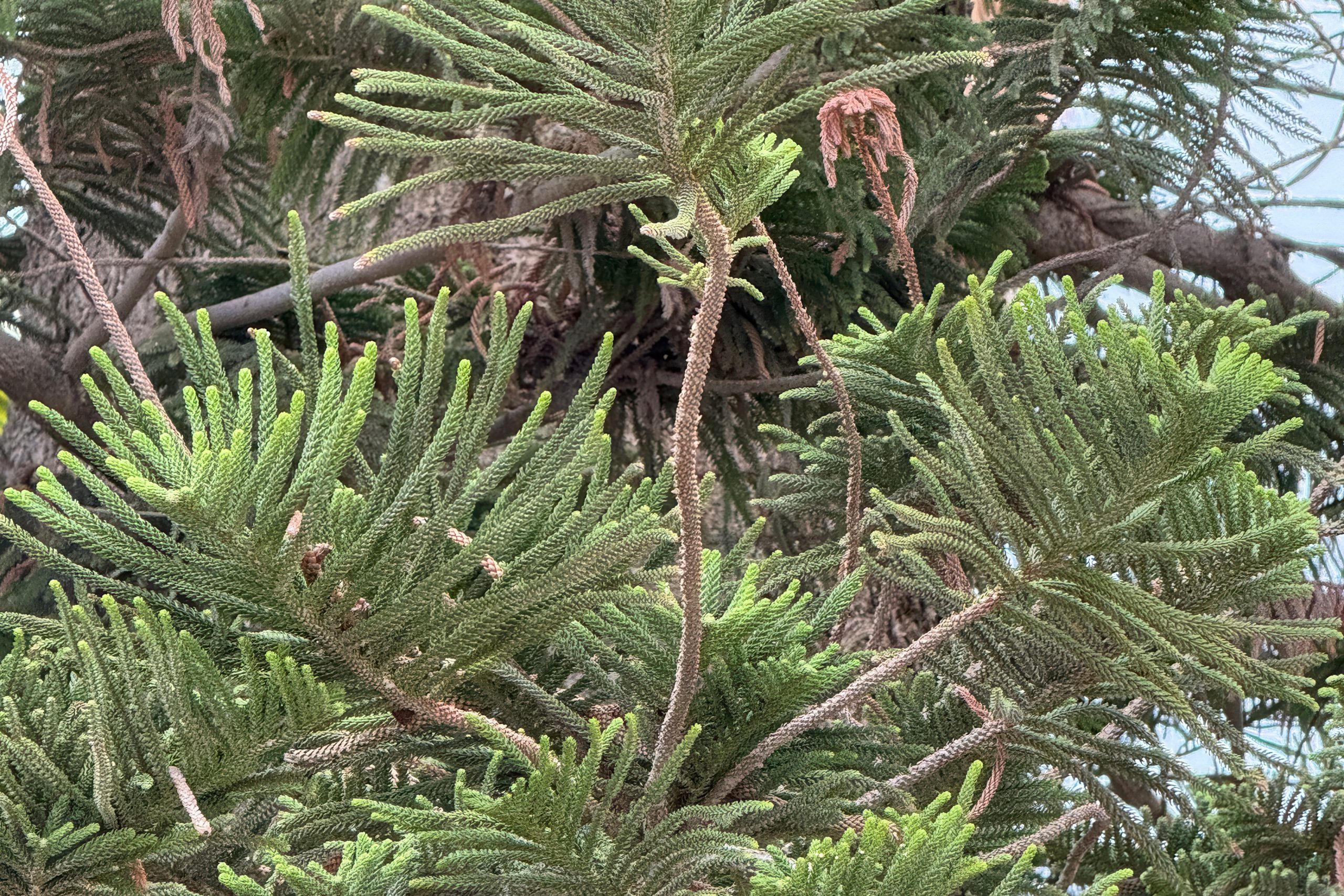
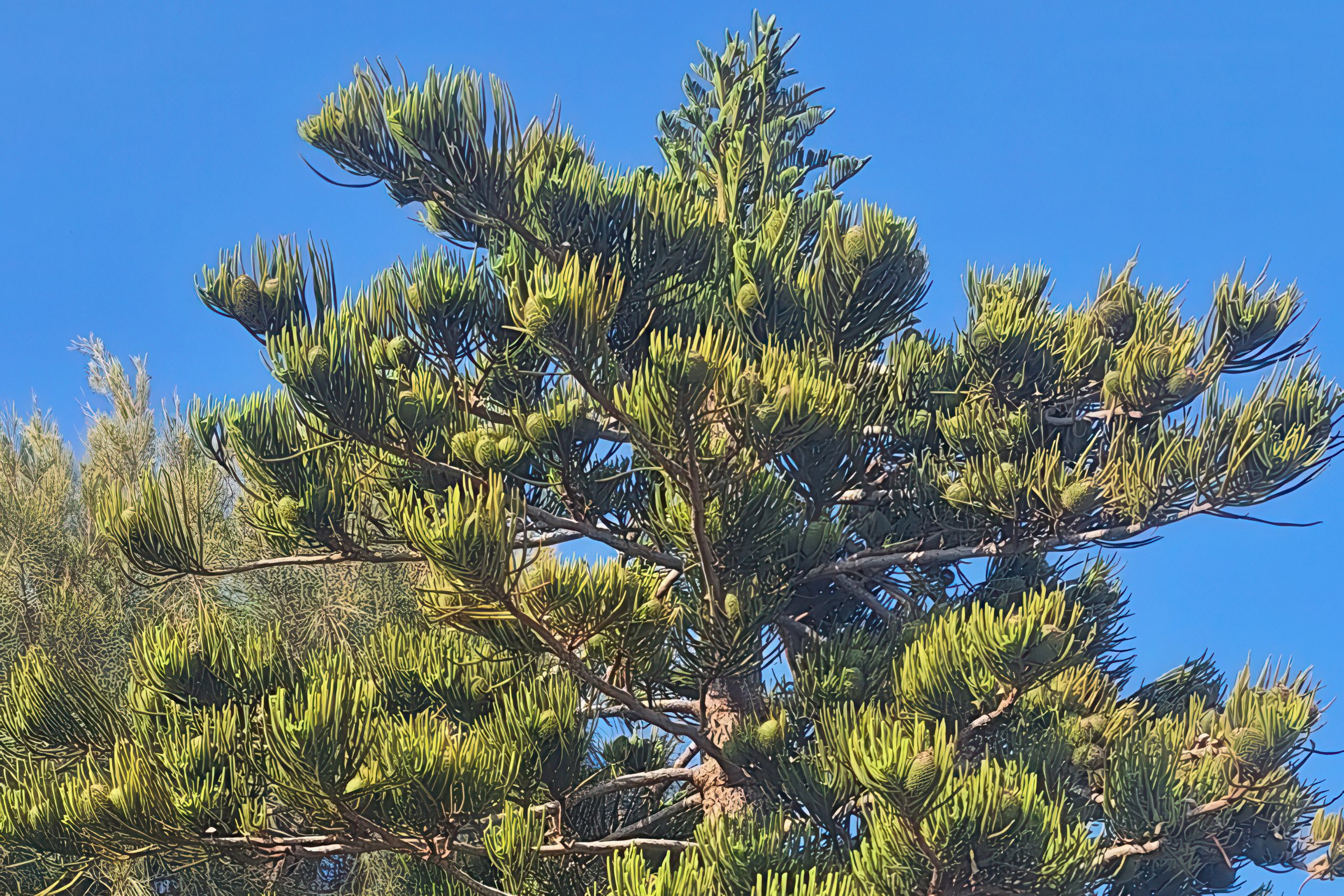
Araucaria heterophylla grows into a stately tree up to 20–30 metres tall in Cyprus, with a straight trunk and tiers of horizontal branches that form a perfect pyramid shape when young. The leaves are scale-like, sharp and overlapping, giving the branches a rope-like texture. Mature trees produce woody cones – females large and round, males slender – that release winged seeds. Araucaria columnaris is taller and more columnar, often leaning slightly, with denser foliage that whispers in the breeze.
Curious Tidbits
- Araucaria trees are “living fossils”; their family survived the mass extinction that wiped out the dinosaurs, outlasting many ancient creatures.
- Captain Cook, the first to discover the trees in Norfolk Island famously thought these trees would make “masts for the largest ships,” but tests showed the wood was too brittle for heavy seas – a fun historical flop!
- In their native Pacific islands, indigenous peoples used the resin for torches and the seeds as food – a tradition that highlights their versatile nature.
- These trees can live over 1,000 years in the wild, making some Cypriot specimens youngsters at just a century old.
- Unlike leafy trees that drop everything in autumn, Araucaria shed foliage gradually – older needles turn yellow and fall off bit by bit, while entire lower branches sometimes detach in a process called cladoptosis, like the tree pruning itself for better growth.
- Young trees make hilarious “living Christmas trees” indoors, but they grow so fast they might outgrow your living room in a few years!
- Birds like pigeons nest in their branches, turning these exotics into mini wildlife havens in urban settings.
A Deeper Look at Their Roots
Part of the gymnosperm group, Araucaria species reproduce with cones rather than flowers, a trait shared with pines and cypresses. In Cyprus, they prefer well-drained soils and full sun, tolerating our salty coastal winds better than many natives. Botanically, their scale leaves help conserve water, a clever adaptation from their Gondwanan origins where climates varied wildly over eons.
Standing Tall in Today’s Cyprus
In an era of climate challenges and urban expansion, Araucaria trees provide welcome shade and windbreaks in parks and gardens, helping cool our cities naturally. They fit into modern landscaping as low-maintenance evergreens, symbolizing Cyprus’s blend of global influences in a world where conservation projects focus on resilient greenery to combat desertification.
Meeting the Ancient Ones
You can spot Araucaria trees in public spaces like the Municipal Gardens in Limassol or along avenues in Paphos and Nicosia. Walking beneath their tiered branches feels like stepping into a serene, prehistoric grove – the sharp foliage rustles softly, and on a clear day, their symmetrical silhouettes against the blue sky offer a peaceful, almost meditative experience perfect for a family outing or quiet reflection.
Echoes of Earth’s Ancient Forests
Though they journeyed from distant Pacific islands, Araucaria trees have become beloved features of Cyprus’s landscape, reminding us of our planet’s deep history and the island’s role as a crossroads of nature. By appreciating these vulnerable survivors, we connect to a broader story of resilience, enriching Cyprus’s green heritage with whispers from a time when giants roamed the earth.