Explore Cyprus with Our Interactive Map

Explore our top stories and discover ideas worth your time.

How Climate Shapes Outdoor Lifestyles in Cyprus

How Climate Shapes Outdoor Lifestyles in Cyprus

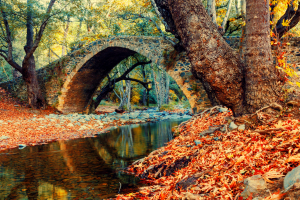
Cyprus enjoys approximately 340 sunny days annually, making it one of the sunniest locations in the Mediterranean. This exceptional weather creates a culture where outdoor activities dominate daily life year-round. The island experiences long, dry summers from mid-May to mid-October and mild winters from December to February. Shutterstock-com Average annual temperature on the coast reaches around 26 degrees Celsius during the day and 17 degrees at night. The warm season lasts about eight months, beginning in April and ending in November. This climate allows residents and visitors to maintain active outdoor lifestyles regardless of season. Why Cyprus Developed an Outdoor Culture The island sits at the crossroads of Europe, Asia, and Africa. Its position attracted ancient civilizations including Phoenicians, Greeks, Romans, Byzantines, Venetians, Ottomans, and British. Each culture adapted to the Mediterranean climate by organizing life around weather patterns. People worked early mornings before heat intensified, took midday breaks during peak temperatures, then resumed activities in cooler late afternoons. Ancient Greeks established the concept of symposia, outdoor gatherings for discussion and meals. Romans built open-air theaters and baths to take advantage of pleasant weather. Byzantine churches incorporated courtyards for outdoor worship. These historical patterns created traditions that continue today. The climate essentially forced outdoor living, and over centuries this necessity became cultural preference. The British colonial period from 1878 to…

Read more
Narrative Storytelling Through Sequential Imagery

Narrative Storytelling Through Sequential Imagery

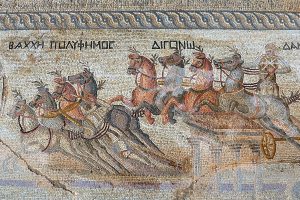
Narrative Storytelling Through Sequential Imagery in Cypriot Art involved the use of connected visual elements to convey myths, rituals, or sacred events within limited spaces such as walls or floors. This technique transformed individual scenes into cohesive narratives, engaging viewers with tales of deities, heroes, and everyday experiences without relying on text. Comparable to early forms of sequential illustration, it encouraged exploration of deeper layers through progressive imagery. Adobe-Stock-com A Method for Conveying Complex Narratives in Compact Forms Cypriot art employed sequential imagery to construct dynamic stories despite spatial constraints. Rather than isolated depictions, series of linked scenes unfolded myths, such as divine births from the sea, or rituals celebrating fertility and harvests. This approach allowed intricate concepts to fit into confined areas, like domestic floors or vessel surfaces, fostering reflection on cultural and spiritual themes. Origins on the Island This narrative style emerged in the Bronze Age around 2000 BC, amid Cyprus's role as a trade nexus incorporating elements from Greece, the Near East, and Egypt. Early pottery featured basic sequences illustrating hunts or dance rituals. The Iron Age after 1050 BC introduced Greek mythological influences, with friezes on temple walls depicting events like Aphrodite's emergence in ordered panels. Roman periods from 58 BC advanced the form through elaborate mosaics in villas, where floors served as narrative canvases for…

Read more
Kourion Mosaics Apollo To Basilicas Guide

Kourion Mosaics Apollo To Basilicas Guide

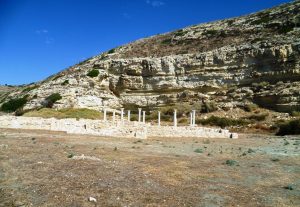
Kourion’s mosaics record Cyprus’s shift from a classical city organised around temples and civic life to an early Christian centre rebuilt under episcopal authority after mid-fourth-century earthquakes. In villas and basilicas, floors and inscriptions became a visual language that guided movement, reinforced belief, and redefined what power looked like in public space. wikimedia-org This article explains how disaster opened the ground for change, how the Episcopal Complex reshaped the city’s core, and how mosaic imagery at sites like the House of Eustolios shows a community rebuilding identity as well as architecture. Apollo Hylates and Old Order For centuries, Kourion thrived as a Greco-Roman city, complete with temples, baths, theatres, and elite villas. Public life revolved around civic institutions and traditional religious cults, most notably the Sanctuary of Apollo Hylates. Christianity was present early, introduced to Cyprus in the first century, but in Kourion it remained largely private and unobtrusive. Everything changed in the mid-fourth century. A catastrophic earthquake, most notably the one in 365 CE, devastated the city. Entire neighbourhoods collapsed, public monuments were abandoned, and the old religious landscape effectively ended. The destruction was not symbolic. It was physical, sudden, and comprehensive. When rebuilding began, it followed a new logic. wikimedia-org Instead of restoring pagan sanctuaries, Kourion was reorganised around Christian authority. The centre of gravity shifted from temples…

Read more