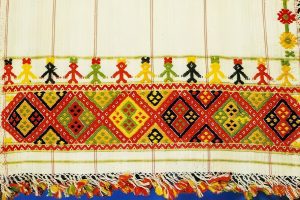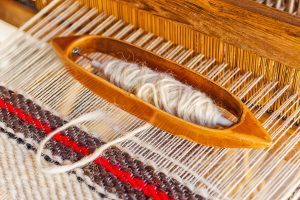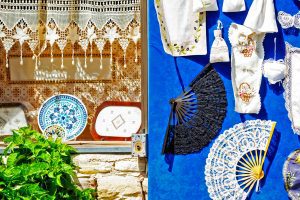
Lefkara Lace (Lefkaritika) is a world-renowned handmade lace tradition from Cyprus, distinguished by its geometric precision, white-on-white stitching, and centuries-old transmission through female artisans. Originating in the village of Lefkara, this craft blends intricate patterns that symbolize nature and life, creating delicate textiles prized for their elegance and cultural depth. Recognized by UNESCO as intangible cultural heritage in 2009, it represents Cyprus’s enduring artisanal legacy, where women’s hands have woven history into fabric for generations.
A Timeless Craft of Elegance and Skill
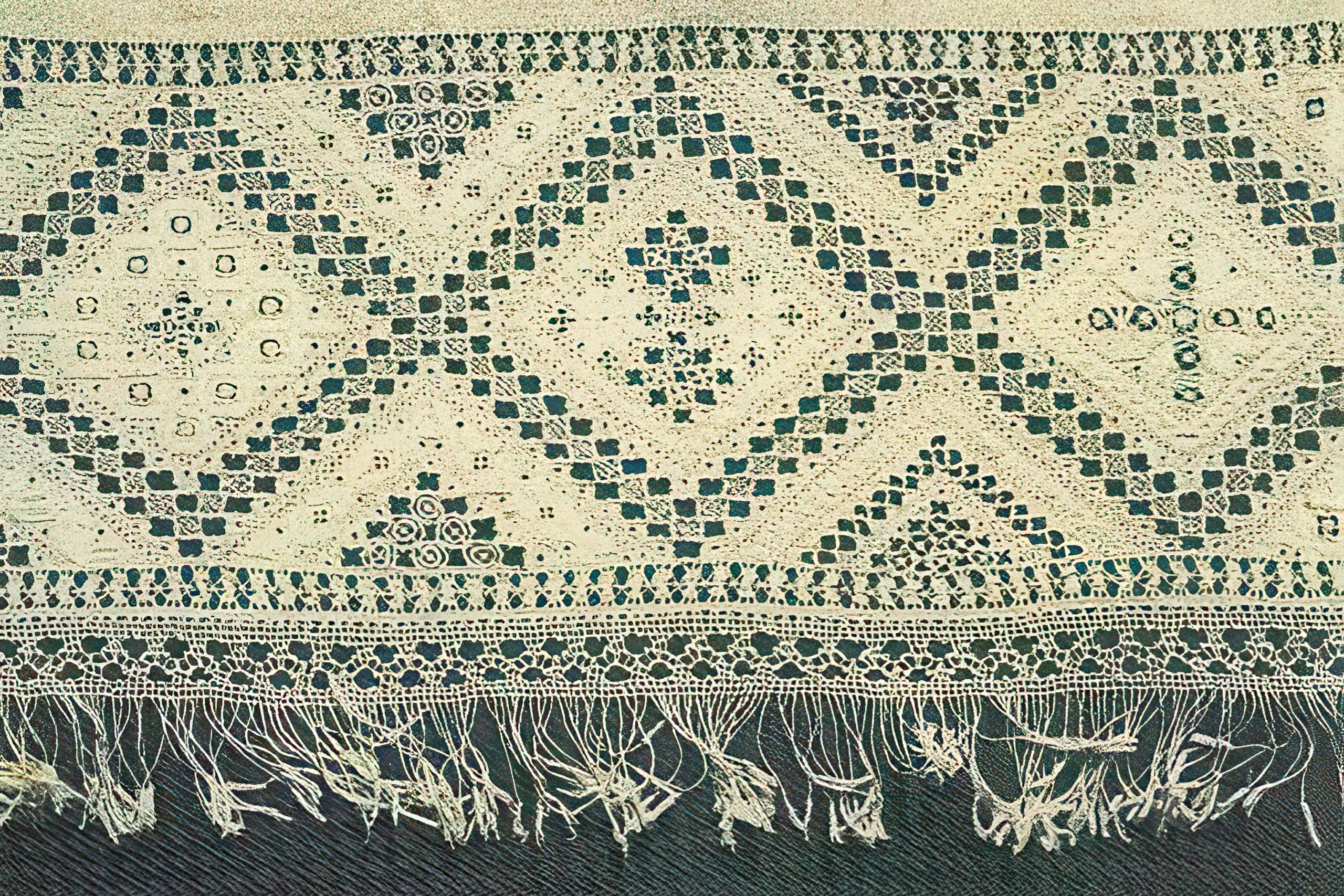
Lefkara lace, known locally as Lefkaritika, embodies the island’s rich textile heritage, a form of needlework where fine linen threads are drawn and stitched into intricate designs that appear almost ethereal against a white background. Produced exclusively in the villages of Pano and Kato Lefkara in the Larnaca District, this lace features geometric motifs inspired by nature, such as rivers, daisies, and almond blossoms, arranged in symmetrical patterns that require exceptional precision and patience. The craft’s white-on-white aesthetic, using unbleached cotton or linen, creates subtle shadows and textures that play with light, giving pieces a luminous quality. This tradition not only produces beautiful items like tablecloths, doilies, and clothing but also serves as a cultural symbol of Cypriot ingenuity, where women’s artistry has sustained communities through economic and social changes.
The process begins with “dafna,” a counted thread technique where threads are pulled to create openwork, followed by needlepoint fillings like “venise” for dense motifs. Artisans, almost always women, work for hours on frames, passing skills orally from mother to daughter, preserving a lineage that UNESCO highlights for its role in gender-specific knowledge transmission. In a world of mass production, Lefkaritika stands as a testament to handmade excellence, blending aesthetic beauty with symbolic meanings tied to fertility, protection, and harmony.
The Historical Roots of Lefkaritika
The origins of Lefkara lace date back to at least the 14th century, emerging during the Lusignan Kingdom (1192-1489) when French rulers introduced European needlework techniques to Cyprus. Archaeological evidence from earlier periods, like Byzantine embroidery fragments from the 12th century found in Troodos excavations, suggests a foundation in local textile traditions that blended with incoming styles. Trade routes connecting Cyprus to Venice, Genoa, and the Levant brought influences from Assyrian and Asia Minor embroidery, as well as Venetian punto in aria (stitches in the air), which Cypriot women adapted to their counted thread methods.
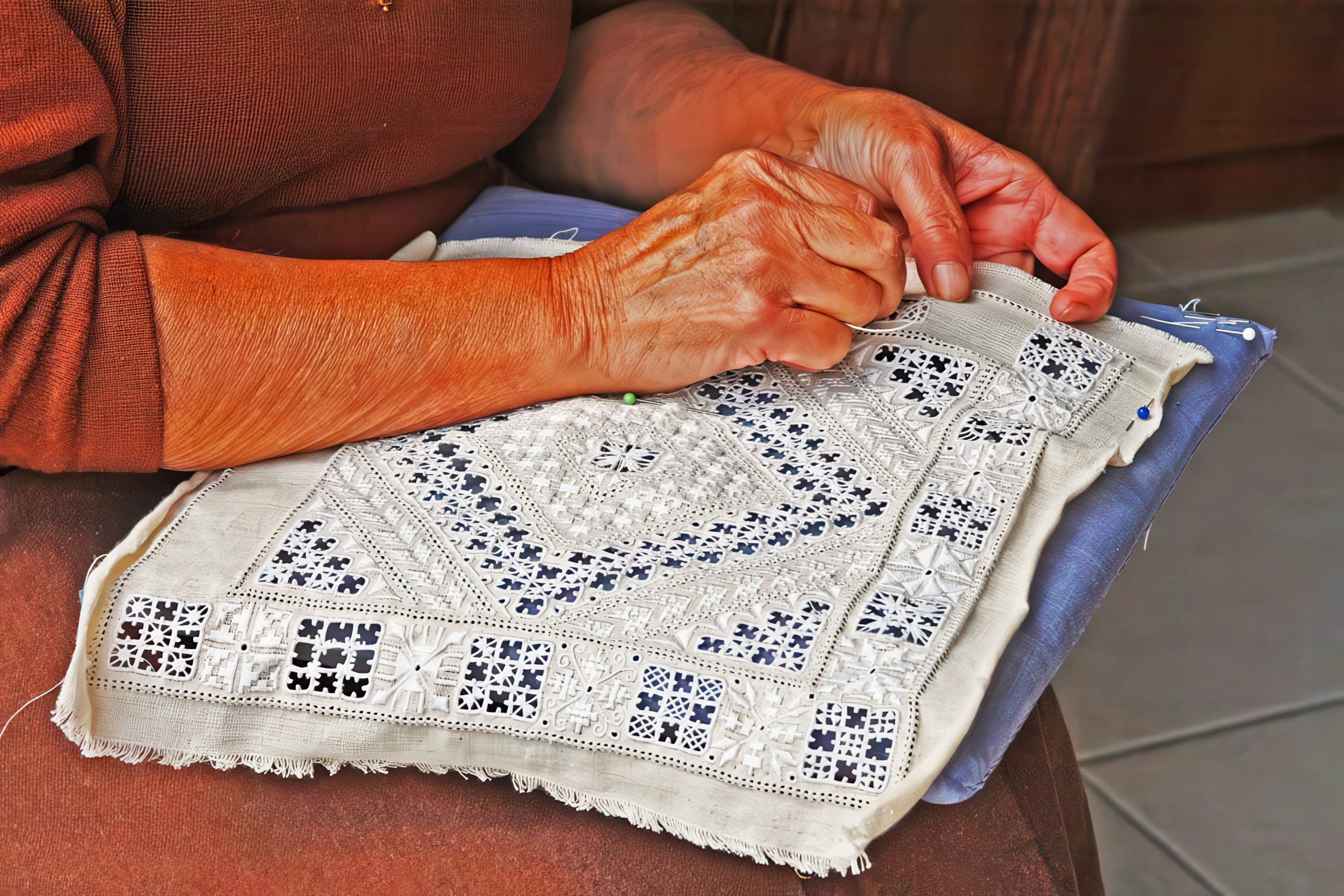
A famous legend claims Leonardo da Vinci visited Lefkara in 1481 during his travels for the Duke of Milan and purchased a piece of lace for the Milan Cathedral’s altar cloth, as recounted in local oral histories and supported by similar designs in Italian Renaissance textiles. This tale, while romanticized, underscores the craft’s early fame, with Venetian merchants exporting it as “punto di Cipro” in the 15th-16th centuries. Under Ottoman rule (1571-1878), lace-making became an economic lifeline for women, who produced pieces for Istanbul markets, incorporating subtle Turkish motifs like tulips while keeping geometric purity.
British colonial rule (1878-1960) commercialized it further, with exhibitions at the 1851 Great Exhibition in London praising its delicacy, leading to royal patronage from Queen Victoria. Post-independence in 1960, it became a symbol of national identity, with the 1974 division affecting production but not extinguishing it – southern villages like Lefkara continued, northern areas adapted similar embroidery. UNESCO’s 2009 inscription as intangible heritage recognized its role in preserving women’s craftsmanship, with the Cyprus Handicraft Service establishing training centers in the 1980s to teach techniques amid urbanization threats.
Ethnographic studies by scholars like Ioanna Hadjicosti have documented how lace patterns evolved from Byzantine geometric icons to Ottoman floral accents, reflecting Cyprus’s multicultural history. Excavations at sites like Amathus have found 12th-century needle fragments, linking to early lace precursors.
A Design of Precision and Symbolism
Lefkaritika’s creation is labor-intensive, beginning with fine linen fabric where threads are counted and withdrawn to form grids. Artisans use needles to fill spaces with stitches like “hemstitch” for borders, “lefkonitiko” for dense fillings, and “tagiades” for daisy-like motifs. Patterns include “potamoi” (rivers) with flowing lines symbolizing life’s continuity, “almond blossoms” for renewal, and “venizelika” inspired by Venetian lace but with Cypriot symmetry. The white-on-white palette, using unbleached threads, creates subtle 3D effects through shadow play, requiring up to 200 hours for a small piece.
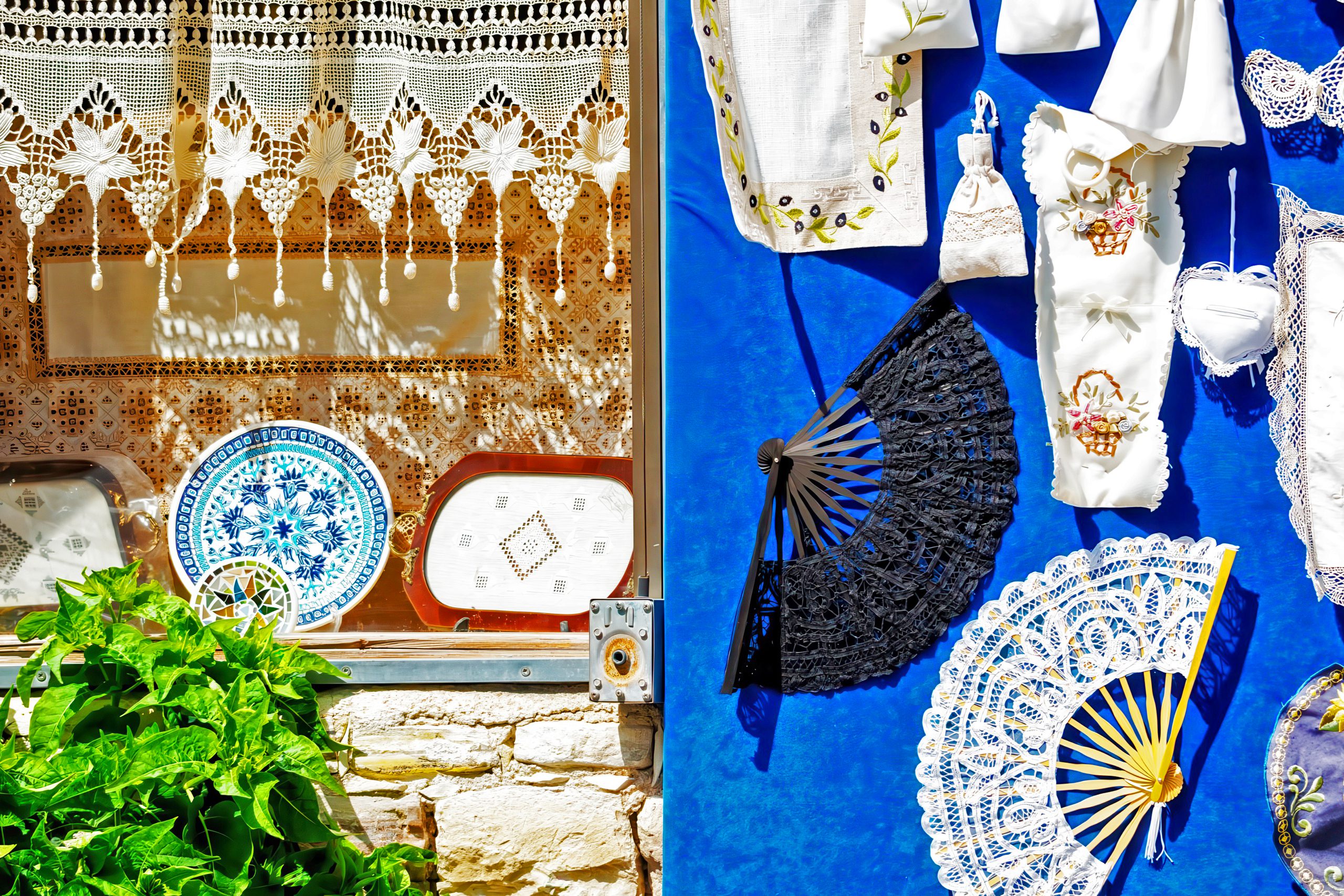
Techniques are passed through apprenticeship, with women starting as girls learning basic stitches like “kopsimo” (cutting) before mastering complex ones like “fillings” for openwork. Tools are minimal: needles, scissors, and thimbles, often handmade from silver for durability. Geometric precision stems from mathematical counting – patterns follow grids of 4 or 8 threads – tying to ancient Cypriot math in trade. Symbolism runs deep: rivers for fertility (echoing Aphrodite’s sea birth), daisies for innocence, creating lace as talismans for homes or gifts.
Regional variations exist: Pano Lefkara favors intricate “venise,” Kato Lefkara simpler “hemstitch” for edges. Quality is measured by fineness – top pieces use 40-count linen for delicacy.
Notable Details That Captivate
A quirky legend claims da Vinci’s Mona Lisa smile was inspired by a Lefkara lacemaker’s grace, though unproven. One pattern, “Leonardo’s daisy,” is said to commemorate his visit, with interlocking petals symbolizing unity. During Ottoman times, lace hid gold threads for smuggling wealth, a tale from 18th-century traveler Ali Bey. Famous artisan Maria Loizou in the 20th century wove for Queen Elizabeth II in 1953, now in Buckingham Palace. And in contests at festivals, women compete in speed-stitching, with prizes for precision.
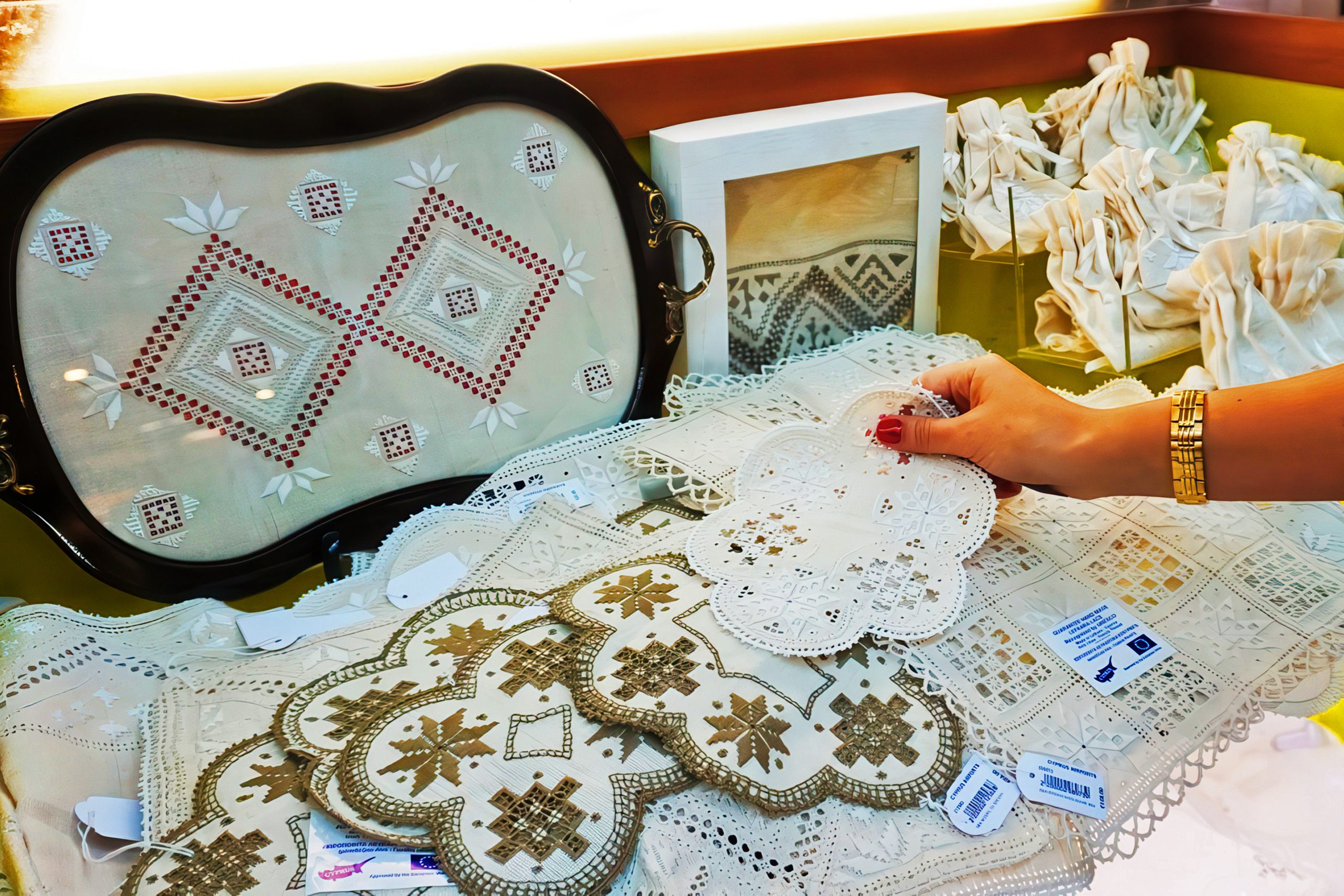
Restorations of antique lace reveal hidden symbols like crosses for protection, stitched in during Venetian Catholic pressures. A 15th-century piece in the Cyprus Folk Art Museum shows Assyrian-inspired borders, traded via Phoenicians.
Unraveling Deeper Layers of Meaning
Lefkaritika’s symbolism extends to theology: geometric patterns echo Byzantine icons’ order, representing divine harmony. In rituals, lace adorns altars or bridal veils for purity, linking to Virgin Mary’s intercession. Socially, it empowered women – as family earners, they gained status, with guilds in Lefkara from the 17th century organizing production. Economically, it fueled trade, with Venetian merchants selling it as luxury in Europe, boosting Cyprus’s reputation.
Cultural depth: patterns like “potamoi” symbolize life’s flow, influenced by river gods in ancient myths. In Ottoman era, lace became “dowry art,” where brides’ skills determined marriage prospects, preserving matrilineal knowledge. Ethnotextile studies at the University of Cyprus analyze stitches for math patterns, linking to ancient geometry from Euclid’s time, traded to Cyprus.
Influences from Arab embroidery added filigree, Venetian lace intricate fillings, but Cypriots made it white-on-white for subtlety, a unique trait.
Lefkaritika in Cyprus Today
In contemporary Cyprus, Lefkaritika thrives as a symbol of women’s empowerment, with cooperatives in Lefkara employing 200 artisans for global exports. Amid division since 1974, it fosters unity, with joint workshops across lines teaching techniques. Climate change affects cotton sources, prompting sustainable farming initiatives. Artists fuse it with modern fashion, like lace in dresses by Cypriot designers at London Fashion Week. In a globalized world, UNESCO’s heritage status spurs tourism, with sales supporting rural economies.
Opportunities for Exploration
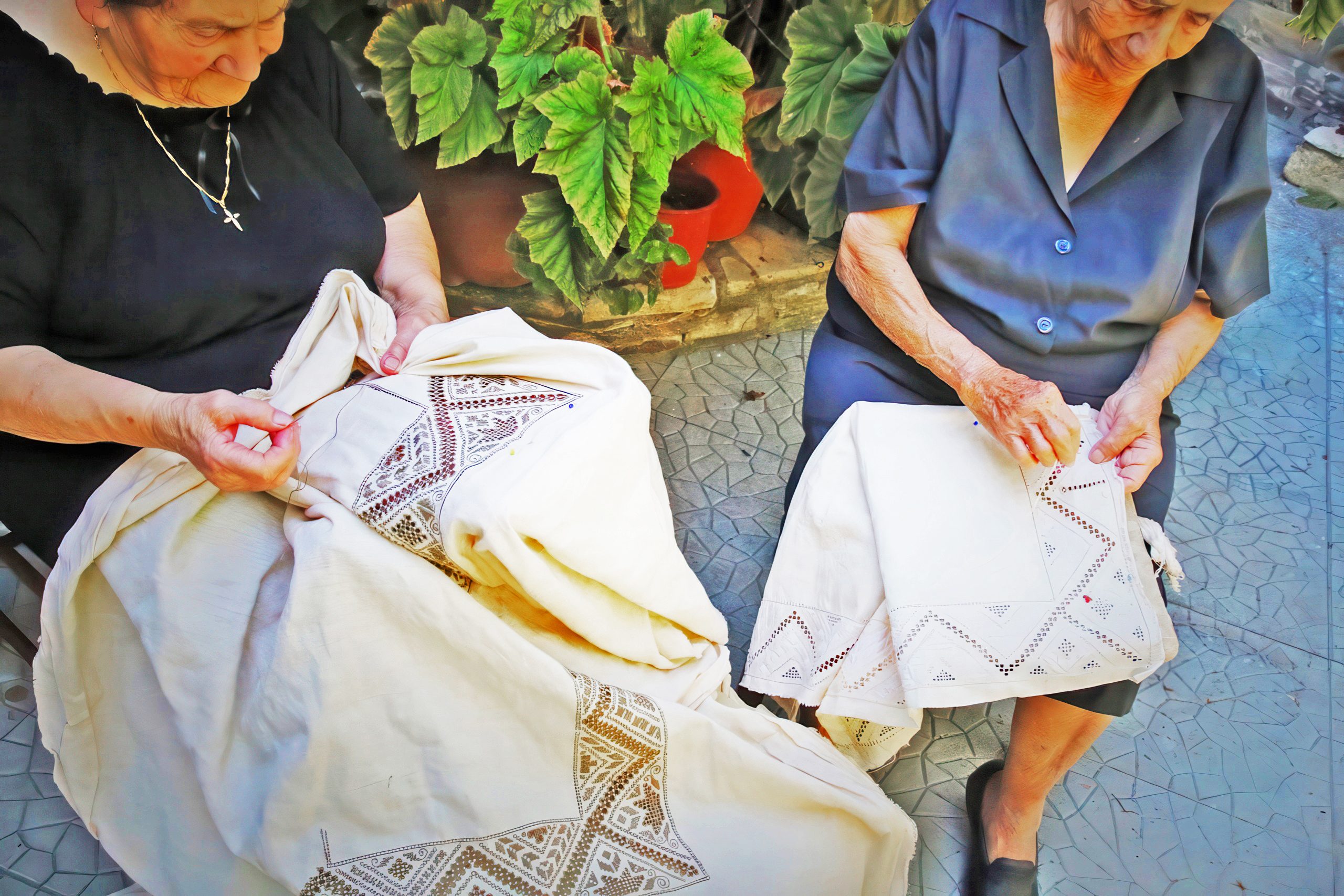
Cultural centers like the Lefkara Lace Museum open daily for €2, with demonstrations. Festivals like the Lefkara Folk Festival in August feature lace-making, free to attend with workshops. Guided craft tours through the Cyprus Tourism Organization cost €15-20, visiting ateliers for sessions. Spring or fall avoids heat, pairing with Troodos hikes where lace echoes in village shops. Many venues offer online videos for remote access.
A Craft of Lasting Thread
Lefkara Lace (Lefkaritika) holds value as a world-renowned tradition of geometric precision and white-on-white stitching, preserved through female artisans for centuries. This wasn’t just craft; it’s a link to historical roots, blending history with skill in every thread. Knowing it enriches appreciation for Cyprus as an artisanal crossroads. Engagement with its pattern or stitch evokes renewed wonder at cultural endurance. In a mass-produced age, Lefkaritika affirms handmade’s power to connect past and present.