Explore Cyprus with Our Interactive Map

Explore our top stories and discover ideas worth your time.

Purple Trumpets in the Cypriot Spring

Purple Trumpets in the Cypriot Spring

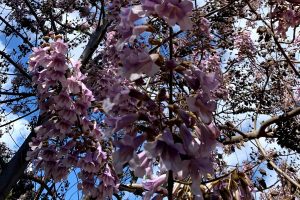
Imagine driving through the gentle hills near Paphos or Limassol in early April, when the air is still cool and the light turns golden. Suddenly, tall, bare-branched trees burst into clouds of soft lavender-purple bells that look like giant foxgloves hanging in the breeze. These are the Paulownia trees of Cyprus – fast-growing newcomers from the Far East that bring a touch of royal elegance to the island’s modern landscape. The Empress Tree Family Paulownia belongs to its own small family, Paulowniaceae, closely related to the foxgloves and snapdragons you might see in a cottage garden. These are deciduous trees that grow with astonishing speed. The main species planted in Cyprus are Paulownia tomentosa (the classic princess or empress tree) together with the even faster-growing P. elongata and P. fortunei. Locally they are known as Παυλώνια (Pavlónia), a direct transliteration of the scientific name. The genus honours Princess Anna Pavlovna of Russia (1795–1865), whose beauty and grace the flowers were said to resemble when the tree was first introduced to Europe. From Asian Forests to Cypriot Plantations Native to central and eastern China and parts of Korea, Paulownia has been treasured for centuries in its homeland for its lightweight, strong timber and beautiful timber used in everything from furniture to musical instruments. It reached Europe in the 19th century as…

Read more
The Peeling Cinnamon Guardians of Cyprus Slopes

The Peeling Cinnamon Guardians of Cyprus Slopes

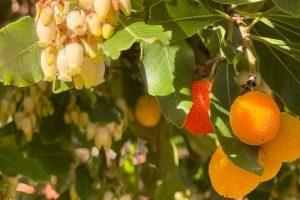
High on rocky, sun-scorched hillsides where pine meets maquis, a graceful evergreen catches the eye with branches glowing like polished copper. Each summer its smooth bark peels away in thin, papery sheets, revealing fresh layers of vivid orange-red and pistachio-green beneath – a living canvas of renewal. This is the Cyprus strawberry tree, one of the island’s most elegant natives and a quiet sentinel of the Mediterranean wildlands. www.inaturalist.org A Graceful Member of the Heath Family Known scientifically as Arbutus andrachne, this evergreen shrub or small tree belongs to the genus Arbutus within the Ericaceae family (the heath or heather family) in the order Ericales, part of the asterid group of flowering plants. In Cyprus it grows alongside its close relative Arbutus unedo (the common strawberry tree) and is a classic component of maquis shrublands and pine-forest understories. Roots Deep in Ancient Mediterranean Landscapes Arbutus andrachne has been part of Cyprus since prehistoric times, forming an integral element of the original maquis vegetation. The ancient Greek botanist Theophrastus (4th–3rd century BC) described it as “Andrachni” in his History of Plants. It was noted by 19th-century explorers and in the 2007 Cyprus “Tree of the Year” campaign by the Department of Forests. Today it remains widespread and secure, listed as Least Concern on the IUCN Red List thanks to its broad…

Read more
Morphou Plain

Morphou Plain

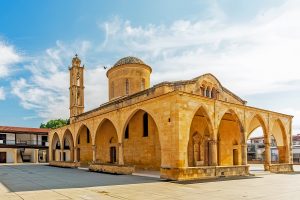
The Morphou Plain spreads across northwestern Cyprus as the island's most fertile agricultural region. The plain covers several hundred square kilometres of exceptionally productive farmland watered by underground aquifers and seasonal streams. The town of Morphou serves as the region's commercial centre with a current population of approximately 18,000 to 24,000 people. shutterstock-com The area produces over half of Cyprus's citrus fruits, primarily oranges, lemons, and grapefruits, along with substantial quantities of apples, vegetables, melons, and strawberries. The distinctive red soil, rich in minerals and organic matter, creates ideal conditions for intensive agriculture. Unlike much of Cyprus, which struggles with water scarcity, the Morphou Plain benefits from abundant groundwater that allows year-round cultivation and supports the island's most productive farming operations. Historical Background The Morphou region has sustained human settlement since at least the Bronze Age, with archaeological evidence suggesting continuous occupation for over 4,000 years. The fertile soil and reliable water supplies attracted early agricultural communities who recognized the land's exceptional productivity. The ancient city-kingdom of Soli developed on the plain's coastal edge, thriving from approximately the 11th century BC until Arab raids destroyed it in the 7th century AD. facebook-com Soli's prosperity derived from two resources: rich copper deposits in the nearby hills and fertile agricultural lands that fed mining communities and produced surplus for export. According to…

Read more