Historical monuments

Articles: Historical monuments

Stories in this category and its subcategories.

Famagusta Martinengo Bastion

Famagusta Martinengo Bastion

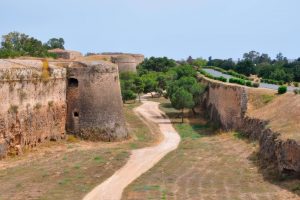
In the northwest corner of Famagusta's historic walled city stands one of the Mediterranean's most impressive examples of Renaissance military architecture. The Martinengo Bastion, also known as Tophane, represents a turning point in defensive technology and remains a testament to 16th-century engineering brilliance. visitncy.com When the Republic of Venice took control of Cyprus in 1489, military engineers quickly recognized a serious problem. The existing fortifications throughout the island were outdated and vulnerable to modern artillery. Medieval walls, built tall and thin to defend against siege towers and scaling ladders, could not withstand the devastating impact of cannon fire. Famagusta presented a particular challenge. As Cyprus's main port and commercial hub, the city required strong defenses. Yet its northwest corner remained…

Read more
Venetian Walls of Nicosia, Cyprus

Venetian Walls of Nicosia, Cyprus

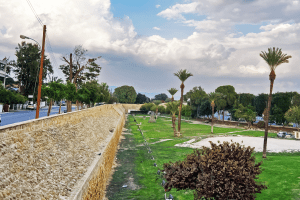
The Venetian Walls of Nicosia form a circular defense system around the capital city of Cyprus. Built between 1567 and 1570 by the Republic of Venice, these Renaissance fortifications remain largely intact and represent one of the best-preserved examples of 16th-century military architecture in the Eastern Mediterranean. voicemap-me The walls create an almost perfect circle around the old city with a circumference of approximately 5 kilometers. This circular shape was innovative for its time and reflected the latest military engineering principles from Renaissance Italy. The design eliminated the weaknesses of medieval fortifications and created a more efficient defensive perimeter that required fewer soldiers to defend. The walls were built primarily from mud brick with the lower sections reinforced with stone.…

Read more
Larnaca Fort Cyprus

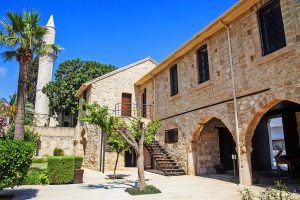
Larnaca Fort Cyprus

Larnaca Fort is a coastal defensive structure that started as a Byzantine fortification and took its current form during Ottoman rule in the 17th century. The fort sits directly on the waterfront at the western edge of one of Cyprus's most popular seaside promenades. Despite its modest size compared to larger Cypriot castles like Kyrenia or Kolossi, the fort played an essential role in protecting Larnaca harbour and the southern coast from pirates and invaders. Today, it houses the Larnaca Medieval Museum and hosts cultural events in its courtyard. shutterstock-com Historical Background Archaeological evidence suggests the Byzantines built a small fortification on this site in the late 12th century. Larnaca, known in ancient times as Kition, had been inhabited since…

Read more
Buffavento Castle Cyprs

Buffavento Castle Cyprs

Buffavento Castle stands at 960 meters above sea level in the Kyrenia mountain range of Cyprus. This medieval fortress is the highest and least preserved of three Byzantine strongholds built along the mountains. The name comes from Italian and means "Defier of the Winds," a fitting description for a castle constantly exposed to mountain winds at this elevation. cycprusfaqs-com The castle sits between St. Hilarion Castle to the west and Kantara Castle to the east, forming a defensive line across the Kyrenia Mountains. All three castles are visible from each other, allowing them to pass signals and warnings. Buffavento guarded the mountain passage from Kythrea to the north coast, controlling movement between the coastal plain and the interior. The location…

Read more
Panagia Chrysopolitissa Basilica Cyprus Heritage Site

Panagia Chrysopolitissa Basilica Cyprus Heritage Site

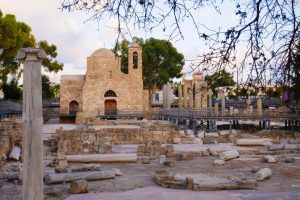
Panagia Chrysopolitissa stands as one of the most significant early Christian sites in Cyprus. This archaeological complex in Kato Paphos preserves the remains of the largest Byzantine basilica ever built on the island, along with one of Christianity's most powerful symbols, St. Paul's Pillar. nashaplaneta-net The Chrysopolitissa site brings together multiple layers of Christian history in one location. The complex includes the ruins of a massive 4th-century Byzantine basilica covering approximately 1,600 square meters, the remains of a 13th-century Franciscan Gothic church, the active stone church of Agia Kyriaki built around 1500 AD, and the famous marble pillar where St. Paul was reportedly flogged. The site combines active worship spaces with archaeological preservation, creating a unique blend of past and…

Read more
Archbishop’s Palace Nicosia Cypriot Orthodoxy Center

Archbishop’s Palace Nicosia Cypriot Orthodoxy Center

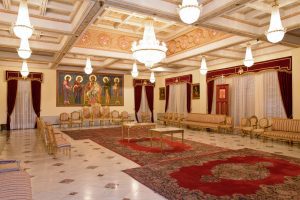
The Archbishop's Palace in Nicosia serves as the official headquarters of the Orthodox Church of Cyprus and the residence of the Archbishop. sciencedirect-com The Archbishop's Palace functions as both the administrative center of the Cypriot Orthodox Church and a major cultural complex. The building houses the offices of the archdiocese, the residence of the Archbishop of Nova Justiniana and All Cyprus, the Byzantine Museum with over 200 icons spanning 1,000 years, the Library of the Archbishopric, and an art gallery displaying European paintings from the 15th to 19th centuries. The palace stands adjacent to the Old Archbishop's Palace, which now contains the Folk Art Museum and the EOKA Struggle Museum. The complex represents the enduring power and influence of the…

Read more