Explore Cyprus with Our Interactive Map

Explore our top stories and discover ideas worth your time.

Circum Troodos White Ring Cyprus Route

Circum Troodos White Ring Cyprus Route

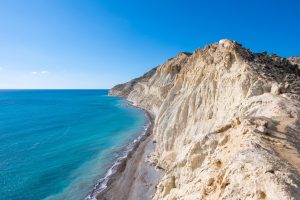
While climbing the high slopes of Troodos we’ve been walking on the frozen machinery of an ancient ocean. But now it’s time to step away from the mountain, slightly change our story and observe what had been happening under the sea, as the Olympus peak was rising into the sky. wikiloc Leaving the cool shade of Platres behind, we approach the wine village of Omodos. The dark volcanic surfaces give way to pale rocks. Chalk breaks easily under your fingers. Hills become rounder. Valleys widen. Vineyards, orchards and white stone villages appear. The geology has shifted from fire to sediment. Encircling the Troodos massif lies a vast geological belt known as the Circum-Troodos Sedimentary Succession. It is the quiet counterpart to the violent ophiolite core. While Troodos itself formed through submarine volcanism deep beneath the Neo-Tethys Ocean, these surrounding rocks were created slowly, grain by grain, as sediments settled on the seabed around the rising mountains. For nearly eighty million years, currents carried shells, clay, volcanic fragments and microscopic marine organisms into the surrounding basin. Layer upon layer accumulated. Over time these sediments hardened into limestones, chalks, marls and sandstones that now form the foothills surrounding the Troodos range. If the ophiolite tells the story of the ocean floor, the Circum-Troodos formations tell the story of the island emerging from…

Read more
Troodos Pine Cedar Forests

Troodos Pine Cedar Forests

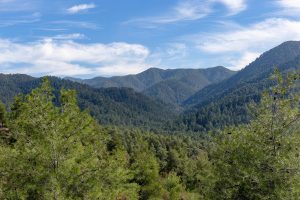
Mediterranean Pine and Cedar Forests (Troodos) consist of high-altitude woodlands in Cyprus's central mountains, featuring endemic tree species that play a crucial role in soil conservation and provide habitats for unique fauna. These forests, dominated by black pine and Cyprus cedar, cover about 18% of the island and support a diverse ecosystem adapted to the Troodos's alpine conditions. They represent a vital natural legacy, where ancient trees anchor the landscape against erosion while sheltering species found nowhere else on Earth. turbinatravels-com A Timeless Woodland in the Highlands The Mediterranean pine and cedar forests of Troodos form a distinctive high-altitude ecosystem, where dense stands of conifers create a canopy that moderates the island's climate and nurtures biodiversity. Rising from 1,200 to 1,952 meters at Mount Olympus, these woodlands transition from lower maquis scrub to pure pine zones, with Cyprus cedar (Cedrus brevifolia) clustered in pockets like the Cedar Valley. The forests' structure—tall pines with understories of endemic shrubs—prevents soil loss on steep slopes, while their roots stabilize the ophiolite soils unique to Troodos. This environment supports over 750 plant species and serves as a refuge for fauna like the mouflon sheep, making it a cornerstone of Cyprus's natural heritage. wikimedia-org The Troodos range, covering 9,200 hectares of forested area, acts as a climatic regulator for the island, capturing moisture from westerly…

Read more

Saint Lazarus of Larnaca – Life, Legend & Legacy

Saint Lazarus of Larnaca – Life, Legend & Legacy

Lazarus of Bethany is one of the most recognized figures in the Bible, and yet most people only know one thing about him: Jesus raised him from the dead. What comes after that is a story that stretches across centuries and continents, and a large part of it takes place on Cyprus. expedia.ie According to Eastern Orthodox tradition, Lazarus did not simply disappear after his resurrection. He fled to the island, became a bishop, lived there for 30 years, and was buried in Larnaca. Today, the city still carries his memory in one of the oldest and most visited churches on the island. Historical Background The Gospel of John tells us that Lazarus was the brother of Mary and Martha, and that all three were close friends of Jesus. When Lazarus fell ill and died, Jesus arrived four days later and brought him back to life. The event was witnessed by a large number of people, and it caused a stir. The chief priests in Jerusalem saw Lazarus as a direct threat to their authority, because his resurrection was convincing more Jews to believe in Jesus. They planned to kill him. wikipedia.org1x According to Eastern Orthodox tradition, Lazarus and his siblings fled Judea to avoid this danger. The Western tradition tells a different version of events, where the three were…

Read more