Explore Cyprus with Our Interactive Map

Explore our top stories and discover ideas worth your time.

Cyprus War Resistance Stories

Cyprus War Resistance Stories

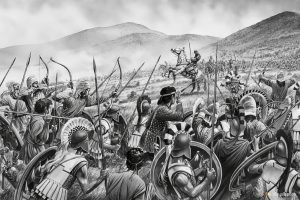
Cyprus has witnessed countless conflicts throughout its 10,000 years of human habitation. The island's position at the crossroads of three continents made it a prize worth fighting for, and its people developed a long tradition of resistance against foreign rule. dzeninfra-ru From ancient sieges to modern independence struggles, Cyprus has been repeatedly conquered, defended, and fought over by armies ranging from Persian emperors to British colonial forces. These conflicts left deep marks on the landscape and shaped the national character of both Greek and Turkish Cypriots who call the island home. Historical Background Cyprus experienced its first major conflicts during the ancient period when Persian forces conquered the island's city kingdoms in the 6th century BC. The Greek population survived Persian rule and later came under Alexander the Great's control, followed by Ptolemaic Egypt and then Rome. Each conquest brought armies, resistance, and sometimes devastation. nano-banana The Arab invasions beginning in 649 AD marked one of the most unusual periods in Cypriot history. Arab forces under Muawiyah I sailed from Alexandria with a large fleet and conquered the capital Salamis-Constantia after a brief siege. During this expedition, Umm-Haram, a relative of the Prophet Muhammad, fell from her mule near Larnaca's Salt Lake and died. She was buried there, and the Hala Sultan Tekke shrine was built in her honor. Arab…

Read more
Salamis Bathhouse Mosaics

Salamis Bathhouse Mosaics

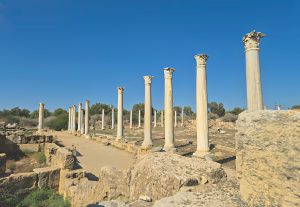
The Salamis bathhouse mosaics show how Roman Cyprus combined leisure, engineering, and civic identity inside one of the island’s most ambitious public complexes. These floors were designed to shape movement and atmosphere, pairing mythic scenes with technical skill, imported materials, and heated rooms that made bathing a daily performance of status. This article explains how the mosaics worked within the bathhouse system, what their imagery signalled, and why their survival still matters for understanding Roman urban life on Cyprus. googleusercontent-com A Capital Built to Be Seen Salamis was not an ordinary provincial town. For long periods, it functioned as the administrative and commercial heart of Cyprus, benefiting from trade routes that linked the Aegean, the Levant, and Egypt. When the city was rebuilt after a devastating earthquake in the first century AD 76/77 and a later insurrection in AD 116, Roman emperors invested heavily in its public architecture. googleusercontent-com The gymnasium and bathhouse complex became one of the most imposing structures in the eastern Mediterranean. Its scale alone communicated status. Wide colonnades, marble-clad halls, and carefully planned water systems transformed bathing into a public performance of Roman order and prosperity. Bathing as a Social Ritual In Roman cities, baths were not private spaces for cleanliness. They were communal environments where physical care, leisure, and social interaction blended into a daily…

Read more

Church of Panagia Podithou Renaissance Cypriot Art

Church of Panagia Podithou Renaissance Cypriot Art

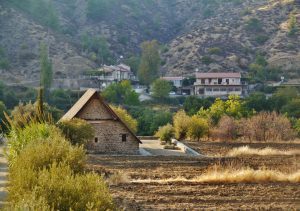
Historical Background and Venetian Context The Church of Panagia Podithou, located near the village of Galata in the Troodos Mountains of Cyprus, is one of the monuments included in the UNESCO World Heritage group known as the Painted Churches of the Troodos Region. Built in 1502, during the period of Venetian rule over Cyprus, the church represents a distinctive moment in the island’s artistic history when Byzantine traditions interacted with Western Renaissance influences. While the building maintains the architectural form typical of Cypriot mountain churches, its wall paintings reveal stylistic changes that reflect exposure to Italian artistic trends. The church stands as a visual document of cultural exchange in the eastern Mediterranean at a time when political authority had shifted but Orthodox religious identity remained strong. wikimedia-org Under Venetian administration, Cyprus became more closely connected to Italian artistic currents, particularly those associated with the Renaissance. Venetian merchants, officials, and clergy moved between Cyprus and the Italian mainland, facilitating the circulation of ideas and artistic models. Despite these influences, Orthodox communities continued to commission church decoration rooted in Byzantine iconographic tradition. Panagia Podithou exemplifies this balance, preserving the theological framework of Orthodox art while incorporating stylistic features inspired by Western painting. The monument therefore illustrates how Cypriot artists and patrons negotiated cultural change without abandoning their spiritual heritage. Architectural Form and…

Read more