Explore Cyprus with Our Interactive Map

Explore our top stories and discover ideas worth your time.

Cyprus Food Festivals

Cyprus Food Festivals

Culinary festivals in Cyprus are not staged food shows or seasonal attractions created for visitors. They are extensions of village life, shaped by agriculture, memory, and the belief that food is meant to be shared. Across the island, festivals dedicated to wine, halloumi, olives, and everyday cooking traditions offer a way to understand Cyprus through participation rather than observation. Food as a Social Language In Cyprus, food festivals usually revolve around a single local product or a small group of related dishes. These events are organised by municipalities, village councils, or community groups, not private promoters. Their purpose is communal before it is celebratory. fastforward-com Recipes, techniques, and rituals that rarely appear in written form are performed publicly, often by people who learned them informally from parents and grandparents. Preparing food together, offering it freely, and eating collectively reinforces the Cypriot idea of hospitality, where sharing food is inseparable from social belonging. Festivals Guided by the Agricultural Calendar The timing of culinary festivals follows the land rather than marketing schedules. Cyprus’s climate supports vineyards, olive groves, dairy farming, and small-scale agriculture, and festivals emerge naturally around moments of harvest and seasonal transition. Spring festivals often highlight fresh produce and early agricultural yields. Summer events reflect abundance and outdoor life, while autumn brings the most significant celebrations, particularly those dedicated to…

Read more

Venetian Fortifications of Cyprus – Coastal Defenses

Venetian Fortifications of Cyprus – Coastal Defenses

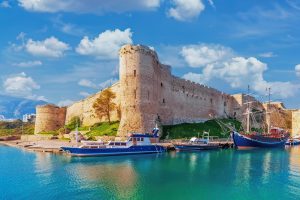
The Venetian fortifications of Cyprus represent some of the most impressive defensive structures built during the Renaissance period. Between 1489 and 1571, the Republic of Venice controlled Cyprus and invested heavily in fortifying three major cities: Nicosia, Famagusta, and Kyrenia. visitnorthcyprus-com These fortifications were designed to protect the island from Ottoman invasion using the latest military engineering techniques of the 16th century. The walls featured pentagonal bastions, thick earthwork ramparts, and deep moats, all adapted for the age of gunpowder artillery. Despite their sophisticated design, these fortifications faced their ultimate test in 1570 when Ottoman forces invaded Cyprus. The siege of Famagusta in particular demonstrated both the strength of Venetian military architecture and the determination of defenders who held out for nearly a year against overwhelming odds. Historical Background Cyprus became a Venetian possession in 1489 when Queen Catherine Cornaro, who had married into the Lusignan royal family of Cyprus, was forced to abdicate and cede the island to Venice. The Republic saw Cyprus primarily as a military base to protect its commercial interests in the Eastern Mediterranean. Venice had been active in Cyprus since around 1000 AD, and the island's location made it valuable for controlling Levantine trade routes. The island also produced profitable cotton and sugar exports. wikipedia-org For decades, Venetian governors emphasized the need for better fortifications,…

Read more
Byzantine Chant in Cypriot Style

Byzantine Chant in Cypriot Style

Byzantine Chant in Cypriot Style is a localized variant of Orthodox liturgical music, characterized by unique melodic phrasing and vocal delivery that distinguish it from mainland traditions. Preserved in monasteries and village churches across the island, it incorporates ancient modes with Cypriot inflections, blending spiritual depth with cultural expression. This form of chant reflects Cyprus's role as a guardian of Byzantine heritage, evoking how sacred sound has shaped devotion for centuries. A Distinct Voice in Orthodox Liturgy Byzantine chant in Cypriot style represents a regional adaptation of the Eastern Orthodox musical tradition, where melodies and rhythms carry theological meaning through voice alone. Developed over centuries in Cyprus's isolated monasteries and rural churches, it features elongated notes, subtle ornamentation, and a nasal timbre that evoke emotion and reverence. This style not only accompanies services but also serves as a cultural anchor, preserving ancient hymnody while incorporating local dialects and rhythms. Its survival highlights Cyprus's position as a crossroads of influences, where Byzantine purity met Mediterranean flavors, creating a chant that feels both timeless and intimately island-bound. Historical Origins and Evolution The roots of Cypriot Byzantine chant trace to the early Christian era, when the island adopted liturgical music from Constantinople around the 4th century AD. Apostles Barnabas and Paul introduced Christianity in the 1st century, as recorded in the Acts of…

Read more