Explore Cyprus with Our Interactive Map

Explore our top stories and discover ideas worth your time.

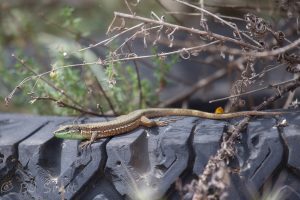
Elusive Guardian Troodos Lizard of Cyprus Peaks

Elusive Guardian Troodos Lizard of Cyprus Peaks

In the rugged heights of Cyprus' Troodos Mountains, a nimble creature darts across sun-warmed rocks, its scales glinting like hidden emeralds. This is the Troodos lizard, Phoenicolacerta troodica, an endemic jewel of the island's wildlife. Let’s explore this shy resident, a survivor of ancient landscapes, and discover why it captivates those who seek it out. A name Phoenicolacerta prefixes the Latin word, Phoenice, meaning "Phoenicia", the coast of the Levant, where most of the species of these lizards are found, with lacerta, "a lizard". The specific name refers to the type locality being in the Troodos Mountains of Cyprus. www.inaturalist.org A Mountain Marvel Emerges The Troodos lizard is a small reptile native only to Cyprus, thriving in the cool, forested slopes of the Troodos range. It's a member of the Lacertidae family, or true lizards, known for agile ground-dwellers, and represents one of the island's unique evolutionary tales. Imagine a lizard perfectly attuned to misty peaks and rocky crevices – that's our subject, a quiet emblem of Cyprus' isolated biodiversity. In Greek it is called Σαύρα του Τροόδους (Saura tou Troodus) which simply means The Troodos lizard. www.inaturalist.org From Ancient Seas to Island Peaks The story of the Troodos lizard begins millions of years ago, when Cyprus emerged from the Mediterranean's turbulent geological past. As the island formed through tectonic…

Read more

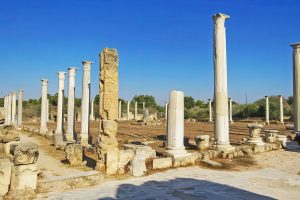
Temple of Zeus Salaminios

Temple of Zeus Salaminios

The Temple of Zeus Salaminios was one of the most important religious monuments of ancient Salamis. Dedicated to Zeus as the supreme god of the Olympian pantheon, it symbolised the city’s Greek identity, political authority, and connection to divine protection. dreamstime-com Through this temple, Salamis expressed its place within the wider Greek world while affirming its own power and prestige. A Temple at the Heart of Salamis The Temple of Zeus Salaminios stood within the great city of Salamis on the eastern coast of Cyprus. As one of the island’s largest and wealthiest cities, Salamis required a religious centre that matched its status. vici-org The choice of Zeus was deliberate. As ruler of gods and men, Zeus represented order, authority, and legitimacy. Worshipping him in monumental form reinforced Salamis’s role as a leading city with strong ties to Greek tradition and values. Zeus as Guardian of the City Zeus Salaminios was not a distant or abstract god. He was believed to actively protect the city, its people, and its rulers. His cult emphasised stability, justice, and continuity, qualities essential for a powerful urban centre. wikipedia-org Rulers and elites used the sanctuary to demonstrate their devotion and to associate their authority with divine approval. Public ceremonies held at the temple reinforced the idea that Salamis thrived under Zeus’s watchful presence. From…

Read more
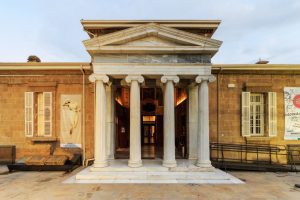
Adaptation of Imported Artistic Techniques

Adaptation of Imported Artistic Techniques

Adaptation of Imported Artistic Techniques in ancient Cyprus involved incorporating styles from regions such as Greece, Egypt, and the Near East, then modifying them to align with local beliefs and values. Rather than exact replication, Cypriot artists infused these elements with distinctive island characteristics, resulting in art that felt authentically Cypriot - unique and rich in significance. This process of selective adaptation transformed external influences into innovative expressions, illustrating how an island on the periphery of empires developed a vibrant creative identity. metmuseum-org A Creative Synthesis at a Mediterranean Crossroads Cypriot art emerged from the island's position as a nexus of cultural exchange, where imported techniques underwent transformation to reflect indigenous perspectives. External styles arrived through trade, migration, and conquest, but artists selectively reshaped them to emphasize themes central to Cypriot life, such as harmony with nature, divine protection, and communal resilience. Pottery, sculptures, and architectural elements bear witness to this blending, where foreign forms gained new meanings tied to the island's spiritual and social fabric. The outcome was a visual language that balanced innovation with tradition, capturing the essence of a society navigating diverse influences while preserving its core identity. ancientcyprus-com The Beginnings of Cultural Adaptation The practice of adapting imported techniques traces back to the Bronze Age around 2500 BC, when Cyprus's copper resources attracted merchants from surrounding…

Read more