Explore Cyprus with Our Interactive Map

Explore our top stories and discover ideas worth your time.

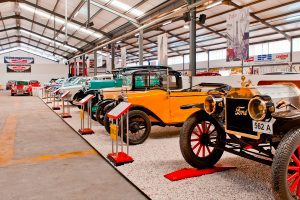
Cyprus Motor Museum Classic Cars Motorcycles

Cyprus Motor Museum Classic Cars Motorcycles

The Cyprus Historic and Classic Motor Museum houses over 240 vintage vehicles in Limassol and stands as the only automotive museum in Cyprus. This collection spans more than a century of motoring history and includes some of the rarest automobiles in the world. en.wikipedia-org Dimi Mavropoulos founded the museum in February 2014 after years of planning. He was born in Limassol in 1949. Mavropoulos became one of Cyprus's most successful rally drivers. By age 20, he had already won numerous local races. He moved to London in 1969 to establish the European office for his family's fruit export business, and during his 30 years there, he competed in 382 rallies across Europe while continuing to race in Cyprus. His racing record speaks for itself. He won the Cyprus Championship multiple times, with his greatest achievement coming in 1990 when he won all seven championship events, including the prestigious Rothmans International Cyprus Rally. This feat remains unmatched. He competed in the Cyprus Rally 30 times and finished in the top three in 28 of them. After retiring from racing, his passion shifted to collecting classic and vintage cars. The idea for the museum came to him in 2000, but it took 14 years of hard work to make it happen. The museum first opened its doors in February 2014, then relocated…

Read more
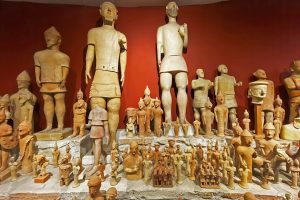
Emphasis on Frontalism and Hieratic Scale

Emphasis on Frontalism and Hieratic Scale

Emphasis on Frontalism and Hieratic Scale in ancient Cypriot art involved depicting figures in direct frontal views, with sizes scaled to reflect spiritual or social significance rather than physical accuracy. This method imbued artworks with a sense of authority and depth, incorporating influences from neighboring cultures to emphasize deities, rulers, or sacred concepts over naturalistic portrayals. The approach created compositions that convey power and divinity through straightforward, impactful forms. A Style Prioritizing Significance Cypriot art from antiquity often avoided precise replication of reality, opting instead for frontalism where subjects face outward directly. Hieratic scale further adjusted proportions, enlarging key elements to denote importance - a deity might dominate over attendants, defying natural dimensions. This was not a limitation but a deliberate strategy to clarify hierarchies, as seen in temple reliefs or vessel decorations, where the format ensured immediate comprehension of narratives. Facebook-com Influences from Surrounding Regions The technique drew from interactions with adjacent civilizations, beginning in the Bronze Age around 3000 BC amid trade with Egypt, the Near East, and Greece. Egyptian art's rigid frontal poses and enlarged rulers influenced Cypriot statues, adopting a formal, unchanging stance. Near Eastern traditions contributed exaggerated scales for monarchs or divinities, while later Greek elements introduced subtle dynamism. As empires like Persia and Rome asserted control, Cypriot adaptations formed a distinctive synthesis aligned with…

Read more

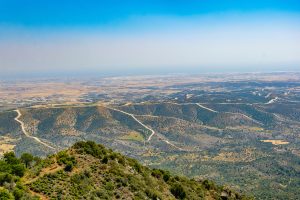
Mount Stavrovouni Cyprus Sacred Mountain

Mount Stavrovouni Cyprus Sacred Mountain

Rising 689 meters above the Mesaoria plain, Mount Stavrovouni has been a sacred site for over 2,000 years. The name derives from two Greek words: stavros (cross) and vouno (mountain), literally meaning "Mountain of the Cross." The monastery follows the strict ascetic rule of Saint Basil and maintains traditions similar to those of Mount Athos in Greece. Adobe-Stock-com The site is recognized as the earliest documented monastery in Cyprus. The oldest written reference appears in Byzantine records from the 4th century and confirms its establishment as a major religious center. A Russian monk named Abbot Daniel visited in 1106 and left detailed accounts of the monastery and its sacred relics in his travel memoirs. The monastery operates as a working religious community with approximately 20 monks dedicated to lifelong ascetic principles. Following Mount Athos traditions, the monastery prohibits women from entering its grounds, though female visitors can access the nearby chapel of Agia Varvara at the mountain's base. Historical Background According to tradition, Saint Helena founded Stavrovouni Monastery between 327 and 329 AD, following her attendance at the First Ecumenical Council of Nicaea in 325 AD. On a pilgrimage to Jerusalem, she discovered the three crosses used in the crucifixion of Jesus and the two thieves, excavated them, and planned to transport them to Constantinople. Adobe-Stock-com On her return to…

Read more