Explore Cyprus with Our Interactive Map

Explore our top stories and discover ideas worth your time.

Fig Tree Bay: Cyprus’s Most Famous Beach

Fig Tree Bay: Cyprus’s Most Famous Beach

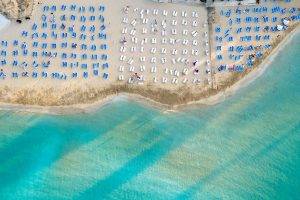
Fig Tree Bay is one of Cyprus’s most recognizable beaches, yet its appeal has never depended on novelty or spectacle. Located in the heart of Protaras on the island’s eastern coast, the bay combines clear, shallow water, soft sand, and a naturally sheltered shape that makes it easy to enjoy without effort. It is popular without feeling overwhelming, developed without feeling artificial, and familiar without becoming dull. This balance explains why Fig Tree Bay continues to attract visitors year after year and why it remains just as important to local life as it is to tourism. Adobe Stock A Beach Defined by Shape, Not Hype At its core, Fig Tree Bay is a gently curved, sandy bay facing the Mediterranean Sea. Unlike long, exposed coastlines, the bay is semi-enclosed by low rocky edges that soften incoming waves and create consistently calm conditions. The shoreline slopes gradually into the sea, allowing people to wade far out before reaching deeper water. Adobe Stock This physical shape is the bay’s greatest asset. It creates a swimming environment that feels predictable and safe rather than dramatic or demanding. The water rarely feels aggressive, and strong currents are uncommon close to shore. These conditions are not accidental they are the result of geography rather than engineering, and they explain why the bay has always been…

Read more
Cyprus Food Festivals

Cyprus Food Festivals

Culinary festivals in Cyprus are not staged food shows or seasonal attractions created for visitors. They are extensions of village life, shaped by agriculture, memory, and the belief that food is meant to be shared. Across the island, festivals dedicated to wine, halloumi, olives, and everyday cooking traditions offer a way to understand Cyprus through participation rather than observation. Food as a Social Language In Cyprus, food festivals usually revolve around a single local product or a small group of related dishes. These events are organised by municipalities, village councils, or community groups, not private promoters. Their purpose is communal before it is celebratory. fastforward-com Recipes, techniques, and rituals that rarely appear in written form are performed publicly, often by people who learned them informally from parents and grandparents. Preparing food together, offering it freely, and eating collectively reinforces the Cypriot idea of hospitality, where sharing food is inseparable from social belonging. Festivals Guided by the Agricultural Calendar The timing of culinary festivals follows the land rather than marketing schedules. Cyprus’s climate supports vineyards, olive groves, dairy farming, and small-scale agriculture, and festivals emerge naturally around moments of harvest and seasonal transition. Spring festivals often highlight fresh produce and early agricultural yields. Summer events reflect abundance and outdoor life, while autumn brings the most significant celebrations, particularly those dedicated to…

Read more

Cyprus Secret Endemic Spurges

Cyprus Secret Endemic Spurges

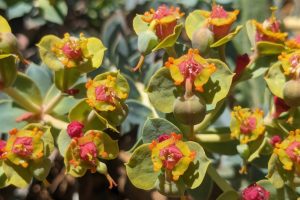
Tucked away in the rugged hills and mountains of Cyprus, two special plants — Euphorbia veneris and Euphorbia lemesiana — bring subtle beauty to rocky spots. These endemic spurges, found nowhere else, whisper stories of ancient gods and recent discoveries. But what makes them thrive in such harsh places, and why are they like hidden treasures waiting to be found? www.inaturalist.org What Are These Tough Little Island Natives? Euphorbia veneris and Euphorbia lemesiana are both small, wild plants from the spurge family, a group known for their milky sap and simple flowers. They're perennials that come back each year, perfectly adapted to Cyprus's dry, sunny landscapes, adding quiet charm to the island's wild corners. How Did These Plants Spring from Cyprus's Mythical and Fiery Past? The Euphorbia genus gets its name from Euphorbus, an ancient Greek doctor around 12 BC, whose name meant "well-fed" — a funny twist since these plants are toxic. Euphorbia veneris honors Venus (Aphrodite), the goddess born from Cyprus's seas, linking it to the island's mythical roots. Described in 1963, it's a nod to Cyprus's geological history from ancient ocean floors pushed up by tectonic forces. Euphorbia lemesiana, named after Limassol (Lemesos), was discovered more recently in 2015 as part of the Eastern Mediterranean spurge group, evolving in isolation amid the island's volcanic past. www.inaturalist.org Picture…

Read more