Explore Cyprus with Our Interactive Map

Explore our top stories and discover ideas worth your time.

The Silvery Sentinels of Cyprus Slopes

The Silvery Sentinels of Cyprus Slopes

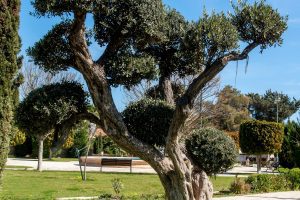
On rocky hillsides and gentle terraces across Cyprus, trees with shimmering silver-green leaves stand like wise elders, their twisted trunks telling stories of centuries under the Mediterranean sun. These are the olive trees, living treasures that have shaped the island’s landscape, diet and culture since the dawn of human settlement here. www.inaturalist.org A Classic Evergreen of the Olive Family Known to science as Olea europaea, the olive belongs to the family Oleaceae within the order Lamiales. In Cyprus it thrives both as the familiar cultivated form in orchards and as the wild oleaster (Olea europaea var. sylvestris), a tougher, smaller-fruited version that grows naturally in maquis and garigue vegetation alongside carob and wild pistachio. www.inaturalist.org Echoes from the Dawn of Cypriot Civilisation Olives have been part of Cyprus since at least the Bronze Age, with ancient pollen records and archaeological finds showing they were already valued for oil and fruit more than 4,000 years ago. Phoenician, Greek and Roman settlers expanded their cultivation, while the wild oleaster formed part of the original maquis shrublands described in 19th-century British forest reports. Over time, centuries of human care turned scattered wild trees into the productive groves that still cloak the island’s lower slopes today. Graceful Form and Enduring Strength The olive is an evergreen tree reaching 8–15 metres, with a short, often…

Read more

Bosea Cypria

Bosea Cypria

High on a sun-bleached limestone cliff in the Akamas or along a rocky gulley near Paphos, you might spot a graceful evergreen shrub with deep-green leaves cascading like a living curtain. In late summer its branches glow with clusters of bright red berries that shine like tiny rubies against the rock. This is Bosea cypria, a quiet but extraordinary survivor that has clung to the island’s rugged edges for millions of years. www.inaturalist.org An Ancient Shrub from the Amaranth Family Bosea cypria belongs to the Amaranthaceae family – the same group that gives us spinach, beetroot and colourful garden amaranths. Unlike most of its relatives, which are soft-stemmed herbs, this species is a woody evergreen shrub, one of only three living members of the genus Bosea worldwide. In Cyprus it grows 1–2 metres tall, highly branched, often pendulous, seeming to drape dramatically from cliffs, old stone walls or even tree trunks. A Living Fossil from the Ancient Tethys Sea This plant is a true botanical relic. Its ancestors once grew along the shores of the vast Tethys Sea during the Tertiary period, long before the Mediterranean took its present form. As continents drifted and the sea shrank, most Bosea species disappeared; today only three remain — one in Cyprus, one in the Canary Islands and one in the north-west Himalayas.…

Read more
Bishop Epiphanius of Salamis

Bishop Epiphanius of Salamis

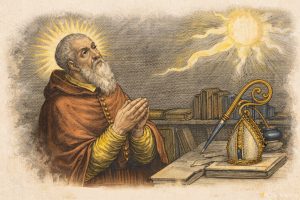
Epiphanius of Salamis stands as one of the most learned figures of the early Christian church. Born between 310 and 320 AD near Eleutheropolis in Palestine, he came from a Jewish background and converted to Christianity in his youth. ai-generated The event that sparked his conversion was witnessing a monk named Lucian give away his clothing to a poor person. This act of compassion moved Epiphanius to seek instruction in the Christian faith, setting him on a path that would make him one of the most influential church leaders of the fourth century. After his conversion, Epiphanius joined a monastery in Egypt where he studied under the guidance of Saint Hilarion the Great. His time in Egypt proved formative, exposing him to various religious movements and teaching him the monastic discipline that would shape his entire life. He returned to Palestine around 333 AD and founded his own monastery near his birthplace, where he served as abbot for approximately thirty years before being called to higher service. From Monastery to Metropolitan During his three decades as a monastery superior, Epiphanius gained an extraordinary reputation for scholarship and ascetic discipline. He mastered an impressive array of languages, including Hebrew, Syriac, Egyptian, Greek, and Latin. This linguistic skill earned him the nickname "Pentaglossos" or "Five-tongued" from his contemporary Jerome. His ability to…

Read more