Explore Cyprus with Our Interactive Map

Explore our top stories and discover ideas worth your time.

Phaneromeni Necropolis Larnaca History Facts

Phaneromeni Necropolis Larnaca History Facts

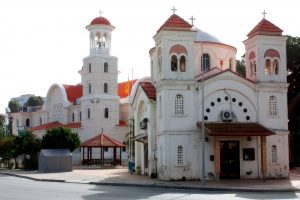
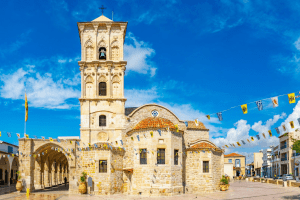
Beneath the streets and churches of modern Larnaca lies a network of ancient tombs that gave the city its name. The Phaneromeni necropolis represents a vast burial ground used for over 1,500 years, from the Late Bronze Age through the Phoenician and Hellenistic periods, preserving layers of history beneath one of Cyprus's oldest continuously inhabited cities. in-cyprus.philenews.com The name Larnaca comes from the ancient Greek word larnax, meaning sarcophagus or stone coffin. This etymology directly reflects the thousands of tombs and burial chests discovered throughout the city. An American consul in the late 19th century claimed to have explored more than 3,000 tombs in the Larnaca area, and archaeological work continues to uncover more burial sites with each new construction project. A Tomb That Became a Church The Catacomb of Phaneromeni Church sits next to the old Panagia Phaneromeni Church, about 7 meters from the east wall of the church building. This rock-cut tomb consists of two chambers connected by a corridor, carved entirely from natural rock. The structure suggests it originally served as a pagan burial site during Phoenician times, possibly as early as 1200 BCE based on the architecture. cyprusisland.net1 The catacomb was discovered in 1870 and was officially dated to the 8th century CE based on its use as a Christian burial site and place of worship.…

Read more
Tips of Settling in Cyprus – Settle Smoothly

Tips of Settling in Cyprus – Settle Smoothly

Moving to a new country brings excitement mixed with practical challenges. Cyprus welcomes thousands of newcomers annually, from retirees seeking Mediterranean sunshine to professionals building international careers. The island nation offers a comfortable climate with over 320 sunny days yearly, affordable living costs compared to Western Europe, and a welcoming expat community. Shutterstock-com English speakers find integration particularly smooth, as the language remains widely spoken due to Cyprus's British colonial history lasting until 1960. Understanding the essential steps before arrival transforms what could be an overwhelming process into a manageable transition. This guide covers the practical elements of settling in Cyprus successfully. Finding Housing That Fits Your Budget Housing costs vary dramatically by location and proximity to coastlines. Limassol and Nicosia command the highest rents, with one-bedroom city center apartments ranging from €700 to €1,500 monthly. Paphos and Larnaca offer more affordable options at €400-700 for similar accommodations. Mountain villages and inland areas provide the lowest costs, with properties sometimes available under €400 monthly. Shutterstock-com Purchase prices follow similar patterns. Coastal properties in tourist zones cost €3,000-5,000 per square meter, while inland locations range from €1,300-2,500. Property buyers must account for additional expenses including VAT (5-19% depending on property type and value), stamp duty (0.15-0.2%), and transaction fees (1%). Non-EU buyers require Council of Ministers approval, though this rarely causes…

Read more
Panigyria Cyprus Villages

Panigyria Cyprus Villages

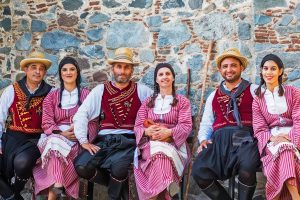
Across Cyprus, every village has at least one night each year when the roads feel a little busier, the air smells faintly of smoke and grilled meat, and familiar voices reappear as if they never left. The panigyri, the traditional village festival, is that moment: a lived ritual shaped by faith, agriculture, and the island’s instinct for togetherness, turning quiet communities into crowded, luminous meeting places where memory and belonging become tangible again. A Gathering of Everyone The word panigyri carries its meaning in its roots. It comes from the ancient Greek panēguris, built from pan (“all”) and agora (“gathering” or “marketplace”), and it points to an older world where people came together for religious, political, and cultural life in the same shared space. In Cyprus, that idea endured through centuries of change and settled into the calendar as the central annual pulse of village life. cyprus-mail-com Today, a panigyri usually marks a patron saint’s feast day or aligns with a seasonal moment tied to harvest and local rhythm, which is why it often feels both sacred and grounded, elevated and practical at the same time. It blends devotion with celebration, turning the village square into a social arena where residents, visitors, and returning diaspora find each other again, sometimes after years, sometimes after a single season away. What makes…

Read more