Explore Cyprus with Our Interactive Map

Explore our top stories and discover ideas worth your time.

Akamas Peninsula National Park Cyprus Nature Reserve

Akamas Peninsula National Park Cyprus Nature Reserve

Akamas Peninsula National Park occupies the northwestern tip of Cyprus, beginning just north of Paphos and extending to Cape Arnaoutis. The landscape varies from golden beaches and dramatic coastal cliffs to arid plains covered in Mediterranean scrub and mountain forests of pine and juniper. shutterstock-com Deep gorges carved by seasonal rivers cut through the limestone terrain. No paved roads cross the interior, and most of the peninsula remains uninhabited. The area takes its name from Akamas, a son of the mythological hero Theseus, who supposedly founded the ancient city of Soli after fighting in the Trojan War. Historical Background Until the year 2000, the British military used Akamas for training exercises and as a firing range. Under the 1960 Treaty of Establishment, the British Army was allowed to use the peninsula for up to 70 days each year. The military presence actually helped preserve the area by preventing development. When the British withdrew, conservation groups and the Cyprus government began the long process of establishing protected status. visitcyprus-com In preparation for Cyprus joining the European Union, most of Akamas received designation under the Natura 2000 network between 2003 and 2009. Two turtle nesting beaches became Sites of Community Importance. The Polis-Gialia area received status as a Special Area of Conservation. The entire peninsula was designated a Special Protection Area for…

Read more
The Cyprus Tulip (Tulipa cypria)

The Cyprus Tulip (Tulipa cypria)

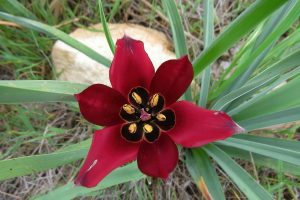
Among the many wildflowers that brighten Cyprus in spring, few capture the imagination quite like the Cyprus Tulip. This rare beauty, found nowhere else in the world, emerges each year with its deep, velvety petals – often appearing almost black against the sunny landscape. Spotting one in the wild feels like uncovering a small treasure hidden on the island. www.inaturalist.org How does it look like and where it grows The Cyprus Tulip, or Tulipa cypria, is a perennial bulbous plant that belongs to the lily family. There are three species of tulips on the island – Tulipa cypria, Tulipa akamasica and the parent specie of which both endemics originated – Tulipa agenensis. Tulipa cypria has been part of Cyprus’s flora for around 5 million of years, shaped by the island’s isolated geography into a separate specie during last Glacial cycles. It grows in Juniperus phoenicea maquis, pastures and cereal fields on limestone. The plant grows 15–40 cm tall, usually with four smooth, fleshy slightly bluish-green leaves, two at the base which are larger and lanceolate, and the two upper leaves which are much smaller and almost linear. Petals are deep blood-red colour with distinctive internal black blotch bordered by a yellow zone, earning the plant its nickname as the “black tulip” of Cyprus – a rare trait that makes it…

Read more
Halloumi and Festival Foods of Cyprus

Halloumi and Festival Foods of Cyprus

Cyprus is a culinary treasure trove where traditional flavors meet modern tastes, and nowhere is this more evident than in its cheese and festival foods. Halloumi, the island’s most famous export, embodies the island’s culture, history, and social life. Beyond its grillable texture and unique flavor, halloumi represents centuries of agricultural tradition, village cooperatives, and community heritage. In-Cyprus Cyprus’s festival foods, from grape harvest sweets to carnival pastries, highlight seasonal cycles, religious celebrations, and communal joy. For locals and visitors alike, tasting halloumi with a slice of watermelon, sampling fresh loukoumades, or savoring grape must treats is a journey into the island’s heart. These foods are not just meals, they are symbols of hospitality, identity, and Cypriot tradition. Halloumi - Cyprus’s Culinary Icon Halloumi is a semi-hard, white cheese with a high melting point, allowing it to be fried or grilled without losing shape. In 2021, it received Protected Designation of Origin (PDO) status, meaning only cheese produced in Cyprus according to traditional methods can bear the name “halloumi.” Traditionally made from goat and sheep milk, PDO regulations require at least 25% of these milks during peak seasons, increasing annually to reach 50% by 2029. Modern production sometimes incorporates cow’s milk, especially for export, but true Cypriot halloumi remains rooted in traditional dairy practices. Wikipedia-Com Interestingly, Cypriots enjoy halloumi in…

Read more