Explore Cyprus with Our Interactive Map

Explore our top stories and discover ideas worth your time.

Ancient Kourion Cyprus – Cliff Top City of Antiquity

Ancient Kourion Cyprus – Cliff Top City of Antiquity

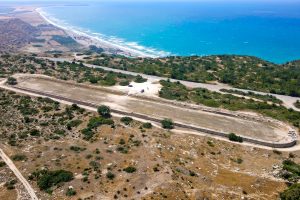
Ancient Kourion sits on a limestone cliff nearly 100 meters high along the southwestern coast of Cyprus, overlooking Episkopi Bay. The site was first inhabited during Neolithic times, with the earliest evidence dating back to 4,500 to 3,900 BC, but the town itself was founded in the 13th century BC by the Argives. orangecyprushome.com The city-kingdom was built on the hills of the area and overlooked and controlled the fertile valley of the river Kouris. Archaeological finds suggest that Kourion was associated with the Greek legend of Argos of Peloponnese, and its inhabitants believed they were descendants of Argean immigrants. The site stands as one of Cyprus's most impressive archaeological areas, preserving remains that span from the Bronze Age through the Byzantine period. The ruins tell stories of prosperity, political intrigue, natural disaster, and religious transformation. Historical Background According to Herodotus, Kourion was founded by Argives in the Late Bronze Age and was named for Koureus, the son of Cinyras, the first king of Cyprus. The Assyrian kings Sargon II and Esarhaddon mentioned Damasu, king of Kuri, in their records. During the Cypriot uprising against Persia in the 5th century BC, its king Stasanor betrayed his country, lending his support and troops to the Persians. However, Kourion later supported Alexander the Great's fight against the Persians in the 4th century…

Read more

Teucer and Salamis Legends Cyprus

Teucer and Salamis Legends Cyprus

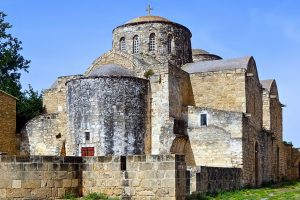
The legend of Teucer and the founding of Salamis stands as one of Cyprus's most enduring foundation myths. This tale connects the island to the world of Greek epic poetry and the aftermath of the Trojan War. Teucer, a legendary archer and warrior, supposedly established the city of Salamis on Cyprus's eastern coast around 1200 BC. visitncy-com The story interweaves tragedy, exile, and renewal. According to ancient sources, Teucer arrived on Cyprus after being banished from his homeland by his father. He brought with him followers from Greece and founded a new city bearing his homeland's name. This myth shaped Salamis's identity for over a millennium and influenced how ancient Cypriots understood their Greek cultural connections. Whether based on historical events or purely mythological, the legend of Teucer became central to how the people of Salamis viewed themselves. The tale provided the city with prestigious origins linked to famous Homeric heroes. Archaeological evidence suggests some truth behind the myths, showing Greek settlement patterns that align roughly with the legendary timeframe. From Trojan War to Cypriot Shores Teucer's story begins in Homer's Iliad, where he appears as the son of King Telamon of Salamis island and his second wife Hesione, daughter of Troy's King Laomedon. Through his mother, Teucer was nephew to King Priam of Troy and cousin to the famous…

Read more
British Colonial Cyprus

British Colonial Cyprus

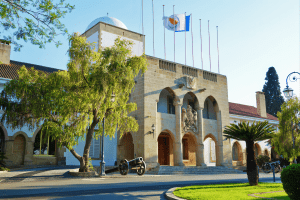
British colonial architecture in Cyprus reflects 82 years of British rule from 1878 to 1960. Unlike other colonies where British builders copied English designs directly, architecture in Cyprus followed a different path. British planners created a local style that combined European ideas with Cypriot building traditions. shutterstock-com During this period, around 700 colonial buildings were constructed across the island. These included government offices, hospitals, post offices, courthouses, schools, and police stations. Most of these buildings were planned and built by the Public Works Department, which employed architects and engineers from Britain, other British territories, and Cyprus. Historical Background Cyprus came under British control in 1878 when the Ottoman Empire leased the island to Britain. At that time, the island was economically weak. Most towns and villages had an appearance closer to Middle Eastern settlements than European cities. tripadvisor-com The contrast between Cyprus and Britain was clear. Britain was a major industrial power with global influence, while Cyprus remained largely rural. When World War I began and the Ottoman Empire joined Germany, Britain canceled the lease and formally annexed Cyprus in 1914. In 1925, Cyprus became an official crown colony. This change marked a turning point in British construction policy. Early colonial buildings were simple and practical, showing Britain’s limited interest in long term investment. After full colonial status was established,…

Read more