Explore Cyprus with Our Interactive Map

Explore our top stories and discover ideas worth your time.

Cyprus Railway Museum Evrychou History Facts

Cyprus Railway Museum Evrychou History Facts

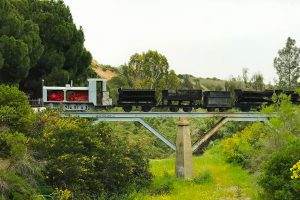
The museum occupies the original Evrychou railway station, a sandstone building constructed in 1906 in the foothills of the Troodos Mountains. The station operated as the western terminus of the Cyprus Government Railway from June 14, 1915, until December 31, 1931, when the final five miles of the railway were abandoned due to financial losses. atlasobscura-com After the railway closed completely in 1951, the building served various purposes, first as a health center and later as a forest workers' dormitory. EOKA fighters damaged and burned the building during their campaign against British rule, as the railway represented colonial infrastructure. The Department of Antiquities restored the station between 2003 and 2012, with new tracks laid in 2010 to 2012 in a Y-shape formation covering about 100 meters. The museum officially opened in September 2016, becoming Cyprus's only railway museum. British expats and local railway enthusiasts contributed significantly to the museum's development, and their contributions are acknowledged in the entrance hall. Historical Background The Cyprus Government Railway operated from October 21, 1905, to December 31, 1951, covering 76 miles across the island. British High Commissioner Sir Garnet Wolseley proposed building a railway when Britain took control of Cyprus in 1878, but uncertainty about how long Britain would govern the island delayed the project for decades. Frederick Shelford submitted a feasibility study on…

Read more

Troodos Mineral Springs

Troodos Mineral Springs

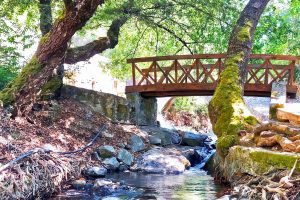
Deep in the Troodos Mountains, sulfur-rich waters rise from ancient rock, just as they have for thousands of years. These mineral springs have drawn healers, pilgrims, and travelers since antiquity. The most famous flows in Kalopanayiotis village, where thermal waters meet the Setrachos River beside a centuries-old Venetian bridge. shutterstock-com Mineral springs produce water containing dissolved substances that alter its taste and give it therapeutic value. Salts, sulfur compounds, and gases dissolve into the water during its underground passage. The springs in Cyprus are particularly rich in sulfur, with additional minerals including magnesium and calcium. Water temperature at these springs varies from pleasantly warm to quite hot. The therapeutic minerals become concentrated as groundwater moves through rock formations deep underground. When pressure builds, the heated, mineral-laden water finds paths to the surface through cracks and faults in the bedrock. The Troodos ophiolite system, formed approximately 90 million years ago during the Upper Cretaceous period, provides the geological foundation for these springs. This ophiolite represents a fragment of ancient ocean floor pushed upward by tectonic forces. As water circulates through these volcanic rocks, it collects the minerals that give the springs their healing properties. From Ancient Temples to Christian Monasteries The Kingdom of Solon controlled the Marathasa area in ancient times. Kings used the sulfur springs as their wellness resort, combining…

Read more
Deneia Necropolis Cyprus Bronze Age Site

Deneia Necropolis Cyprus Bronze Age Site

Just southeast of the modern village of Deneia in the Nicosia district lies one of Cyprus's most significant Bronze Age burial grounds. This ancient necropolis contains over 1,250 tombs that document nearly a thousand years of funerary practice, from approximately 2500 BCE through 1650 BCE, making it among the most extensively used cemeteries in prehistoric Cyprus. cyprusisland.net The Deneia necropolis represents an extraordinary concentration of chamber tombs carved into natural rock during the Early and Middle Bronze Age periods. Unlike many smaller cemeteries scattered across Cyprus that served individual villages, Deneia appears to have functioned as a regional burial ground that drew communities from a wider area. The tombs follow the standard Bronze Age design, with a dromos or entrance passage leading down to one or more roughly circular burial chambers. These chambers typically held multiple interments as families reopened tombs over generations to add new dead. Grave goods found at the site include red-polished pottery, copper tools and weapons, jewelry made from gold and precious stones, and clay figurines. Historical Background The people who used this cemetery lived during a critical transformation in Cypriot history. Around 2500 BCE, newcomers from Anatolia introduced new pottery styles and burial customs to Cyprus. These immigrants are identified by archaeologists as the Philia Culture, and they brought with them the knowledge to exploit…

Read more