Explore Cyprus with Our Interactive Map

Explore our top stories and discover ideas worth your time.

Larnaca Fort Cyprus

Larnaca Fort Cyprus

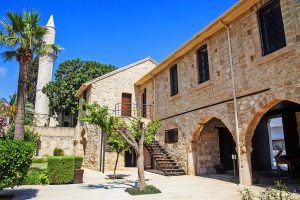
Larnaca Fort is a coastal defensive structure that started as a Byzantine fortification and took its current form during Ottoman rule in the 17th century. The fort sits directly on the waterfront at the western edge of one of Cyprus's most popular seaside promenades. Despite its modest size compared to larger Cypriot castles like Kyrenia or Kolossi, the fort played an essential role in protecting Larnaca harbour and the southern coast from pirates and invaders. Today, it houses the Larnaca Medieval Museum and hosts cultural events in its courtyard. shutterstock-com Historical Background Archaeological evidence suggests the Byzantines built a small fortification on this site in the late 12th century. Larnaca, known in ancient times as Kition, had been inhabited since the 14th century BC. The medieval fort became necessary when the Genoese captured Famagusta, Cyprus's main port, in 1373. This forced the Lusignan Kingdom of Cyprus to develop Larnaca as an alternative major port. larnakaregion-com According to medieval chronicler Florius Boustronius, King James I of Cyprus ordered the expansion of the Byzantine fortification into a more substantial castle between 1382 and 1398. The castle's primary purpose was to defend the harbour and protect the increasingly important port town. During this period, Larnaca transformed from a minor coastal settlement into one of the kingdom's principal trading centers, making coastal defenses critical…

Read more

Saint Barnabas Early Christian Missionary Cyprus

Saint Barnabas Early Christian Missionary Cyprus

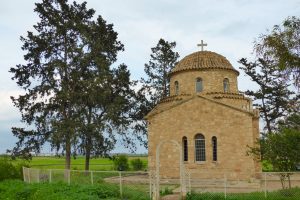
Near the ruins of ancient Salamis, a monastery complex marks the spot where one of Christianity's first apostles was buried in secret after being martyred for his faith. Saint Barnabas was a native of Cyprus who joined Paul on missionary journeys that brought Christianity to the island and converted its Roman governor. His discovery in a tomb 400 years after his death would change the course of Cypriot church history and establish the Orthodox Church of Cyprus as an independent institution. shutterstock-com Barnabas holds a unique position in Christian history as the apostle who validated Paul's conversion and introduced him to the Christian community in Jerusalem. According to the Acts of the Apostles, Barnabas sold his property near Jerusalem and donated the proceeds to the early church, demonstrating his complete dedication to the new faith. He is considered the patron saint of Cyprus and is commemorated on June 11th in the Orthodox calendar. Historical Background Barnabas traveled to Jerusalem to study law under Rabbi Gamaliel, the same teacher who instructed Paul. While studying in Jerusalem, Barnabas witnessed miracles performed by Jesus and became one of His followers. When Paul (then called Saul) returned to Jerusalem after his dramatic conversion on the road to Damascus, the Christian community was understandably suspicious of the former persecutor of Christians. Barnabas played a crucial…

Read more
Ayia Napa Sea Caves Rock Formations Waters

Ayia Napa Sea Caves Rock Formations Waters

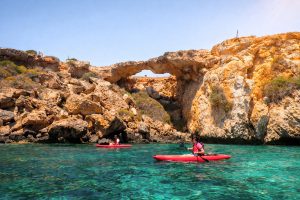
The Ayia Napa Sea Caves represent one of Cyprus's most photographed coastal features. Located just outside the resort town, these caves attract visitors year-round with their combination of geological beauty and recreational opportunities. shutterstock-com The sea caves form part of the rugged coastline around Cape Greco National Forest Park, positioned between Ayia Napa and Protaras on the southeastern edge of Cyprus. The caves themselves are carved into limestone cliffs that rise 6 to 12 meters above the sea. Some caves extend up to 80 meters into the rock. The area marks the western boundary of the 385-hectare Cape Greco National Forest Park, designated as protected land in 1993. Historical Background The formation of these caves demonstrates basic geological erosion over thousands of years. The cliffs consist of layered limestone, with each layer having different hardness levels. The middle layer is softer limestone that erodes more easily when waves crash against it repeatedly. The upper layer, made of harder rock, resists erosion better and creates a protective cap over the caves. This prevents collapse while the waves continue hollowing out the softer material underneath. The lowest layer, also harder, forms a natural platform or ledge several meters wide. tripadvisor-com Because the layers are not perfectly horizontal, parts of this ledge sit underwater while other sections remain dry. The irregular erosion patterns…

Read more