Explore Cyprus with Our Interactive Map

Explore our top stories and discover ideas worth your time.

Cape Greco National Forest Park

Cape Greco National Forest Park

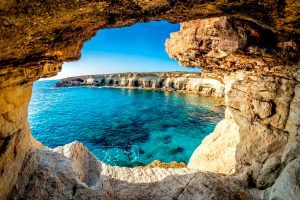
Cape Greco National Forest Park occupies 385 hectares on a rocky promontory at the southeastern tip of Cyprus, nestled between the resorts of Ayia Napa and Protaras. The park was designated as a National Forest Park in 1993 to protect this area of unspoiled natural beauty. The broader Natura 2000 site encompasses 1,876 hectares, including 915 hectares of terrestrial area and 961 hectares of marine zones. tripbucket.com The dramatic limestone cliffs rise 30 feet above turquoise Mediterranean waters, creating spectacular coastal scenery. Sea caves carved by thousands of years of wave action punctuate the coastline, while natural rock arches frame views of the endless blue horizon. The park combines hiking trails, cycling paths, endemic plant species, and coastal beauty in a relatively compact area. Visitors experience Cyprus at its wildest and most beautiful, with pine scented paths overlooking crystal clear waters. The lost juniper forest and current vegetation Cape Greco was originally covered by a dense juniper forest that gave the area its distinctive character. Between 1910 and 1920, these trees were rapidly cut down and burned to power steam flour mills that operated in abundance in the Paralimni area. Since then the slow growing juniper has never fully recovered, though scattered specimens still survive alongside varieties of pine. tripbucket.com Today the vegetation consists mostly of sparse low level growth,…

Read more
Daily Life in Cyprus

Daily Life in Cyprus

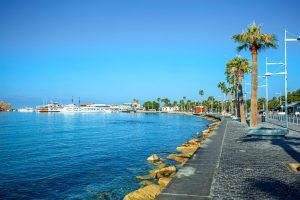
Cyprus life revolves around the Mediterranean Sea and the simple pleasure of walking. The island's 650 kilometers of coastline and 326 days of annual sunshine create perfect conditions for daily seaside visits that locals consider essential rather than optional. In-Cyprus-com Walking serves multiple purposes in Cypriot culture, from exercise and social connection to mental relaxation and community participation. The coastal promenades and beaches function as outdoor living rooms where families gather, friends meet, and strangers become acquaintances through repeated casual encounters. The History of Coastal Walking Traditions The tradition of evening coastal walks, known as the volta, traces back to ancient Greek and Roman practices of gathering in public spaces. During Byzantine times, promenades along harbor areas served as meeting points for merchants, fishermen, and community members. The Ottoman period introduced coffee culture that complemented these walking traditions, creating social patterns that persist today. British colonial rule added formal promenade design to coastal cities, particularly in Limassol and Larnaca where waterfront development emphasized public access. In-Cyprus-com The modern promenade culture emerged after Cyprus's independence in 1960, when cities began investing in coastal infrastructure. The Paphos promenade development connected the medieval harbor with archaeological sites, while Limassol created the Molos, a palm-lined waterfront park that opened in 2014. These projects reclaimed seafronts for public use after decades of commercial and industrial…

Read more
Young Cypriots Rap About Life Today

Young Cypriots Rap About Life Today

Rap and hip-hop in Cyprus are not about imitation. For many young Cypriots, they have become one of the clearest ways to talk about pressure, identity, frustration, and belonging on a small island shaped by global culture and local tension. What sounds like music often functions as a public conversation, direct, emotional, and grounded in everyday experience. Through rhythm and dialect, young artists are documenting modern Cyprus as it is lived, not as it is marketed. stock-adobe-com A voice that arrived quietly, then stayed Hip-hop began to gain a foothold in Cyprus in the late 1990s, arriving without fanfare and often without understanding. At first, it lived on the margins of youth culture, overshadowed by rock, metal, and mainstream pop scenes that leaned heavily on English or formal Greek. Early attempts often sounded borrowed, more like echoes of elsewhere than expressions of home. That changed gradually. As artists became more confident and more rooted, the music stopped trying to sound foreign. It began to absorb the island itself. The turning point came when recording tools became cheaper and online platforms removed the need for approval from radio stations or labels. Bedrooms became studios. Uploads replaced auditions. Rap did not need permission anymore, and once that barrier disappeared, honesty followed. Why rap works so well in Cyprus Rap is flexible by…

Read more