Explore Cyprus with Our Interactive Map

Explore our top stories and discover ideas worth your time.

Nea Paphos Archaeological Park Roman Mosaics

Nea Paphos Archaeological Park Roman Mosaics

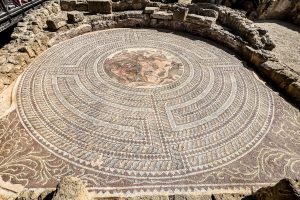
Nea Paphos Archaeological Park preserves the heart of an ancient city that served as the capital of Cyprus for over 600 years. Located on the southwestern coast near modern Paphos, this UNESCO World Heritage Site contains some of the finest Roman mosaics in the eastern Mediterranean, alongside temples, fortresses, and the remains of a once-thriving urban center. Adobe-Stock-com Historical Background Nea Paphos was founded in the late 4th century BC by Nikokles, the last king of Palaipaphos (Old Paphos), about 10 kilometers inland. The new coastal location offered better harbor access and strategic advantages for trade across the Mediterranean. When Ptolemy I of Egypt took control of Cyprus in 294 BC, he made Nea Paphos the island's administrative capital, a status it maintained through the Ptolemaic, Roman, and early Byzantine periods. Adobe-Stock-com The city reached its peak during Roman rule, from 58 BC onward. As the seat of the Roman proconsul, Nea Paphos became a wealthy urban center with impressive public works and luxurious private homes. According to the Acts of the Apostles, Paul the Apostle visited the city in 45 AD and converted the Roman proconsul Sergius Paulus to Christianity. It makes Cyprus one of the first Roman territories to have a Christian governor. The city suffered severe damage from earthquakes in the 4th century AD, particularly the devastating…

Read more

Circum Troodos White Ring Cyprus Route

Circum Troodos White Ring Cyprus Route

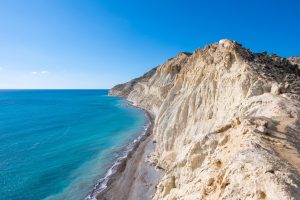
While climbing the high slopes of Troodos we’ve been walking on the frozen machinery of an ancient ocean. But now it’s time to step away from the mountain, slightly change our story and observe what had been happening under the sea, as the Olympus peak was rising into the sky. wikiloc Leaving the cool shade of Platres behind, we approach the wine village of Omodos. The dark volcanic surfaces give way to pale rocks. Chalk breaks easily under your fingers. Hills become rounder. Valleys widen. Vineyards, orchards and white stone villages appear. The geology has shifted from fire to sediment. Encircling the Troodos massif lies a vast geological belt known as the Circum-Troodos Sedimentary Succession. It is the quiet counterpart to the violent ophiolite core. While Troodos itself formed through submarine volcanism deep beneath the Neo-Tethys Ocean, these surrounding rocks were created slowly, grain by grain, as sediments settled on the seabed around the rising mountains. For nearly eighty million years, currents carried shells, clay, volcanic fragments and microscopic marine organisms into the surrounding basin. Layer upon layer accumulated. Over time these sediments hardened into limestones, chalks, marls and sandstones that now form the foothills surrounding the Troodos range. If the ophiolite tells the story of the ocean floor, the Circum-Troodos formations tell the story of the island emerging from…

Read more
Church of Stavros tou Agiasmati Wall Painting

Church of Stavros tou Agiasmati Wall Painting

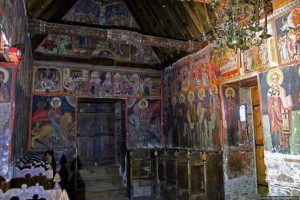
Historical Background and Regional Context The Church of Stavros tou Agiasmati, situated in the Troodos Mountains near the village of Platanistasa, is one of the monuments included in the UNESCO World Heritage group known as the Painted Churches of the Troodos Region. Dating to the late 15th century, the church represents a mature phase of Cypriot ecclesiastical art during a period of political change and cultural interaction. Its decoration is attributed to the painter Philip Goul, a master whose work reflects the continued vitality of Orthodox artistic traditions under Venetian rule. The church’s importance lies in the completeness and narrative richness of its fresco cycle, which preserves a vivid visual expression of late medieval theology and devotion. ayda-ru During the 15th century, Cyprus stood at a crossroads between Byzantine heritage and Western influence. Although the island was under Venetian administration, Orthodox communities maintained their religious and artistic traditions. Stavros tou Agiasmati embodies this continuity, demonstrating that rural mountain churches remained centers of creative expression and theological instruction. Its remote location contributed to the preservation of its paintings, allowing modern viewers to experience a nearly intact example of late medieval Cypriot religious art. Architectural Form and Environmental Adaptation Architecturally, the church follows the characteristic Troodos mountain type: a small, single-aisled structure built of local stone and covered by a steeply pitched…

Read more