Explore Cyprus with Our Interactive Map

Explore our top stories and discover ideas worth your time.

Cyprus International Music Festivals Sound Stone Identity

Cyprus International Music Festivals Sound Stone Identity

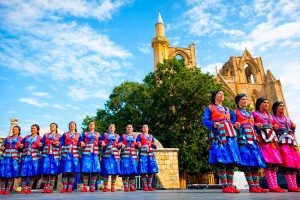
Cyprus hosts a small but distinctive network of international music festivals that unfold across ancient theatres, medieval abbeys, and open Mediterranean landscapes. Rather than existing as isolated events, these festivals reflect how the island uses music to connect heritage, geography, and contemporary cultural life. This article explains how Cyprus’s major international music festivals developed, why their venues matter as much as the performances, and how they continue to shape the island’s cultural identity today. cyprusholidayadvisor-com Music Festivals as Cultural Bridges Cyprus sits at the crossroads of Europe, the Middle East, and the Eastern Mediterranean, and its music festivals mirror that position. From classical chamber concerts to jazz, opera, and cross-genre experimentation, festival programming is deliberately international in scope. Rather than focusing on a single musical tradition, Cyprus’s festivals operate as cultural bridges. They bring together artists from Europe, the Middle East, and beyond, often in places shaped by centuries of layered history. Music becomes a neutral language in spaces once defined by empire, religion, or conflict. The Core Festivals That Define the Scene Several institutions form the backbone of Cyprus’s international music calendar. In the Turkish-occupied area, the so-called “International Music Festival”, held illegally by the Turkish authorities, has grown into a long-running annual event, typically held in early autumn. Organised by the so-called “Northern Cyprus Musical Association”, it features…

Read more

Cyprus Woodland Areas Pine Cedar Dominance

Cyprus Woodland Areas Pine Cedar Dominance

Cyprus stands as the third-largest island in the Mediterranean Sea, covering 9,251 square kilometers of diverse landscapes. The island's woodlands represent roughly 19 percent of its total land cover, a significant portion that plays a vital role in carbon storage, oxygen production, and temperature regulation. These forests divide into distinct zones based on altitude, climate, and soil composition, with coniferous species dominating the higher elevations and mixed Mediterranean vegetation covering the lowlands. chooseyourcyprus.com The Mountain Ranges and Their Forests The Troodos Mountains rise in the southwest, with Mount Olympus (also called Chionistra) reaching 1,952 meters at its peak. The Kyrenia Mountains stretch along the northeastern coast, forming a lower but equally important range. Between these two mountain systems lies the Mesaoria plain, a central lowland area. This varied topography creates multiple forest zones, each supporting different plant communities adapted to specific elevation and moisture levels. chooseyourcyprus.com Calabrian pine forests represent the most extensive woodland type on the island. These forests blanket both mountain ranges from sea level up to approximately 1,400 meters in elevation. The Calabrian pine thrives in the Mediterranean climate and forms the backbone of Cyprus's forest ecosystem. At higher altitudes in the Troodos range, black pine takes over, dominating areas from 1,400 meters upward to the mountain peaks. The Rare Cedar Stands of Paphos Forest Cyprus cedar…

Read more
Büyük Han Nicosia Ottoman Caravanserai Cyprus

Büyük Han Nicosia Ottoman Caravanserai Cyprus

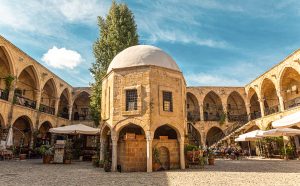
In the center of the Turkish-occupied part of Nicosia’s Old City stands a building that has had many lives. It has been a merchant’s inn, a prison, a home for displaced families, and today it is a lively cultural center. Built in 1572, just two years after the Ottomans took over Cyprus, Büyük Han is the largest and best example of caravanserai architecture on the island. visitncy-com The building is almost square, measuring 50.67 by 45.25 meters, and has 68 rooms on two floors arranged around a central courtyard. It was originally built for traveling merchants and traders who connected Cyprus with Anatolia, the Levant, and beyond. Büyük Han is considered one of the best surviving examples of Ottoman architecture in Cyprus and has been a protected monument since its restoration in the 1990s. The History Behind the Great Inn Büyük Han was built in 1572 under Muzaffer Pasha, the first Ottoman governor of Cyprus. Some sources say it might have been completed by his successor, Sinan Pasha, because Muzaffer Pasha was reassigned shortly after the island was taken. Muzaffer Pasha brought an architect from Constantinople named Bostan, who may have designed Büyük Han. The design was based on the Koza Han in Bursa, Turkey, a famous Ottoman caravanserai. It has a central courtyard and fortified elements, with open arcades…

Read more