Explore Cyprus with Our Interactive Map

Explore our top stories and discover ideas worth your time.

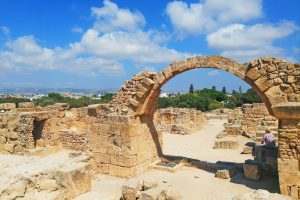
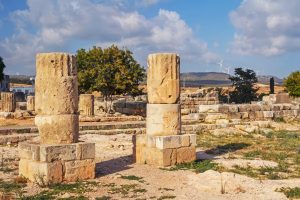
Saranda Kolones Fortress

Saranda Kolones Fortress

Inside the Paphos Archaeological Park, just north of the old harbor, a pile of broken stones and toppled columns marks where one of Cyprus's most important medieval fortresses once stood. Saranta Kolones, which translates to Forty Columns, served as the main defensive stronghold protecting Paphos during a turbulent period when Arab raids threatened the island. Today, visitors walk among its ruins and discover a fortress that endured multiple rebuilds, witnessed crucial historical events, and met a violent end in one of the worst earthquakes ever to strike Cyprus. tripadvisor-com Historical Background The fortress was built at the end of the 7th century AD under Byzantine rule. Historical records indicate that Theodore, the brother of Emperor Heraclius I, supervised its construction. At that time, the Arab Caliphate had emerged as a powerful force in the Middle East, and Cyprus found itself in the path of expansion. Arab forces launched raids on the island, making coastal cities particularly vulnerable. Paphos, with its strategic harbor and position on shipping routes, needed strong defenses. hotel-com The Byzantine builders created a formidable structure. The fortress featured walls three meters thick, substantial enough to resist siege weapons of that era. Four massive corner towers anchored the defenses, with four additional intermediate towers positioned along the connecting walls. A moat surrounded the entire complex, and access was…

Read more
Young Cypriots Rap About Life Today

Young Cypriots Rap About Life Today

Rap and hip-hop in Cyprus are not about imitation. For many young Cypriots, they have become one of the clearest ways to talk about pressure, identity, frustration, and belonging on a small island shaped by global culture and local tension. What sounds like music often functions as a public conversation, direct, emotional, and grounded in everyday experience. Through rhythm and dialect, young artists are documenting modern Cyprus as it is lived, not as it is marketed. stock-adobe-com A voice that arrived quietly, then stayed Hip-hop began to gain a foothold in Cyprus in the late 1990s, arriving without fanfare and often without understanding. At first, it lived on the margins of youth culture, overshadowed by rock, metal, and mainstream pop scenes that leaned heavily on English or formal Greek. Early attempts often sounded borrowed, more like echoes of elsewhere than expressions of home. That changed gradually. As artists became more confident and more rooted, the music stopped trying to sound foreign. It began to absorb the island itself. The turning point came when recording tools became cheaper and online platforms removed the need for approval from radio stations or labels. Bedrooms became studios. Uploads replaced auditions. Rap did not need permission anymore, and once that barrier disappeared, honesty followed. Why rap works so well in Cyprus Rap is flexible by…

Read more

Aphrodite Legends in Cyprus

Aphrodite Legends in Cyprus

Cyprus holds a unique place in Greek mythology as the birthplace of Aphrodite, the goddess of love and beauty. According to ancient legend, she emerged from the sea foam near the southwestern coast of the island, arriving on the shores in a manner that captured the imagination of countless generations. This mythological connection transformed Cyprus into one of the most important religious centers in the ancient Mediterranean world. pixabay-com The island's association with Aphrodite went far beyond simple legend, shaping its culture, religion, and identity for thousands of years. Pilgrims traveled from across the ancient world to visit her sanctuaries, making Cyprus synonymous with the worship of love, beauty, and fertility. Historical Background The birth myth of Aphrodite contains dramatic elements that ancient Greeks found both shocking and meaningful. According to the poet Hesiod, the titan Cronus castrated his father Uranus, the sky god, and threw the severed parts into the sea. From the resulting foam, Aphrodite arose as a fully grown woman of extraordinary beauty. The name Aphrodite itself comes from the Greek word aphros, meaning foam. gemini-google-com The waves initially carried her toward the Greek island of Kythera, but winds redirected her journey to Cyprus. She reached the shore at a location now called Petra tou Romiou, also known as Aphrodite's Rock. Local tradition claims that as she…

Read more