Explore Cyprus with Our Interactive Map

Explore our top stories and discover ideas worth your time.

Byzantine Frescoes & Iconography

Byzantine Frescoes & Iconography

The Troodos Mountains of Cyprus contain one of the most remarkable collections of Byzantine religious art in the world. Ten churches and monasteries, all designated as UNESCO World Heritage Sites, preserve frescoes and paintings that span from the 11th to the 16th centuries. travel-rambler-ru These mountain sanctuaries hold more than just beautiful artwork. They represent a continuous tradition of Christian artistic expression that survived invasions, political upheaval, and changing empires. The paintings on their walls tell biblical stories in vivid colors that remain surprisingly bright after 900 years. What makes these sites particularly valuable is their completeness. Unlike many Byzantine monuments that suffered damage or destruction, the remote mountain locations protected these churches from the Arab raids that devastated coastal areas between the 7th and 10th centuries. The steep-pitched wooden roofs, specifically designed to handle mountain snow and rain, also helped preserve the interior artwork. Historical Background Cyprus became part of the Byzantine Empire when Constantinople was founded in 324 AD. The island inherited artistic traditions from both ancient Greek and Roman culture, which Byzantine artists developed into a distinctive Christian visual language. The first major period of Byzantine art in Cyprus lasted from the late 4th century until the 7th century. istanbultouristpass-com During this time, craftsmen built large basilicas with wooden roofs and created three exceptional apsidal mosaics. The…

Read more
Cypriot Musicians Shape Sound Between Worlds

Cypriot Musicians Shape Sound Between Worlds

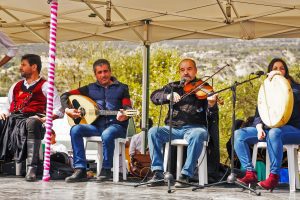
Cyprus has always lived between places, and its contemporary music makes that position audible. Today’s Cypriot musicians collaborate across Europe and the Middle East in ways that feel natural rather than strategic, producing music that travels easily while remaining grounded in local identity. These projects are not about imitation or trend-chasing. They are about translation, turning geography, history, and lived experience into sound. To understand modern Cypriot music is to hear an island negotiating who it is, who it speaks to, and how it wants to be understood. A Geography You Can Hear Cyprus does not need to “reach outward” to collaborate. It is already surrounded by cultural conversation. For centuries, the island has absorbed and adapted influences from Byzantine liturgical traditions, Levantine musical systems, and later European forms introduced through political and cultural exchange. This layered inheritance means that modern collaboration does not feel like a rupture. It feels like continuity. When contemporary Cypriot musicians work with European producers or Middle Eastern artists, the blend often sounds intuitive. The island’s music has long been shaped by multiple tonal systems, rhythmic sensibilities, and storytelling traditions. Modern technology and global networks simply make those exchanges more visible. Collaboration as Cultural Anchoring, Not Fusion for Its Own Sake At first glance, this trend might look like stylistic fusion. In reality, something more…

Read more
Cyprus Artisanal Sweets

Cyprus Artisanal Sweets

Cyprus has developed a distinctive collection of traditional sweets that reflect centuries of cultural exchange between Greece, the Middle East, and the Mediterranean. These artisanal treats are not luxury items but essential parts of daily life, religious celebrations, and village festivals. shutterstock-com From honey-soaked dough balls to sesame confections and refreshing milk puddings, Cypriot sweets combine simple ingredients with time-tested techniques to create memorable flavors. Each sweet tells a story of the island's agricultural abundance, its position as a crossroads of civilizations, and its commitment to preserving culinary heritage. Historical Context The tradition of sweet-making in Cyprus dates back to ancient Greece and Byzantium. Historical texts reveal that many current recipes have roots in Byzantine-era treats called plakoundes, pemmata, or melipikta. These early sweets were made with dough and natural sweeteners like honey, carob syrup, or grape must. The word halva derives from the Arabic term for sweetness, reflecting the Ottoman influence that shaped Cypriot cuisine for centuries. Loukoumades trace their history to 776 BC, when ancient Greeks offered honey-soaked dough balls as prizes to Olympic athletes. The tradition survived through Byzantine times, when monasteries made these treats during Lent because they contained only flour, yeast, water, and honey. As different cultures settled in Cyprus, they brought their own variations and techniques, creating the diverse sweet traditions that exist today.…

Read more