Explore Cyprus with Our Interactive Map

Explore our top stories and discover ideas worth your time.

Kaledonia Waterfall Trail

Kaledonia Waterfall Trail

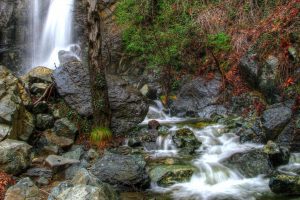
The Kaledonia Waterfall Trail offers one of Cyprus's most scenic forest hikes. This 3-kilometer nature trail follows the Kryos Potamos River through dense pine and oak forests in the Troodos Mountains, leading to a spectacular 12-meter waterfall at 1,330 meters elevation. chooseyourcyprus-com The trail takes its name from the Kaledonia waterfall at its center point, though many maps also spell it Caledonia. The path maintains a mostly shaded route under tall pine trees along the riverbank, creating a cool microclimate even during Cyprus's hot summer months. The sound of rushing water accompanies hikers throughout the journey as they cross the Kryos Potamos River six to seven times before reaching the main cascade. The trail sits within Troodos National Forest Park, a protected area covering 9,147 hectares around Mount Olympus. Wooden bridges span the stream at key points, though hikers must also step across river stones polished smooth by centuries of water flow. Business Insider ranked this waterfall as the 14th best in Europe in 2015, bringing increased international attention to what was previously a lesser-known local hiking destination. Historical Background In 1878, a Scottish expedition visited the Platres region during the early period of British colonial administration in Cyprus. When the Scots encountered the waterfall and surrounding landscape, they found remarkable similarities to the waterfalls and forested gorges of their…

Read more
Pepper Trees of Cyprus

Pepper Trees of Cyprus

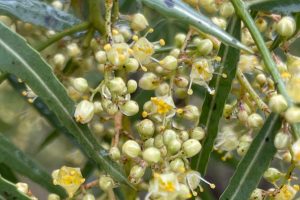
Imagine strolling through a sun-drenched village square or along a quiet coastal road in late summer. A graceful tree with feathery, weeping branches catches your eye, its small greenish-white flowers having given way to clusters of shiny pink-red berries that sparkle like strings of tiny jewels. These are the Schinus species of Cyprus – elegant South-American guests whose light, peppery fragrance and airy beauty have quietly woven themselves into the island’s everyday scenery. The Pepper Trees of the Cashew Family Schinus belongs to the Anacardiaceae family – the same remarkable group that includes pistachios (Pistacia vera), mastic trees (Pistacia lentiscus), cashews, mangoes and even sumacs. This family is known for resinous bark, compound leaves and often aromatic fruits. The genus Schinus contains about 30 species, nearly all native to South America. In Cyprus the two most common are Schinus molle (Peruvian pepper tree or false pepper tree) and Schinus terebinthifolius (Brazilian pepper tree). Locally they are called Αρτυμαθκιά (Artumathkiá – “pepper tree”) for S. molle, and Μαστισιά (Mastisiá – “mastic-like”) or Σχίνος η τερεβινθόφυλλη for S. terebinthifolius, evoking their resinous family ties. A Journey from the Andes to Cypriot Soil Both species are native to subtropical and tropical South America. Schinus molle comes from the Andes foothills of Peru, Bolivia and neighbouring countries, while S. terebinthifolius hails from Brazil, Argentina…

Read more

Ayia Napa Lover’s Bridge

Ayia Napa Lover’s Bridge

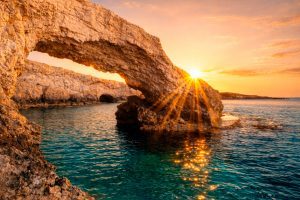
The Lover's Bridge stands as one of Cyprus's most photographed natural landmarks. This limestone arch extends from the coastal cliffs near Ayia Napa, reaching toward the Mediterranean Sea with one end firmly anchored to land while the other dips into crystal-clear turquoise water. tripadvisor-com The bridge measures approximately 6 meters long and half a meter wide, formed entirely through natural processes without any human construction. Visitors from around the world come to walk across this slender natural formation, particularly during sunset hours when golden light transforms the white limestone and azure water into a scene of remarkable beauty. The bridge takes its name from romantic traditions that have developed around the site. Local legend claims that couples who kiss while standing in the middle of the arch and make a wish together will see their wishes come true. This belief has made the location a popular destination for marriage proposals, wedding photographs, and symbolic ceremonies celebrating love and commitment. How Wave Action Sculpted the Arch The Lover's Bridge formed through a combination of mechanical and chemical erosion acting on limestone bedrock. Rainwater absorbs carbon dioxide from the atmosphere and soil, creating a weak carbonic acid solution. When this slightly acidic water contacts limestone, it triggers chemical reactions that gradually dissolve the calcium carbonate rock. Seawater contains additional dissolved salts and…

Read more