Explore Cyprus with Our Interactive Map

Explore our top stories and discover ideas worth your time.

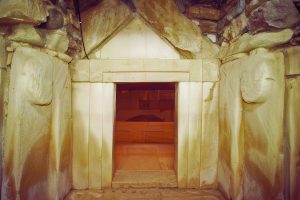
Temple of Astarte-Aphrodite at Tamassos

Temple of Astarte-Aphrodite at Tamassos

The Temple of Astarte-Aphrodite at Tamassos was a sacred site where different religious traditions met and blended. It reflects the merging of the Phoenician goddess Astarte with the Cypriot form of Aphrodite, showing how Cyprus functioned as a crossroads of belief in the ancient Mediterranean. The sanctuary reveals how cultures interacted not only through trade and politics, but also through shared and evolving religious ideas. A Sanctuary in the Heart of Cyprus Tamassos lay inland, near rich copper resources and important trade routes. Though far from the coast, it was deeply connected to the wider Mediterranean world. The presence of a sanctuary dedicated to Astarte-Aphrodite reflects these connections and the movement of people, goods, and beliefs across the island. facebook-com The temple served the local population while also reflecting foreign influence, making it a powerful symbol of Cyprus’s layered cultural identity. Two Goddesses, One Sacred Presence Astarte was a major Phoenician goddess associated with fertility, love, war, and royal power. Aphrodite, though later known as the Greek goddess of love, had deep roots in earlier Cypriot and Near Eastern traditions. At Tamassos, these two divine figures were not seen as separate, but as different expressions of the same sacred force. britannica-com This blending, known as religious syncretism, allowed worshippers from different backgrounds to recognise their own beliefs within a shared…

Read more

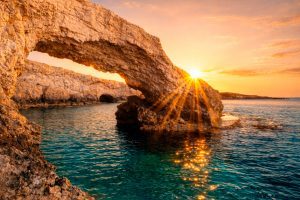
Ayia Napa Lover’s Bridge

Ayia Napa Lover’s Bridge

The Lover's Bridge stands as one of Cyprus's most photographed natural landmarks. This limestone arch extends from the coastal cliffs near Ayia Napa, reaching toward the Mediterranean Sea with one end firmly anchored to land while the other dips into crystal-clear turquoise water. tripadvisor-com The bridge measures approximately 6 meters long and half a meter wide, formed entirely through natural processes without any human construction. Visitors from around the world come to walk across this slender natural formation, particularly during sunset hours when golden light transforms the white limestone and azure water into a scene of remarkable beauty. The bridge takes its name from romantic traditions that have developed around the site. Local legend claims that couples who kiss while standing in the middle of the arch and make a wish together will see their wishes come true. This belief has made the location a popular destination for marriage proposals, wedding photographs, and symbolic ceremonies celebrating love and commitment. How Wave Action Sculpted the Arch The Lover's Bridge formed through a combination of mechanical and chemical erosion acting on limestone bedrock. Rainwater absorbs carbon dioxide from the atmosphere and soil, creating a weak carbonic acid solution. When this slightly acidic water contacts limestone, it triggers chemical reactions that gradually dissolve the calcium carbonate rock. Seawater contains additional dissolved salts and…

Read more
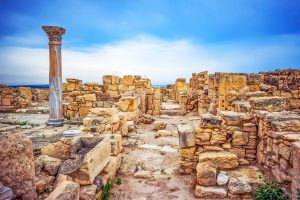
House of Eustolios Cyprus Roman Villa Mosaics

House of Eustolios Cyprus Roman Villa Mosaics

britonthemove-com Perched on the southern cliffs of ancient Kourion near modern Limassol, the House of Eustolios stands as one of Cyprus's most fascinating archaeological sites. This late 4th-century complex blends Roman luxury with early Christian devotion, creating a unique window into a transformative period in Mediterranean history. Originally built as a private villa, the structure evolved into a public recreation center that served Kourion's citizens for over two centuries. Historical Background traveladventures-org The House of Eustolios rose from the ruins of catastrophe. In 365 AD, a massive earthquake devastated the eastern Mediterranean, striking Kourion with particular force. The ancient city, which had thrived as one of Cyprus's major kingdoms since the 13th century BC, lay in rubble. Buildings collapsed, infrastructure crumbled, and the population struggled to survive among the wreckage. Twenty-five years after the disaster, Kourion remained in a dismal state. Into this scene returned Eustolios, a wealthy Christian citizen who had been away from his hometown. Shocked by the continued suffering of his fellow citizens, he made a remarkable decision. Rather than simply rebuild for himself, Eustolios constructed an elaborate complex on the ruins of an earlier Roman villa and donated the entire facility for public use. The timing proved significant. Emperor Theodosius I had just made Christianity the official religion of the Roman Empire in 380 AD. Eustolios…

Read more