Explore Cyprus with Our Interactive Map

Explore our top stories and discover ideas worth your time.

Kantara Castle Cyprus

Kantara Castle Cyprus

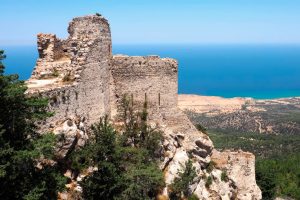
Kantara Castle is a Byzantine and medieval fortress located in the eastern Kyrenia mountain range in the Turkish-occupied part of Cyprus. The name comes from the Arabic word “qantara,” meaning bridge or arch, though some sources translate it as observation point. The castle sits at the easternmost position of three famous mountain castles in Cyprus, with Buffavento Castle to the west and St. Hilarion Castle further west. The castle occupies a strategic position with views over both the northern coast and the Mesaoria Plain. On clear days, visitors can see the Karpasia Peninsula, Famagusta Bay, and distant mainland coasts. This commanding location made Kantara essential for Cyprus’s defense for nearly 500 years. Historical Background The exact construction date remains unknown, but most historians place the Byzantine construction around 965 AD after Arab raiders were pushed back from Cyprus. For centuries, coastal populations had faced repeated attacks, and mountain watchtowers were needed to spot approaching ships and warn inland settlements. wikipedia-org Before the fortress existed, an Orthodox monastery dedicated to St. Mary of Kantara stood on the site. Defensive walls were gradually added, turning the religious complex into a military stronghold. This mix of sacred and defensive use was common during unstable periods. Kantara formed part of a signal network with the other Kyrenia mountain castles. Guards could see neighboring fortresses…

Read more
St. Sophia Cathedral Gothic Landmark Cyprus

St. Sophia Cathedral Gothic Landmark Cyprus

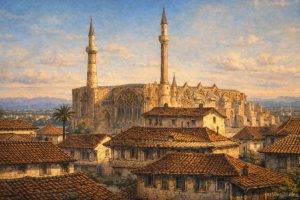
In the center of North Nicosia stands the largest Gothic building in Cyprus. Originally a cathedral, it was later turned into a mosque but still keeps its French Gothic style. Over 800 years, the building has seen coronations, earthquakes, sieges, and the rise and fall of kingdoms, making it one of the most important historic sites on the island. wikipedia-com St. Sophia Cathedral, now called Selimiye Mosque, was built in the 13th century. It was converted into a mosque in 1570 after the Ottoman conquest of Cyprus. The building measures 66 by 21 meters inside and can hold about 2,500 worshippers. It was the coronation church for the Lusignan kings of Cyprus and later for the titular kings of Jerusalem and Armenia. Historical Background Construction of St. Sophia Cathedral began in 1209 under the Lusignan dynasty, a French royal family that ruled Cyprus after the Crusades. Its design was strongly inspired by Notre-Dame de Paris and other French cathedrals. French masons came to Cyprus to lead the work, while local craftsmen helped. The building took more than 150 years to finish, with the final parts completed around 1326. For over 200 years, St. Sophia was the coronation church for the Lusignan kings. Kings of Cyprus were crowned here as rulers of Jerusalem, even though Jerusalem was no longer under their…

Read more

Paphos Forest Nature Reserve – Endemic Wildlife

Paphos Forest Nature Reserve – Endemic Wildlife

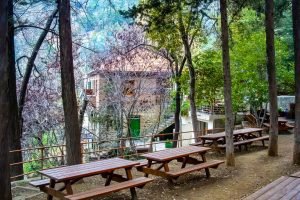
Paphos Forest Nature Reserve stands as one of the largest and most ecologically significant protected areas in Cyprus. Spanning approximately 620 square kilometers across the northwestern Troodos Mountains, this vast wilderness represents the island's most extensive continuous forest ecosystem. wikipedia-org The reserve gained official protected status through a series of conservation measures beginning in 1938, when the government recognized the urgent need to preserve the habitat of the endangered Cyprus mouflon. Today, the forest functions as a critical biodiversity hotspot, home to dozens of endemic species found nowhere else on Earth. The landscape ranges from dense pine forests and ancient cedar groves to golden oak woodlands and riparian vegetation along mountain streams. This diversity of habitats supports an exceptional variety of wildlife, from large mammals to rare insects, making it an essential sanctuary for Mediterranean biodiversity. Historical Background The history of Paphos Forest as a protected area began with a crisis. By the early 20th century, the Cyprus mouflon population had collapsed to approximately 25 individuals due to relentless hunting. The animals faced imminent extinction. In response, the British colonial administration declared the entire Paphos Forest a permanent game preserve on November 4, 1938. This unprecedented action protected not only government land but also private properties within the forest boundaries and holdings of the Kykkos Monastery. The decision proved controversial,…

Read more