Explore Cyprus with Our Interactive Map

Explore our top stories and discover ideas worth your time.

Mesaoria Basin Cyprus

Mesaoria Basin Cyprus

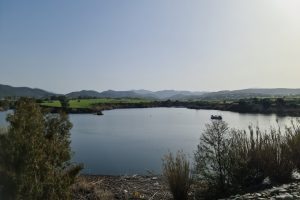
Stand on a small hill just outside Nicosia and look around. To the south the Troodos Mountains rise dark and rugged on the horizon, their volcanic slopes fading into forests. To the north the Kyrenia range appears as a long pale wall of limestone cliffs or rugged forms stretching as far as the eye can see. Between them lies an immense open landscape. Vasily Papkovskiy This is Mesaoria. In Greek it literally means “between the mountains”. This basin forms a natural wide corridor across the island, a broad open landscape framed by two very different geological worlds. At first glance the region may appear quiet compared with the dramatic mountains that surround it. There are no towering cliffs or deep gorges. Instead, the land spreads outward in broad plains and gentle plateaus where fields stretch toward distant villages. Yet beneath this calm landscape lies one of the most revealing geological chapters of Cyprus.Mesaoria is not simply a plain between mountains. It is the remnant of a vast sea basin that once separated the Troodos massif from the Kyrenia range. For millions of years this basin collected sediments washed from the surrounding highlands while marine life thrived in its waters. Later tectonic movements slowly lifted the seabed, turning the marine basin into dry land. Now imagine travelling ten million years back…

Read more
Whispers from the Wild Stalks

Whispers from the Wild Stalks

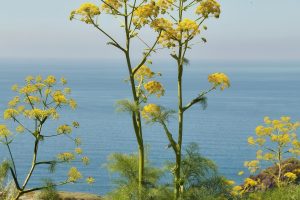
Imagine wandering through the sun-drenched fields of Cyprus, where a plant towers like a sentinel from ancient myths, its yellow blooms catching the breeze. This article invites you on a gentle journey to discover the giant fennel, a resilient Cypriot native that bridges legends of fire-thieves and hidden fungal treasures, leaving you pondering the quiet wonders hidden in everyday landscapes. www.inaturalist.org A Gentle Giant's Greeting The giant fennel, known scientifically as Ferula communis, is a member of the vast carrot family, Apiaceae, which includes familiar herbs like parsley and dill. It's a perennial plant that dies back each summer only to burst forth anew, standing tall in open meadows and reminding us of nature's enduring cycles in the Mediterranean world. Echoes from Mythical Times In the mists of ancient history, giant fennel played starring roles in Greek legends that echoed across the sea to Cyprus. Prometheus, the daring Titan, famously hid stolen fire from the gods inside its hollow stem to gift humanity warmth and light. Followers of Dionysus, the god of wine and revelry, wielded staffs made from its stalks wrapped in ivy and topped with pine cones as symbols of joy and fertility during ecstatic festivals. www.inaturalist.org On Cyprus itself, historical accounts from 19th-century explorers describe locals crafting stools and decorative items from its sturdy wood, a practice…

Read more
Troodos Lizard

Troodos Lizard

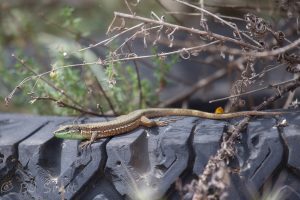
In the rugged heights of Cyprus' Troodos Mountains, a nimble creature darts across sun-warmed rocks, its scales glinting like hidden emeralds. This is the Troodos lizard, Phoenicolacerta troodica, an endemic jewel of the island's wildlife. Let’s explore this shy resident, a survivor of ancient landscapes, and discover why it captivates those who seek it out. A name Phoenicolacerta prefixes the Latin word, Phoenice, meaning "Phoenicia", the coast of the Levant, where most of the species of these lizards are found, with lacerta, "a lizard". The specific name refers to the type locality being in the Troodos Mountains of Cyprus. www.inaturalist.org A Mountain Marvel Emerges The Troodos lizard is a small reptile native only to Cyprus, thriving in the cool, forested slopes of the Troodos range. It's a member of the Lacertidae family, or true lizards, known for agile ground-dwellers, and represents one of the island's unique evolutionary tales. Imagine a lizard perfectly attuned to misty peaks and rocky crevices – that's our subject, a quiet emblem of Cyprus' isolated biodiversity. In Greek it is called Σαύρα του Τροόδους (Saura tou Troodus) which simply means The Troodos lizard. www.inaturalist.org From Ancient Seas to Island Peaks The story of the Troodos lizard begins millions of years ago, when Cyprus emerged from the Mediterranean's turbulent geological past. As the island formed through tectonic…

Read more