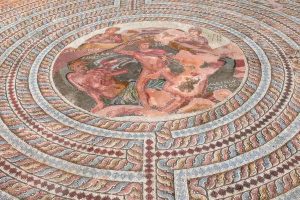
Long before the ancient Greeks built their temples or the Romans laid their mosaics, Cyprus was home to some of the Mediterranean’s earliest farming communities. These prehistoric pioneers built villages, grew crops, and created a culture that would lay the foundation for thousands of years of Cypriot civilization.
The Island’s First Settlers
Cyprus’s prehistoric story begins over 11,000 years ago when the island’s landscape looked dramatically different from today. The first humans to arrive found a land inhabited by pygmy hippos and dwarf elephants – miniature versions of their mainland cousins that had evolved in isolation on the island. These early settlers were hunter-gatherers who eventually gave way to organized farming communities.
By around 7000 BCE, Cyprus had developed a full Neolithic (New Stone Age) culture with permanent villages, domesticated animals, and agricultural fields. These weren’t primitive camps but sophisticated settlements with stone architecture, communal planning, and complex social structures. The island’s prehistoric inhabitants created a distinctive way of life that would influence Cypriot culture for millennia to come.
From Ice Age Hunters to Stone Age Farmers
The earliest evidence of human presence on Cyprus comes from a coastal rock shelter called Aetokremnos, dating to around 9500 BCE. Here, archaeologists found thousands of burned bones from Cyprus’s now-extinct dwarf hippos – 74% of all the animal remains at the site. These Mesolithic hunters apparently feasted on these unique creatures, possibly contributing to their extinction.
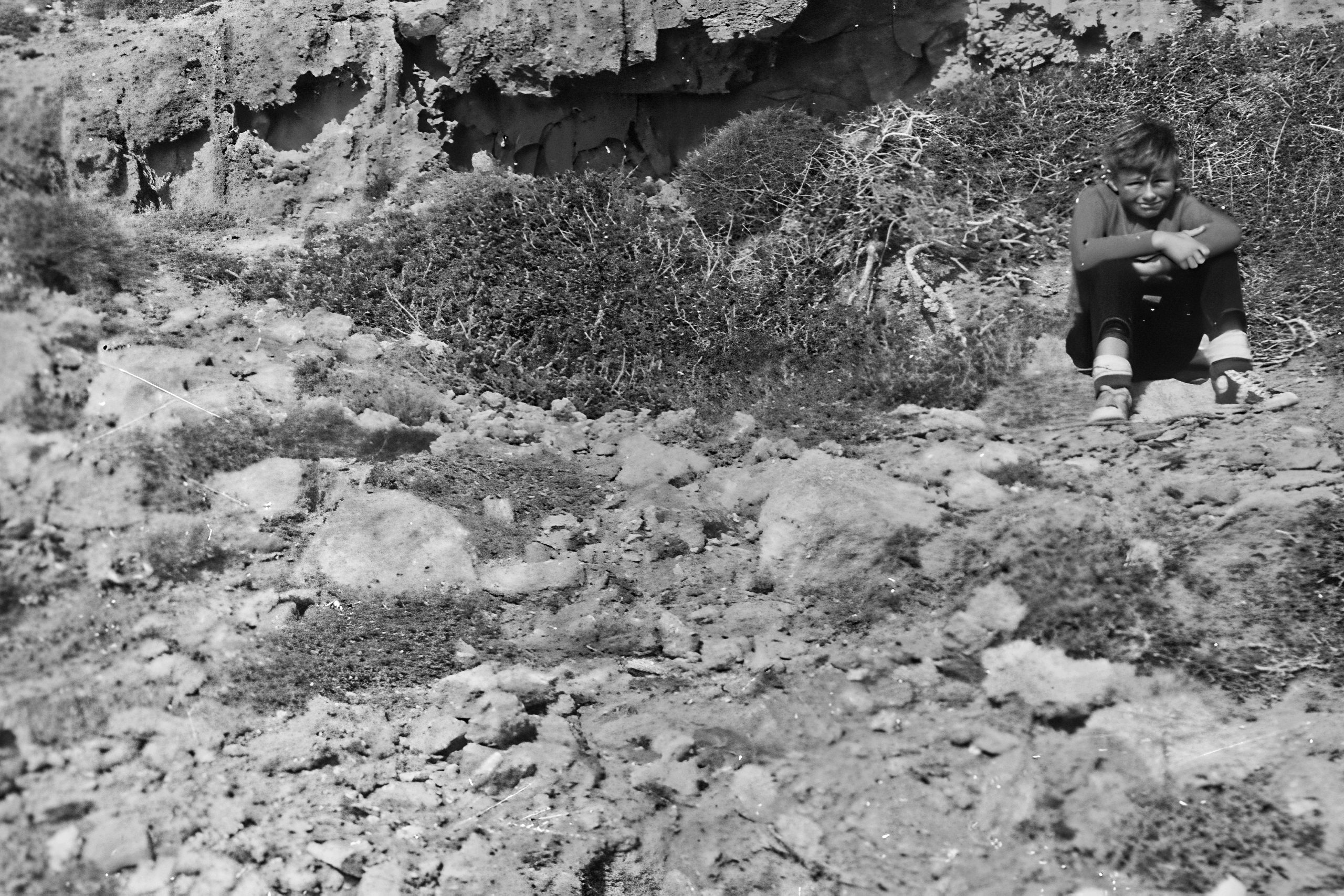
By 8200 BCE, as the climate warmed after the Ice Age, the first small farming villages appeared. These early communities didn’t even make pottery yet – archaeologists call this the “aceramic” (pottery-less) period. But by 7000 BCE, Cyprus had entered its full Neolithic age, with people growing wheat, barley, and lentils while raising sheep, goats, and pigs.
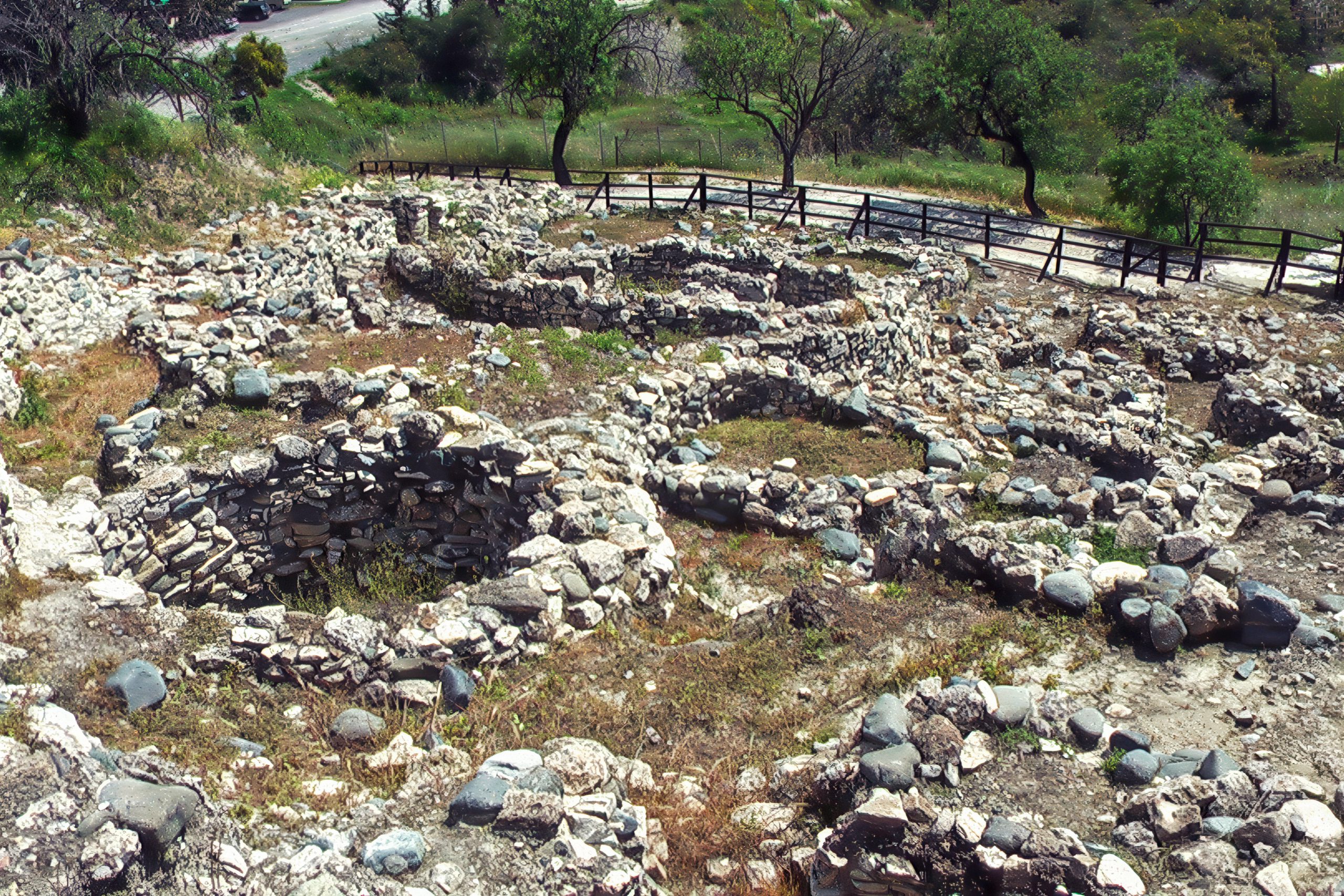
The most famous of these Neolithic settlements is Choirokoitia (also spelled Khirokitia), occupied from about 7000 to 5000 BCE. This village represents the peak of Cyprus’s Stone Age culture – a thriving community of farmers and herders who built remarkable circular stone houses and surrounded their settlement with defensive walls. After Choirokoitia was mysteriously abandoned around 5000 BCE, there’s a puzzling gap in the archaeological record before Cypriot culture re-emerged and evolved through the Chalcolithic (Copper Age) around 4000 BCE.
Interestingly, Cyprus had virtually no native large animals – no deer, lions, or bears, just a tiny shrew that survived from earlier times. All meat came from domestic herds, fish, or birds, making these early Cypriots heavily dependent on their farming and herding skills.
Life in a Neolithic Village
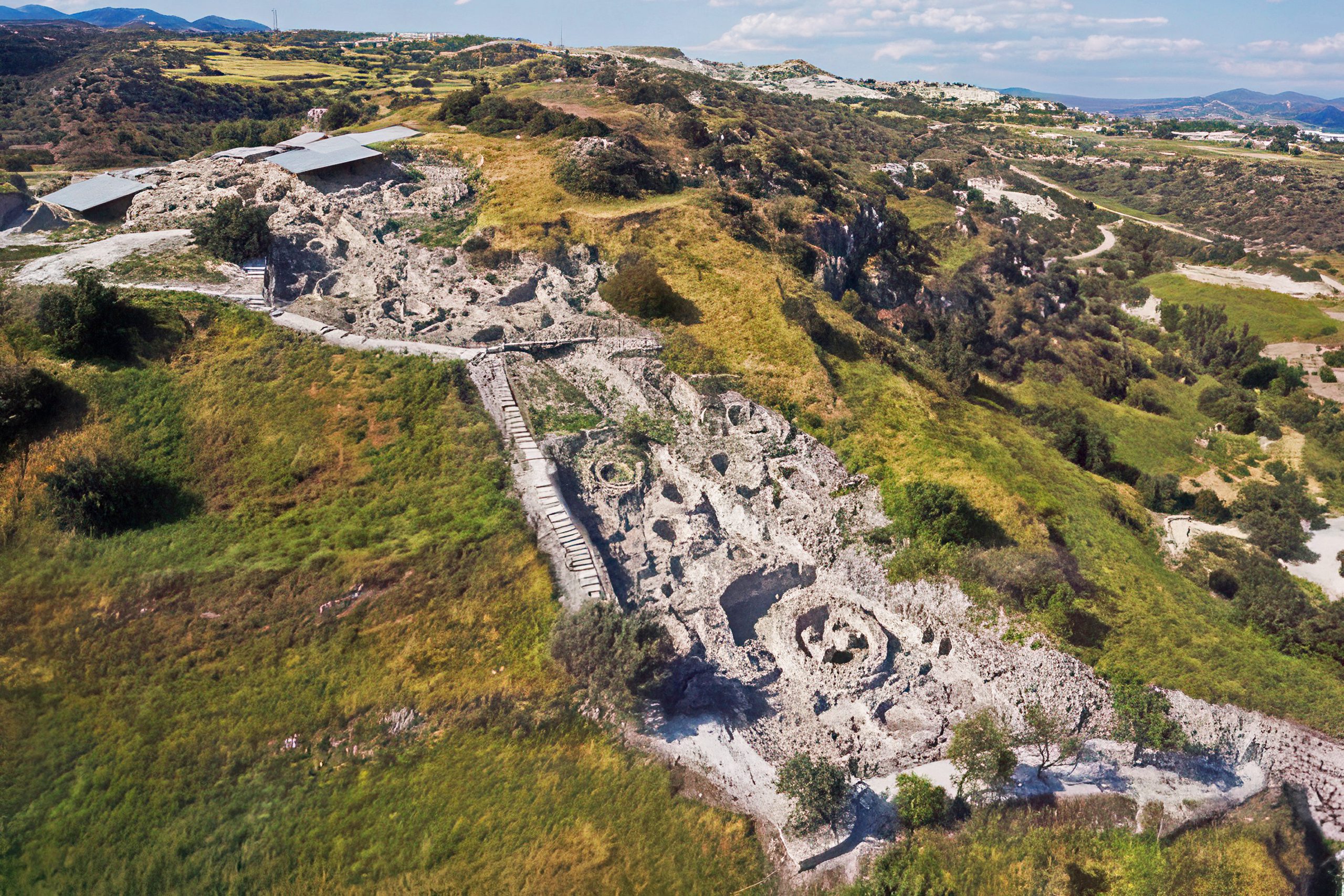
Choirokoitia offers the best window into how prehistoric Cypriots lived. The village was built on a hillside, with distinctive round houses constructed from stone and mudbrick. Each circular building had walls of stacked stone plastered with mud, topped with flat roofs made from wooden beams and reeds.
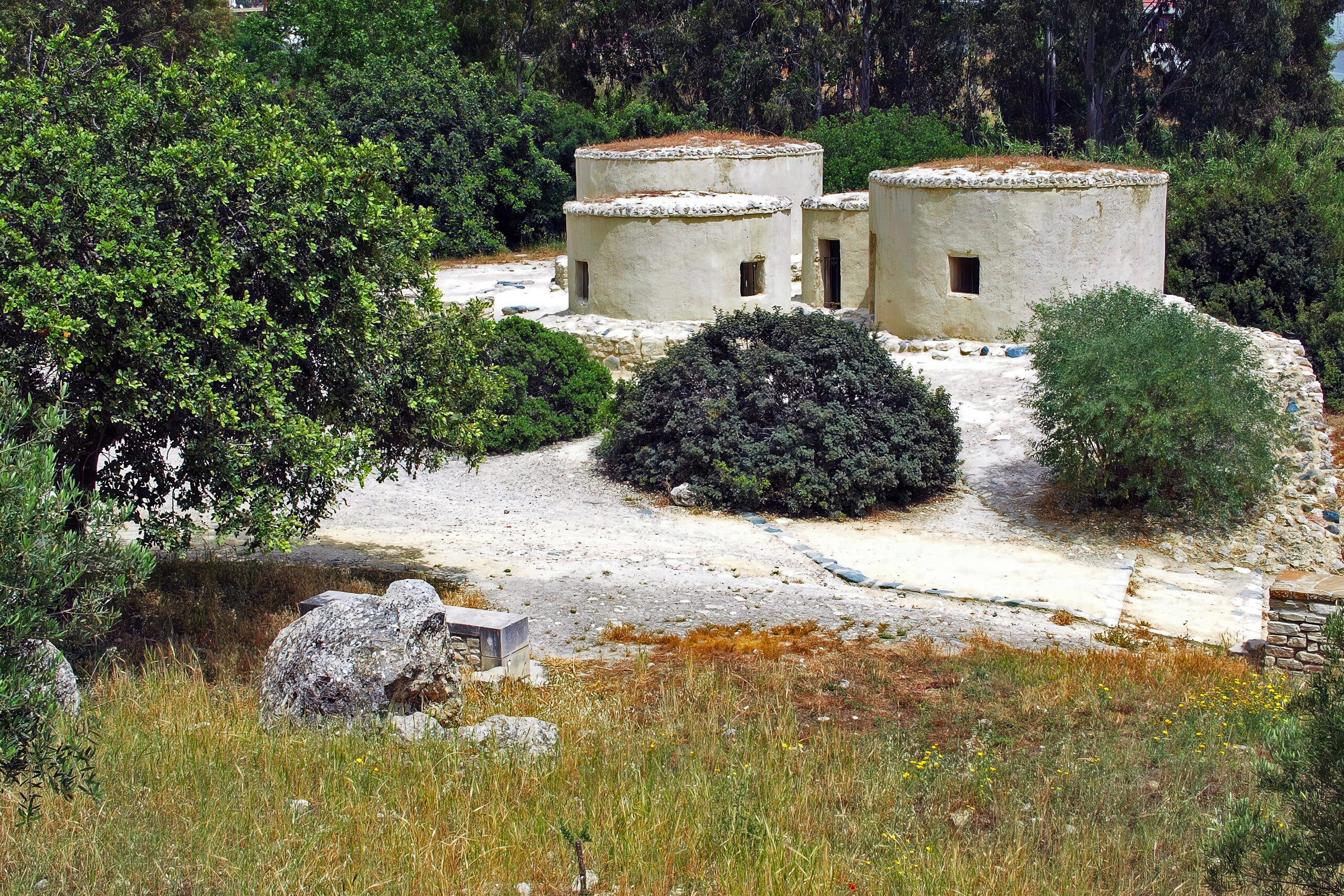
These weren’t simple huts. Inside each round house, inhabitants built hearths for cooking, basins for water or food preparation, and storage pits for grain and supplies. Multiple buildings often clustered around small shared courtyards, suggesting families or extended kin groups lived and worked together in communal arrangements.
What makes Choirokoitia particularly fascinating is its elaborate defenses. The village was protected by at least two concentric stone ramparts with carefully controlled entrances – making it one of the earliest fortified settlements known anywhere. Why did these Neolithic farmers need such strong walls? Were they defending against raiders, wild animals, or simply marking territory? The answer remains a mystery.
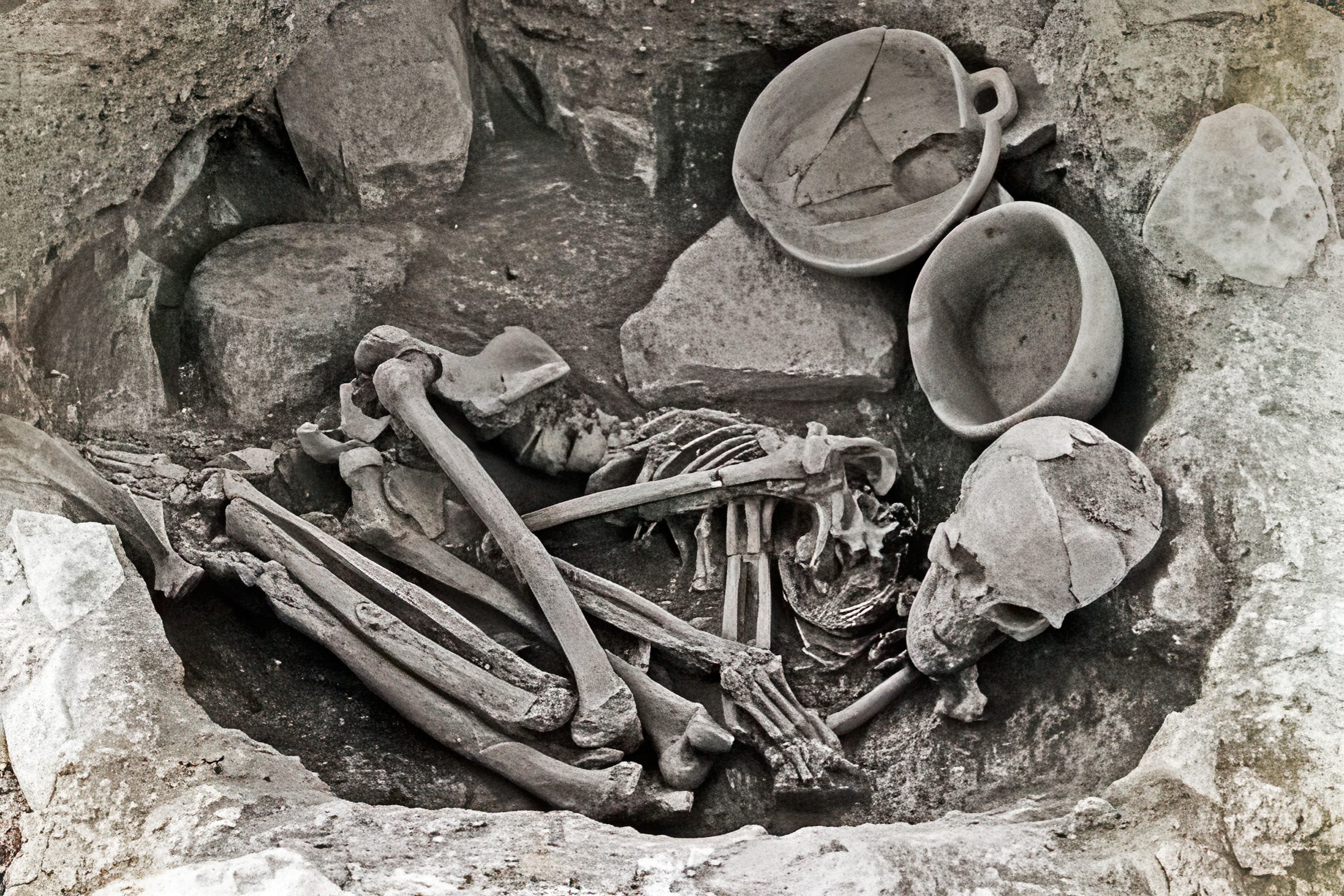
The Neolithic Cypriots buried their dead beneath the floors of their houses – a practice suggesting powerful family bonds and ancestor veneration. Finding your great-grandmother’s bones literally underfoot while you ground grain or cooked dinner connected the living to the dead in the most intimate way possible. Anthropomorphic stone figurines found at Choirokoitia suggest spiritual beliefs, perhaps goddess worship or ancestor idols.
The village layout itself reveals sophisticated planning. UNESCO notes that Choirokoitia “represents the Aceramic Neolithic at its peak” – these weren’t random clusters of huts but organized communities with shared spaces, defensive systems, and social coordination. The complex arrangement of inner buildings, courtyards, and fortification walls shows that villagers planned their settlement together and maintained it over many generations.
Surprising Details from Prehistoric Cyprus
● Dwarf Hippo Dinners: The earliest Cypriots hunted and ate pygmy hippopotamuses that once roamed the island. These Ice Age leftovers were much smaller than African hippos but still provided substantial meals, as evidenced by thousands of charred bones found at ancient hearth sites.
● 7,000-Year-Old Fortresses: Choirokoitia’s Neolithic village was surrounded by two concentric stone walls as early as 7000 BCE, making it one of the world’s earliest fortified settlements – built thousands of years before most ancient city walls.
● Ancestors Underfoot: Prehistoric Cypriots buried their family members beneath the floors of their houses, quite literally living with their ancestors. This practice suggests deep reverence for family lineage and possibly beliefs about protecting the household through ancestral spirits.
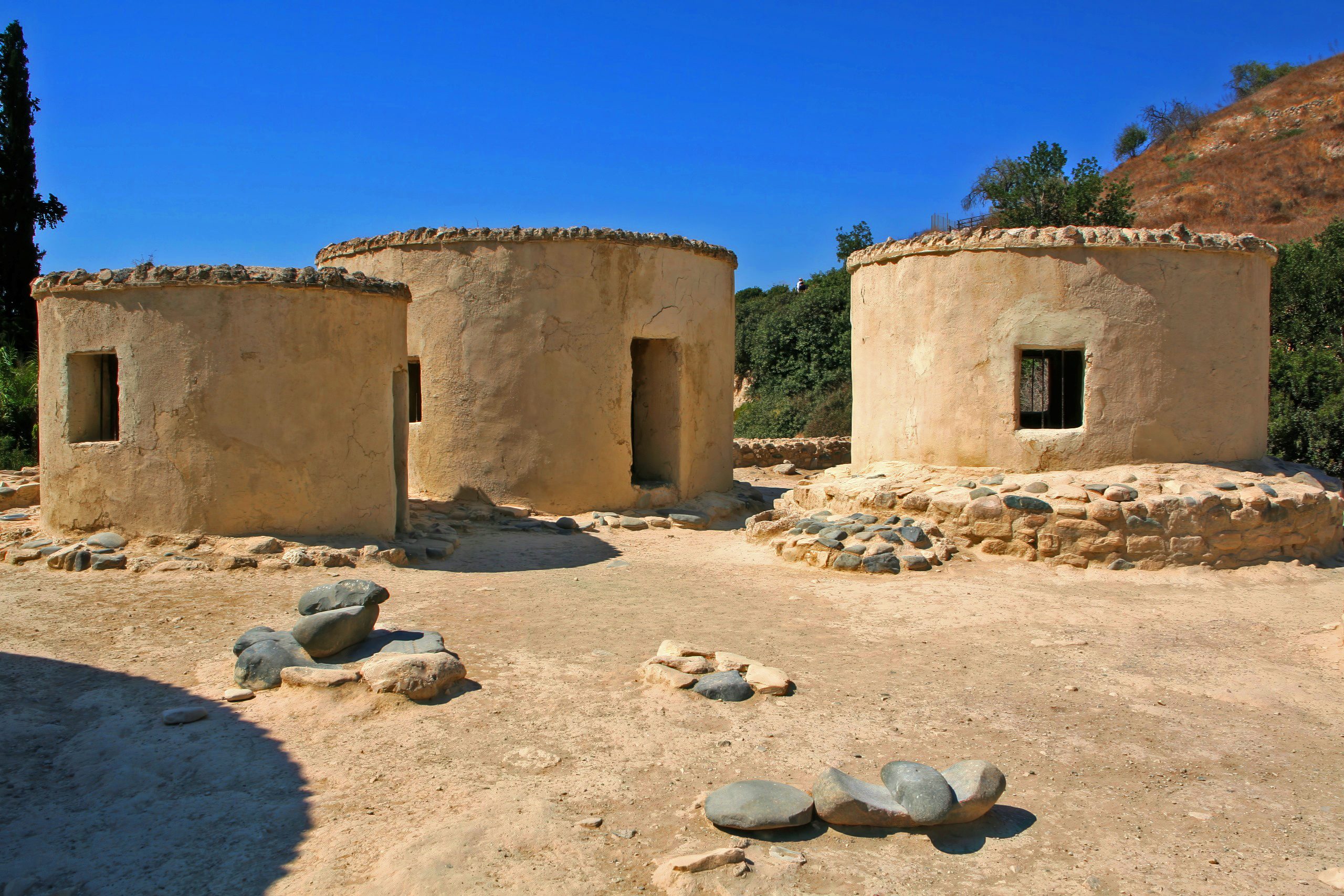
● Round House Reconstructions: At the Choirokoitia archaeological site today, visitors can see five full-scale reconstructions of the circular stone houses built using authentic Neolithic techniques – complete with flat roofs, stone walls, and interior hearths, letting you step into a 9,000-year-old home.
● No Native Big Game: Unlike mainland regions, Cyprus had no deer, bears, or lions to hunt. The island’s only native land mammal was a tiny shrew. This meant Neolithic hunters had limited wild game and relied heavily on domesticated animals for meat.
The Mysterious Abandonment
One of prehistory’s puzzles is why Choirokoitia and other Neolithic settlements were suddenly abandoned around 5000 BCE. The archaeological record shows a gap of several centuries with little or no human activity on Cyprus. When people returned and re-established communities, they brought new cultural practices and technologies – suggesting either a complete population replacement or major cultural transformation.
Some archaeologists theorize that climate change, resource depletion, or disease might have driven people away. Others suggest the abandonment might not have been total – perhaps people moved to areas we haven’t yet excavated. The mystery adds intrigue to Cyprus’s prehistoric story and reminds us how much remains unknown about ancient life.
The transition from the Neolithic to the Chalcolithic period around 4000 BCE brought copper working to Cyprus. The island’s rich copper deposits in the Troodos Mountains would eventually make Cyprus famous throughout the ancient world. In fact, the very name “Cyprus” is linked to the Latin word for copper (cuprum), reflecting how central this metal became to the island’s identity and economy.
A Source of National Pride
Cyprus’s prehistoric heritage remains a vital part of modern national identity. Choirokoitia was designated a UNESCO World Heritage Site in 1998, recognized as one of the best-preserved Neolithic villages in the entire eastern Mediterranean. Cypriot schoolchildren learn about these ancient settlements as the foundation of their island’s remarkably long history of continuous human habitation.
The circular stone houses of Choirokoitia have become iconic symbols of Cyprus’s deep roots. Images of these round dwellings appear in textbooks, tourism materials, and even on Cypriot euro coins, reminding modern citizens that their island has been home to organized communities for over 9,000 years. This gives Cypriots a profound sense of place and continuity that few nations can claim.
Archaeological research at prehistoric sites continues today, with international teams regularly making new discoveries that add to our understanding of early Mediterranean civilization. These findings frequently make local news and generate pride in Cyprus’s contribution to human history. The prehistoric period is taught in schools as the beginning of what would become a uniquely Cypriot culture – one that absorbed influences from Greece, the Near East, and Egypt while maintaining its own distinct character.
Walking Through 9,000 Years of History
Choirokoitia is easily accessible and well worth a visit. Located just off the Nicosia-Limassol motorway, the site is open daily year-round for a modest fee (approximately €2.50). A visitor center provides context, and a small on-site museum displays artifacts found during excavations.
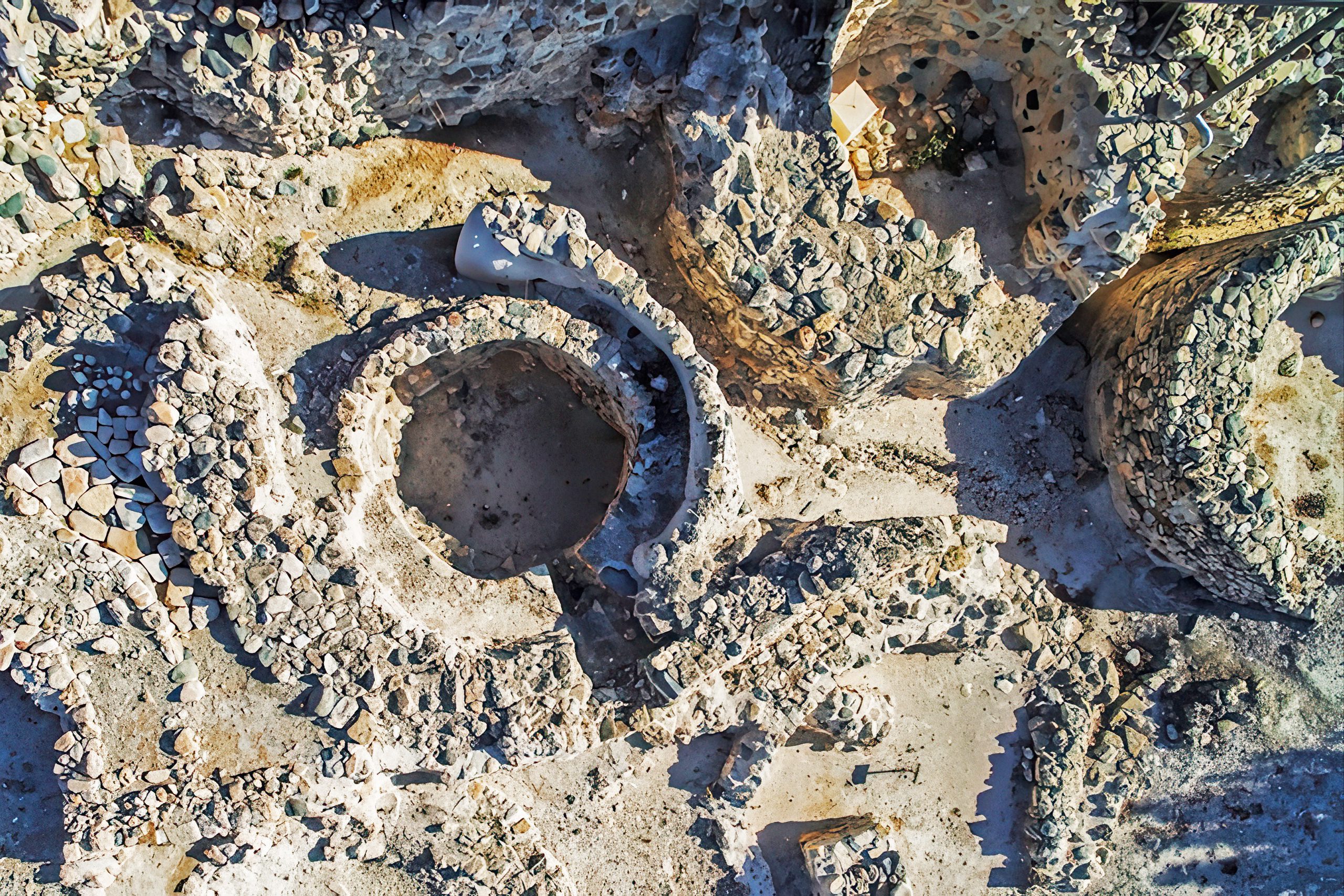
The experience begins with a pathway that leads up the hillside through the excavated remains of the ancient village. You’ll see the stone foundations of dozens of circular houses, their walls still standing several feet high after nine millennia. Information plaques explain what you’re seeing, and the layout becomes clear: clusters of round buildings grouped around communal spaces, all within protective ramparts.
The highlight for most visitors is the five reconstructed round houses built near the parking area using authentic Neolithic techniques – stone walls plastered with mud, wooden roof beams, reed thatching, and flat roofs. You can actually step inside these reconstructions to see how the interiors were organized, with replica tools, storage vessels, and sleeping areas giving you a tangible sense of daily life in 7000 BCE.
Wear comfortable walking shoes, as the path up the hillside can be steep. Bring water, especially in summer when Cyprus gets hot. The site is relatively shaded by olive and carob trees, but there’s limited protection from the sun. Early morning or late afternoon visits offer the best light for photography and the most comfortable temperatures.
The atmosphere at Choirokoitia is peaceful and contemplative. You’ll rarely encounter large crowds, making it easy to imagine yourself transported back to the Stone Age. The serene valley setting, the ancient stones warming in Mediterranean sunshine, and the realization that you’re walking where some of humanity’s earliest farmers lived and worked creates a powerful connection across the millennia.
Why Cyprus’s Prehistoric Past Matters
Understanding Cyprus’s Neolithic and prehistoric periods means grasping the remarkable continuity of human life on this island. From the dwarf hippo hunters of 9500 BCE to the organized farming communities of Choirokoitia, Cyprus has been home to people for over 11,000 years.
These earliest inhabitants weren’t just surviving – they were thriving, building sophisticated settlements, creating art, developing agricultural systems, and establishing traditions that would influence the island’s culture for thousands of years to come.
When you visit Choirokoitia or encounter Cyprus’s prehistoric heritage in museums, you’re not just looking at ancient ruins – you’re connecting with the very foundation of Mediterranean civilization and experiencing one of the longest stories of human habitation anywhere in the world. That’s what makes Cyprus special: it’s not just an island with history, but an island where history began.