Art and Decorative Heritage

Articles: Art and Decorative Heritage

Stories in this category and its subcategories.

The Cypriot Limestone Kouros

The Cypriot Limestone Kouros

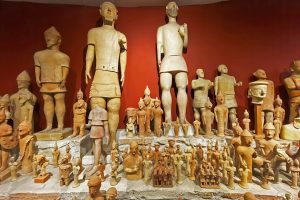
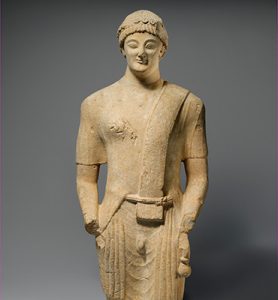
Cypriot limestone “kouroi” are Archaic-era standing male statues that look Greek at first glance but functioned differently, serving mainly as clothed votive figures placed in sanctuaries as lasting representations of worshippers and elite donors. Cyprus’s lack of marble pushed sculptors toward soft local limestone, shaping a calmer, more geometric style that was originally strengthened by bright paint rather than fine anatomy. This article explains how material, ritual purpose, and cross-Mediterranean influence combined to produce a distinctly Cypriot human figure tradition. metmuseum-com Kouros in Name Only The word kouros comes from Greek and refers to youthful male statues that became widespread in the Aegean world during the Archaic period. Greek kouroi are usually nude, carved in marble, and designed to embody…

Read more
Salamis Bathhouse Mosaics

Salamis Bathhouse Mosaics

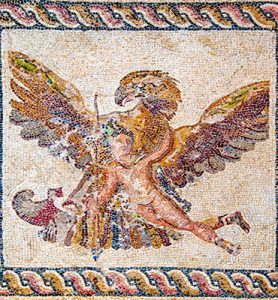
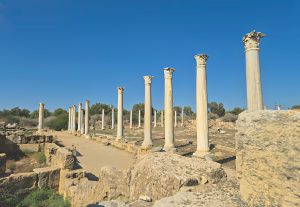
The Salamis bathhouse mosaics show how Roman Cyprus combined leisure, engineering, and civic identity inside one of the island’s most ambitious public complexes. These floors were designed to shape movement and atmosphere, pairing mythic scenes with technical skill, imported materials, and heated rooms that made bathing a daily performance of status. This article explains how the mosaics worked within the bathhouse system, what their imagery signalled, and why their survival still matters for understanding Roman urban life on Cyprus. googleusercontent-com A Capital Built to Be Seen Salamis was not an ordinary provincial town. For long periods, it functioned as the administrative and commercial heart of Cyprus, benefiting from trade routes that linked the Aegean, the Levant, and Egypt. When the…

Read more
Ayios Herakleidios Mosaics

Ayios Herakleidios Mosaics

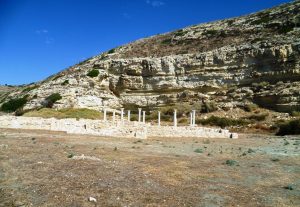
The mosaics at Ayios Herakleidios, in the inland territory of Tamassos, show an early Christian community expressing belief through geometry rather than mythic scenes or imperial display. Laid across successive basilica phases, the floors use repetition, careful placement, and durable materials to create a sense of order during periods of instability. This article explains how the site developed around the saint’s tomb, what the patterns and Chi-Rho symbol were designed to do, and how the mosaics survive alongside a living monastery today. googlemaps.com An Inland Sanctuary at Tamassos Unlike Cyprus's major early Christian monuments along the coast, the Ayios Herakleidios complex developed inland, near copper-rich Tamassos, a former city-kingdom once dedicated to pagan gods. The location is essential to understanding…

Read more
Ayia Irini Sanctuary Cyprus

Ayia Irini Sanctuary Cyprus

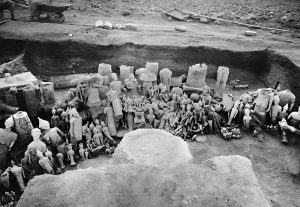
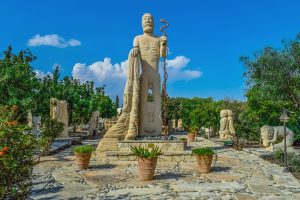
Long before temples, columns, and formal priesthoods defined religious architecture, worship in Cyprus often unfolded in open landscapes shaped by repetition rather than monumentality. The Ayia Irini Sanctuary, once located in the rural northwest of the island near Cape Kormakitis, was one such place. Here, generations of ordinary people left terracotta figures around a simple altar, gradually forming a permanent gathering of votive statues facing the divine. Though the site itself is now quiet and largely unmarked, Ayia Irini remains one of the clearest windows into how faith, identity, and daily life intertwined in ancient Cyprus. talanews-blogspot-com A Sacred Place Without a Monument Ayia Irini was not built to impress. It lacked the architectural grandeur of later urban temples and…

Read more
Kourion Mosaics Apollo To Basilicas Guide

Kourion Mosaics Apollo To Basilicas Guide

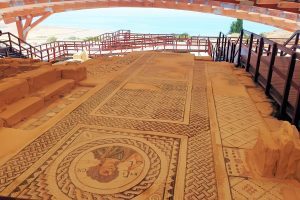
Kourion’s mosaics record Cyprus’s shift from a classical city organised around temples and civic life to an early Christian centre rebuilt under episcopal authority after mid-fourth-century earthquakes. In villas and basilicas, floors and inscriptions became a visual language that guided movement, reinforced belief, and redefined what power looked like in public space. wikimedia-org This article explains how disaster opened the ground for change, how the Episcopal Complex reshaped the city’s core, and how mosaic imagery at sites like the House of Eustolios shows a community rebuilding identity as well as architecture. Apollo Hylates and Old Order For centuries, Kourion thrived as a Greco-Roman city, complete with temples, baths, theatres, and elite villas. Public life revolved around civic institutions and traditional…

Read more
Sacred Landscape Representation

Sacred Landscape Representation

Sacred Landscape Representation in Cypriot art involved the use of motifs such as mountains, seas, fertility symbols, and celestial elements to express the island's profound spiritual connection to nature. These designs went beyond mere decoration, reflecting a worldview where the environment was infused with divine energy, from turbulent waves to bountiful fields. This artistic approach evokes the island's mystical essence, highlighting ancient perceptions of the natural world as a realm of sacred significance. reddit-com A World Expressed Through Art Cypriot art portrayed the landscape as a narrative medium, where natural features conveyed deeper spiritual layers. Mountains symbolized strength and divine oversight, seas evoked origins and transformation, fertility motifs celebrated renewal, and celestial patterns linked earthly existence to cosmic forces. This…

Read more
Sacred Geometry and Proportion Cyprus

Sacred Geometry and Proportion Cyprus

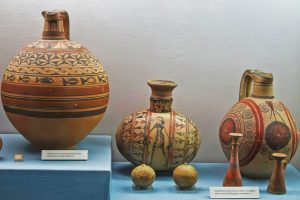
Symbolic Use of Geometry and Proportion in Cypriot Art refers to the ancient practice on the island where repeating shapes and balanced designs conveyed concepts of order, harmony, and cosmic balance. These patterns extended beyond decoration, embedding profound meanings in pottery, sculptures, and other artifacts, fostering a sense of connection to an structured universe. This method transformed basic lines into representations of life's fundamental principles, highlighting the thoughtful intent behind each composition. ancientcyprus-com A World Expressed Through Structured Forms Ancient Cypriot art frequently employed basic geometric elements, such as circles, triangles, and zigzags in repetitive arrangements, rather than detailed depictions of figures or scenes. These patterns appeared across various media, from clay vessels to stone engravings, serving purposes that transcended…

Read more
Emphasis on Frontalism and Hieratic Scale

Emphasis on Frontalism and Hieratic Scale

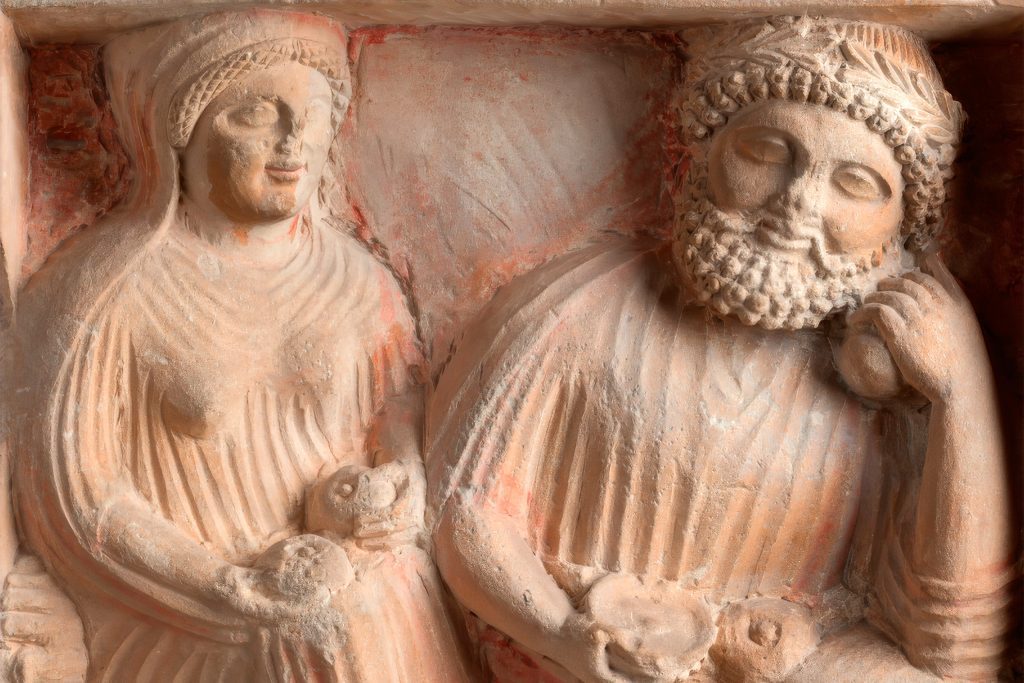
Emphasis on Frontalism and Hieratic Scale in ancient Cypriot art involved depicting figures in direct frontal views, with sizes scaled to reflect spiritual or social significance rather than physical accuracy. This method imbued artworks with a sense of authority and depth, incorporating influences from neighboring cultures to emphasize deities, rulers, or sacred concepts over naturalistic portrayals. The approach created compositions that convey power and divinity through straightforward, impactful forms. A Style Prioritizing Significance Cypriot art from antiquity often avoided precise replication of reality, opting instead for frontalism where subjects face outward directly. Hieratic scale further adjusted proportions, enlarging key elements to denote importance - a deity might dominate over attendants, defying natural dimensions. This was not a limitation but a…

Read more
Ritual Function Over Aesthetic Realism

Ritual Function Over Aesthetic Realism

Ritual function over aesthetic realism in ancient Cypriot art meant creators focused more on making pieces that worked for spiritual purposes and clear symbols, rather than looking exactly like real life. This approach turned sculptures, pots, and carvings into tools for rituals, devotion, and symbolic clarity, putting heart and belief ahead of perfect looks. It's a style that makes art a bridge to the divine, sparking curiosity about what really mattered to island people long ago. A Style Built for Meaning, Not Mirrors Ancient Cypriot art placed practical use in rituals above lifelike details, creating items that served spiritual needs with bold, straightforward designs. Figures often appeared with exaggerated features or stiff poses, not from lack of ability, but to…

Read more