An ophiolite is a section of ocean floor that has been pushed up onto land where scientists can study it. The word comes from Greek and means “snake rock” because some of these rocks have a scaly, greenish appearance. Most ocean floor stays underwater where it’s hard to examine, but ophiolites give geologists a chance to walk on rocks that formed miles beneath the sea.
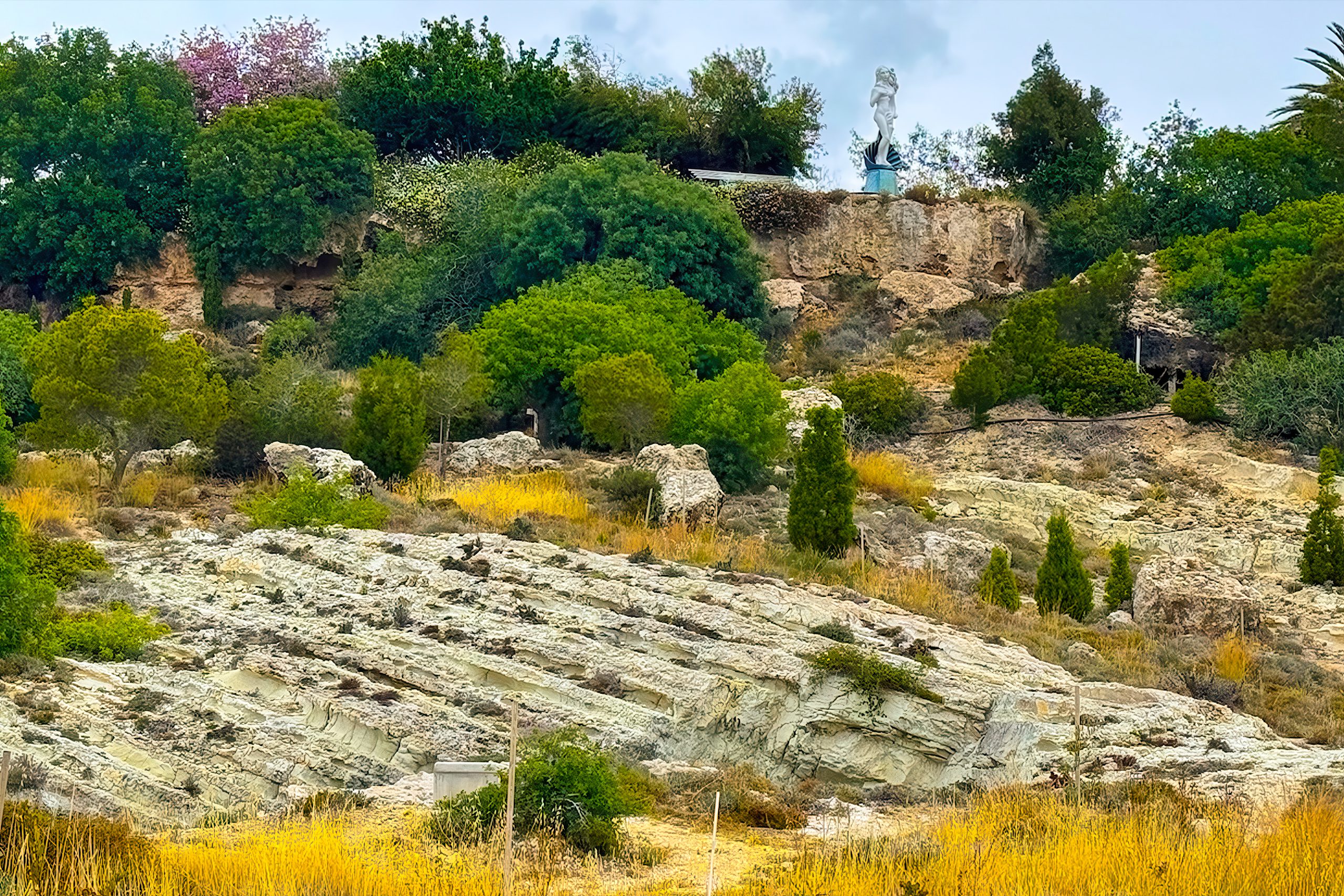
The Troodos Ophiolite covers much of central Cyprus and contains rocks from deep in the Earth’s mantle, rocks from magma chambers, and rocks from ancient volcanic eruptions on the seafloor. This complete sequence, all in the right order, makes Troodos one of the most important geological sites in the world.
Historical background
About 90 to 92 million years ago, during the Late Cretaceous period, the rocks that now form the Troodos Mountains were being made on the floor of the Tethys Ocean. This ancient ocean once separated Africa from Europe and Asia. At that time, Cyprus didn’t exist as an island. Instead, these rocks were part of the deep seafloor.
The ophiolite formed in an unusual spot: above a subduction zone where one tectonic plate was sliding beneath another. Hot magma rose from deep in the Earth’s mantle and created new ocean crust. This wasn’t happening at a typical mid-ocean ridge in the middle of an ocean but at what geologists call a supra-subduction zone.
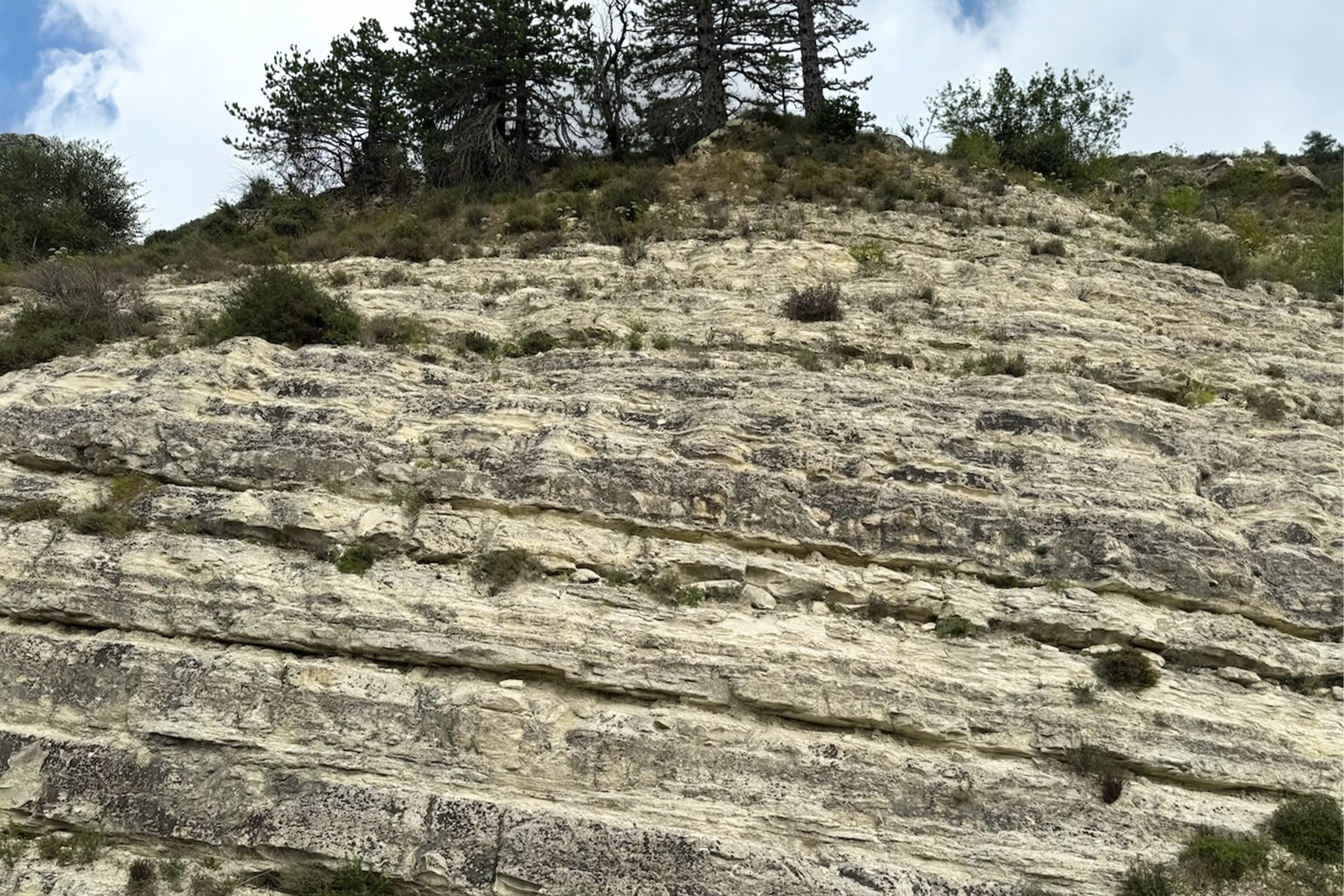
Over about 10 million years, from 92 to 82 million years ago, layer after layer of new ocean crust was created. The deepest rocks came from the mantle itself. Above these, magma cooled slowly to form gabbro in underground chambers. Still higher, vertical sheets of magma created thousands of parallel dikes.
Journey from Ocean Depths to Mountain Heights
After the oceanic crust stopped forming around 82 million years ago, it spent tens of millions of years as part of the ocean floor. Marine sediments accumulated on top of the volcanic rocks. These sediments included radiolarian chert made from the silica shells of tiny organisms, and layers of limestone built from calcium carbonate shells.
The ophiolite remained underwater until approximately 20 million years ago when the Neogene uplift began. This uplift was triggered by complex interactions between the African plate subducting beneath the Eurasian plate and chemical reactions deep within the mantle rocks. Serpentinization, a process where water reacts with mantle minerals to form serpentine, may have contributed to the uplift by causing the rocks to expand and become less dense.
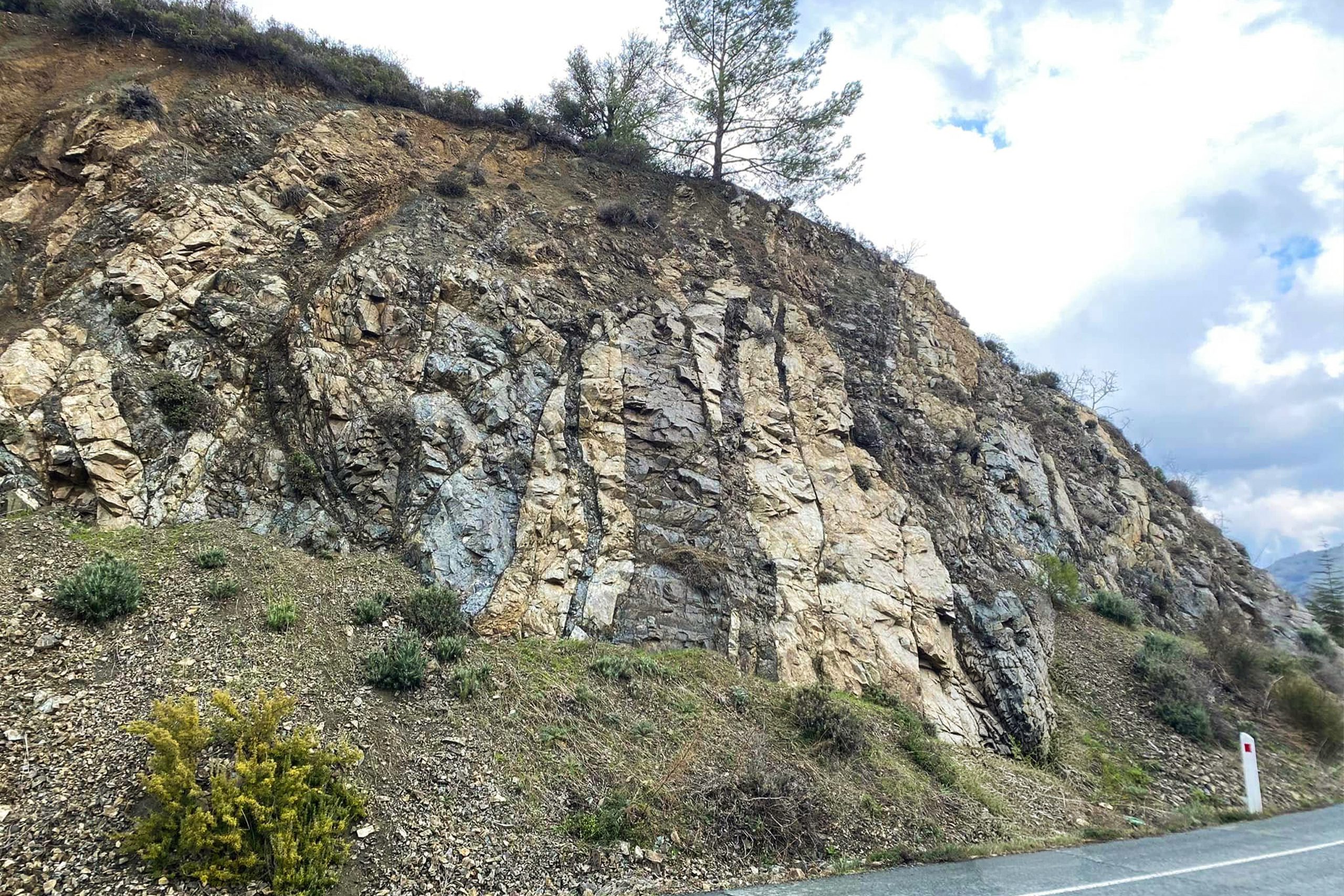
The most rapid uplift occurred much more recently, starting about 6 million years ago. The collision of the Eratosthenes Seamount, a piece of continental crust on the African plate, with the Cyprus trench accelerated the upward movement. The ophiolite was pushed above sea level and continued rising, with most of the current elevation achieved during the past few million years. Cyprus remains tectonically active today, and the uplift is still ongoing.
The ophiolite also rotated approximately 90 degrees counterclockwise since its formation. Most of this rotation happened within 40 million years of the rocks forming, before the major uplift began. This rotation changed the original orientation of features like dikes and faults, which geologists must account for when reconstructing the ancient spreading environment.
The Rock Layers and What They Reveal
The complete ophiolite sequence exposed in the Troodos Mountains includes several distinct zones. At the center and highest elevations, the mantle sequence consists of harzburgite and dunite, dark green to black rocks composed mainly of olivine and pyroxene minerals. Much of this mantle material has been altered to serpentinite through reaction with water.
Above the mantle lies the lower crustal section made of layered gabbro and other coarse-grained plutonic rocks. These formed from slowly cooled magma chambers beneath the spreading ridge. The layering developed as different minerals crystallized at different times and settled or floated within the magma chamber.
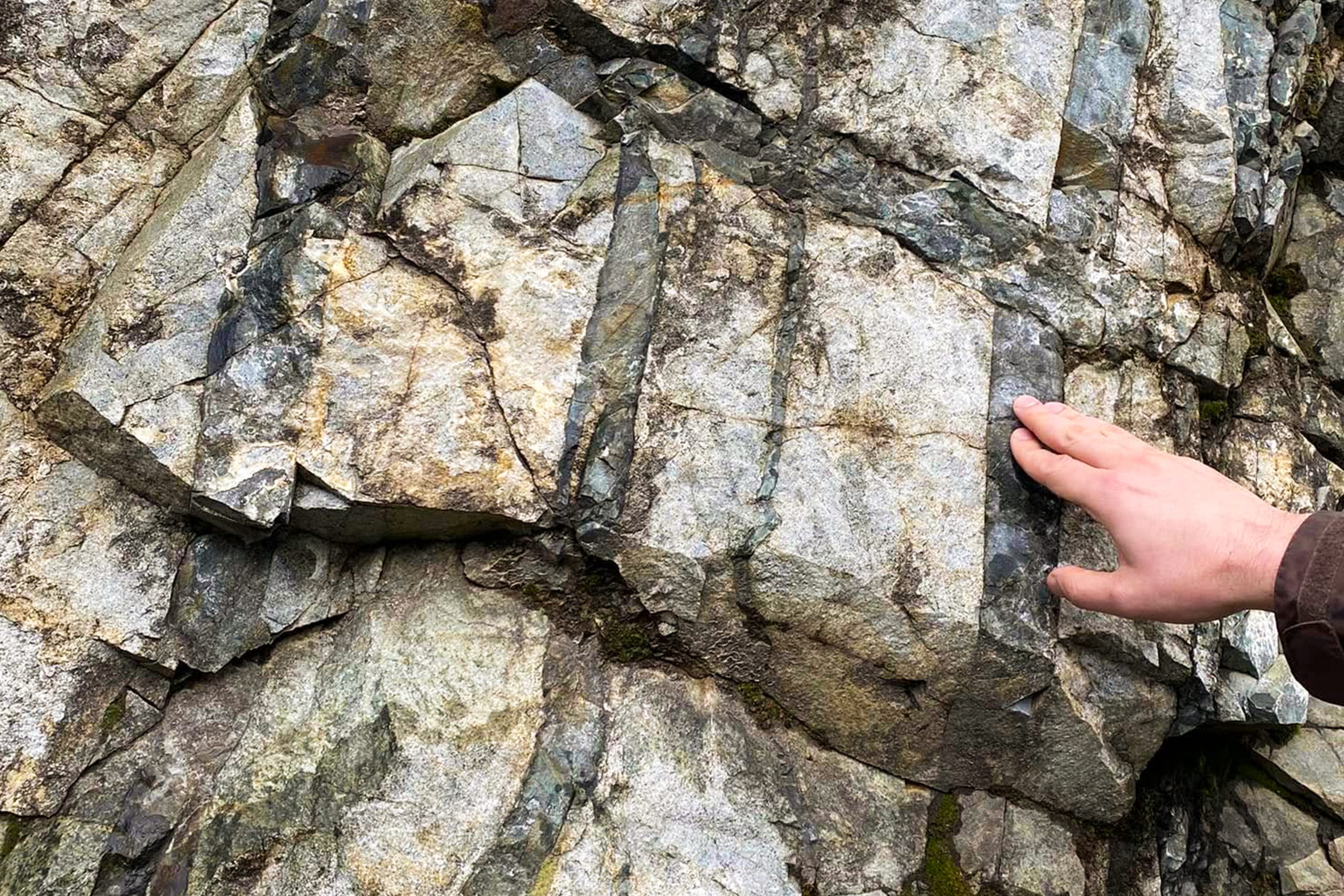
The sheeted dike complex sits above the plutonic section and consists of thousands of vertical diabase dikes packed tightly together. These dikes represent the pathways through which magma rose from the chambers below to feed volcanic eruptions on the seafloor. The remarkable feature of this dike swarm is that it records approximately 100 kilometers of extension, where the oceanic crust was pulled apart as new magma continuously filled the gap.
Pillow lavas cap the sequence, representing the actual seafloor where lava erupted and cooled in seawater. The rounded pillow shapes are diagnostic of underwater eruption. In some areas, the lavas show evidence of multiple eruption episodes, with different chemical compositions indicating changes in the magma source over time.
Marine sediments above the pillow lavas complete the sequence. The lowest layers are deep-sea umbers, iron and manganese-rich sediments that formed from chemical precipitation in the oxygen-poor environment near the spreading ridge. Above these lie radiolarian cherts and eventually limestones deposited as the oceanic crust moved away from the ridge and into deeper water.
Copper Deposits and Cyprus’s Name
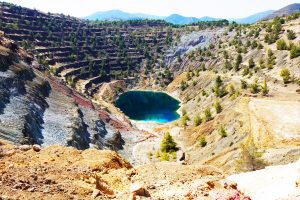
One of the most economically significant features of the Troodos Ophiolite is the presence of massive sulfide ore deposits rich in copper and iron. These deposits formed at hydrothermal vents on the ancient seafloor, similar to modern black smokers found at mid-ocean ridges today. Hot, metal-rich fluids circulated through the oceanic crust, leaching metals from the rocks. When these fluids vented onto the cold seafloor, the dissolved metals precipitated to form massive deposits of pyrite, chalcopyrite, and other sulfide minerals.
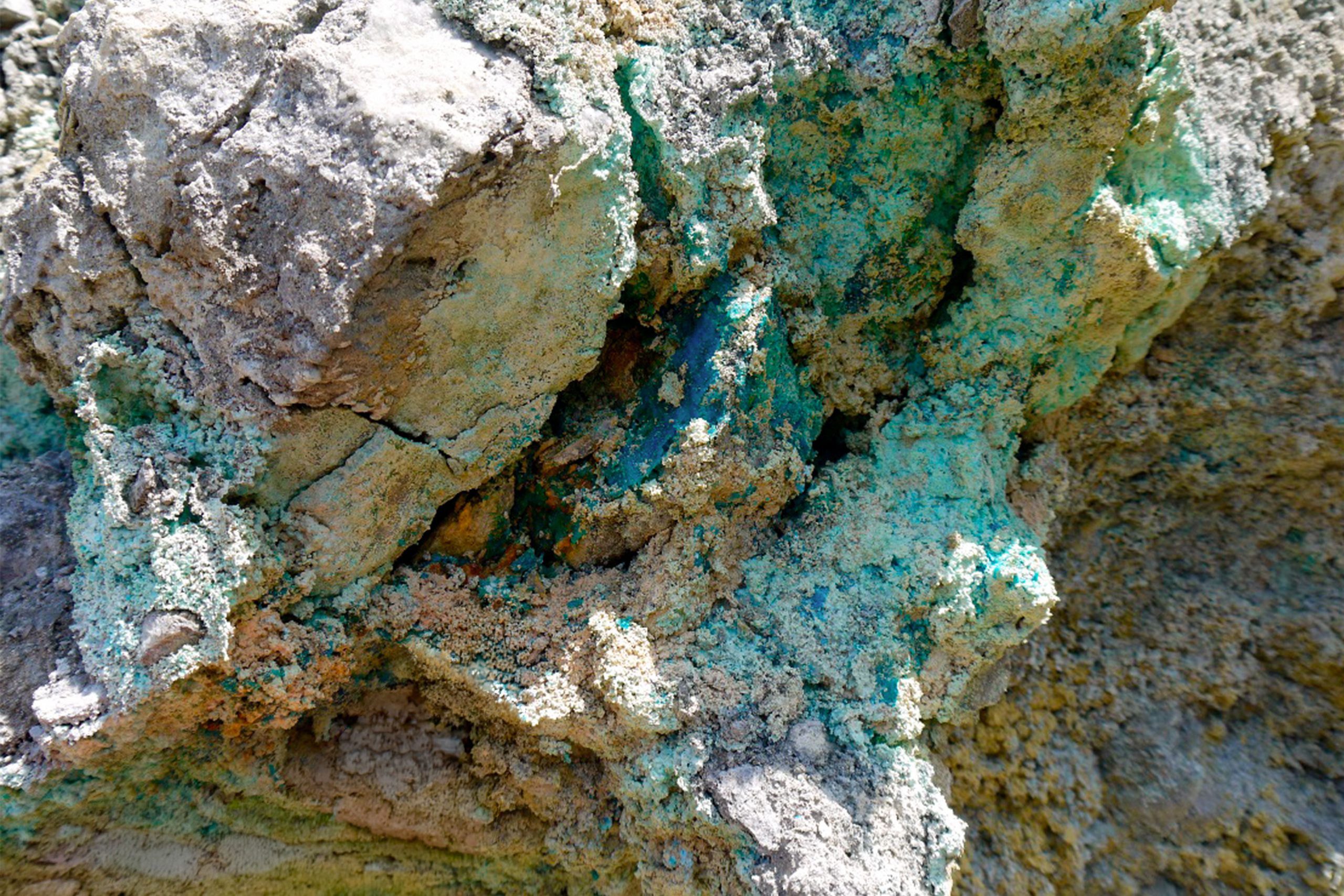
Over 90 such deposits have been identified in the Troodos Ophiolite, making Cyprus one of the most important ancient analogs for understanding modern seafloor mineral formation. The island has been mined for copper for thousands of years, dating back to the Bronze Age. The connection between Cyprus and copper is so strong that many scholars believe the island gave its name to the metal, as the Latin word for copper is cuprum, derived from the name Cyprus.
Mining continues today at the Skouriotissa mine, the last active copper mine on the island. The ore deposits provide not only economic value but also scientific insights into hydrothermal processes. The presence of these deposits shows that seawater penetrated deep into the hot oceanic crust, creating circulation systems that concentrated metals and supported unique ecosystems similar to those found at modern black smoker vents.
Scientific Importance and Research
The Troodos Ophiolite has played a central role in developing our understanding of seafloor spreading and plate tectonics. In 1971, geologists Eldridge Moores and Frederick Vine published a landmark study describing how the Troodos rocks represented a complete section of oceanic crust and upper mantle. This work helped confirm the theory of seafloor spreading and established ophiolites as key evidence for plate tectonic processes.
Since then, the ophiolite has been the subject of intense scientific investigation. The Cyprus Crustal Study Project drilled several deep boreholes through the ophiolite to study its internal structure and composition. These drill cores provided samples from depths that cannot normally be accessed in the ocean and allowed detailed analysis of how the oceanic crust formed and evolved.
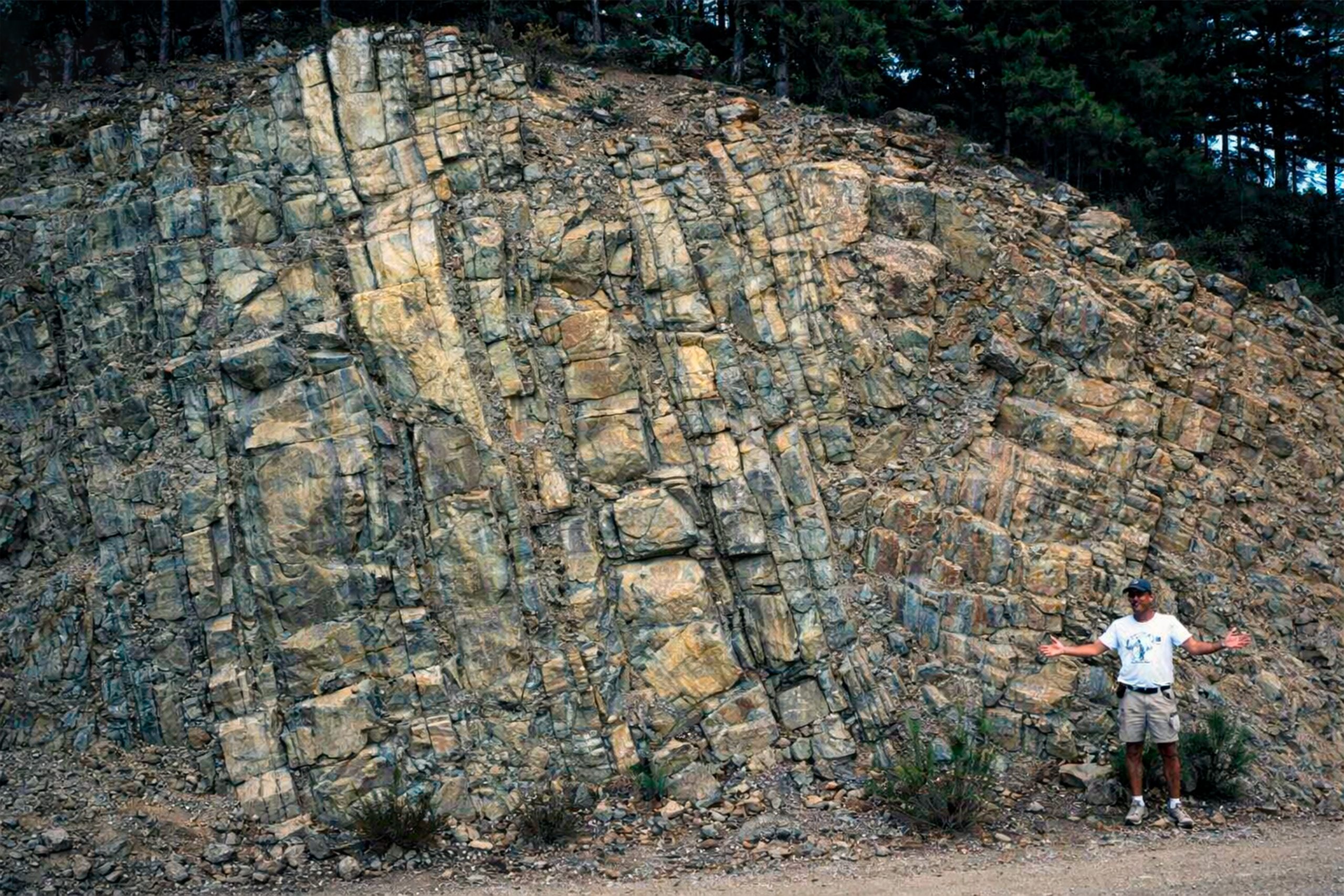
Geophysical surveys have revealed the three-dimensional structure of the ophiolite, including features like faults and variations in layer thickness. These studies show that the oceanic crust formed in a complex environment with episodes of extension, magma intrusion, and hydrothermal alteration all happening simultaneously. The results help scientists interpret geophysical data from modern ocean basins where direct observation is impossible.
The ophiolite serves as a natural laboratory for understanding processes that occur at modern spreading ridges. By studying the Troodos rocks, scientists can see how magma chambers work, how dikes form, and how hydrothermal systems develop. This knowledge is directly applicable to current research on mid-ocean ridges worldwide.
Recognition and Protected Status
In recognition of its exceptional geological significance, the Troodos region was designated a UNESCO Global Geopark. The geopark features 38 identified geosites that display different aspects of the ophiolite complex. These sites are protected and managed to ensure scientific access while preventing damage from development or inappropriate use.
The designation brings international attention to the geological heritage and supports educational programs that explain the ophiolite’s importance to both specialists and general visitors. Interpretation centers, marked trails, and information panels help people understand what they are seeing and why it matters for global science.
Visiting the Ophiolite Today
The Troodos Mountains are accessible by road from all major cities in Cyprus. Well-maintained highways lead to mountain villages and popular destinations like Mount Olympus. Numerous trails allow hikers to explore the geology up close and observe the different rock types in their natural settings.
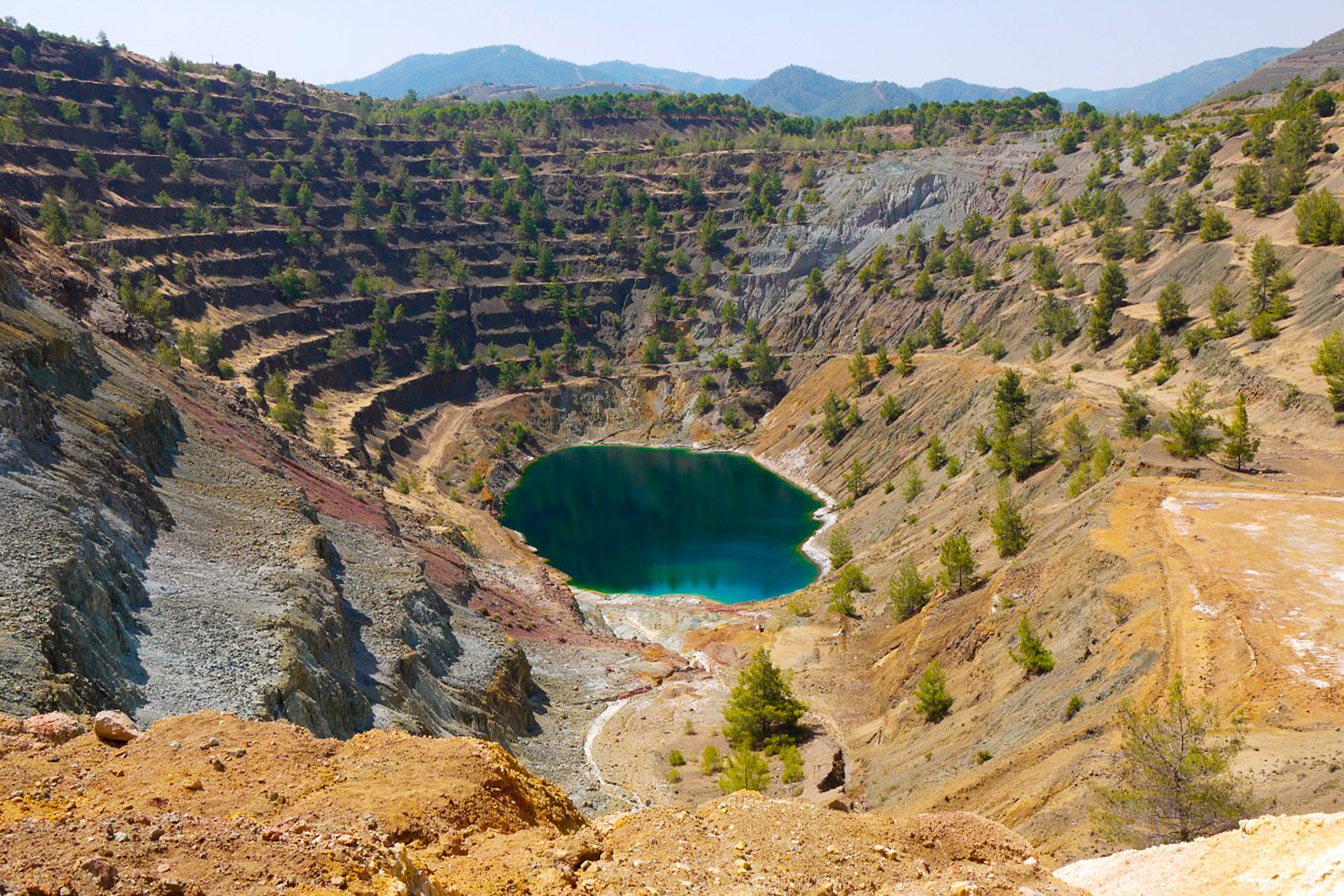
Certain locations are particularly important for viewing specific features. The sheeted dike complex is well exposed near the village of Pano Amiantos. Pillow lavas can be seen along many mountain roads. The mantle rocks are best observed near the summit of Mount Olympus and in the Limassol Forest area. Signs mark many geological points of interest, and guided tours are available for those who want expert interpretation.
The mountains offer more than geology. Byzantine churches with ancient frescoes dot the landscape, and traditional villages maintain their character and customs. The combination of geological, cultural, and natural attractions makes the Troodos region appealing to diverse visitors.
Why the Ophiolite Matters
The Troodos Ophiolite represents a unique window into processes that shape our planet but normally remain hidden beneath thousands of meters of ocean. The complete preservation of the oceanic sequence, from mantle to seafloor, provides insights that cannot be obtained anywhere else. The rocks tell stories of ancient oceans, plate movements, and the dynamic forces that continue to reshape Earth’s surface. For Cyprus, the ophiolite is both a natural treasure and a link to the island’s long history of copper mining and mineral wealth.