Walk along the rocky shores of Cyprus and look carefully into a clear tidal pool. Hidden among the stones, you may notice a dark purple sphere covered in long spines. This is the Purple Sea Urchin, one of the most familiar and important marine animals of the Mediterranean Sea.
Although it looks like a simple ball of spines, this remarkable creature belongs to an ancient group of animals that has been shaping marine ecosystems for hundreds of millions of years.
More Than Just a Sea Creature
The Purple Sea Urchin (Paracentrotus lividus) is a marine invertebrate belonging to the echinoderms, the same group that includes sea stars, brittle stars, and sea cucumbers.
Unlike fish, sea urchins have no backbone. Instead, they possess a hard shell made of fused calcium plates called a “test,” covered with movable spines. These spines help protect the animal from predators and allow it to move slowly across the seabed.

In Cyprus, Purple Sea Urchins are commonly found along rocky coastlines from shallow water down to depths of about 20 metres, although they can live much deeper.
Survivors from Ancient Seas
Sea urchins are among the oldest animal groups still living today. Their ancestors appeared more than 450 million years ago, long before dinosaurs walked the Earth.
During this immense span of time, sea urchins witnessed mass extinctions, changing continents, and the opening and closing of ancient seas. Their basic body plan proved so successful that it has remained remarkably similar for hundreds of millions of years.
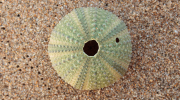
The Purple Sea Urchin itself evolved in the Mediterranean and eastern Atlantic regions, becoming one of the dominant grazers of rocky coastal habitats.
In Cyprus, these animals have likely inhabited coastal waters since long before humans first settled the island.
A Living Ball of Spines
At first glance, the Purple Sea Urchin appears simple, but a closer look reveals a surprisingly sophisticated animal.
Its body is usually round and slightly flattened, measuring between 4 and 8 centimetres across. The colour ranges from deep purple and violet to brownish-green, depending on age and habitat.
The spines can move independently, helping the urchin climb rocks, squeeze into crevices, and even bury itself among stones.
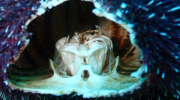
On its underside lies one of nature’s most fascinating feeding tools: a complex chewing apparatus known as “Aristotle’s Lantern.” This structure contains five continuously growing teeth capable of scraping algae from rocks with remarkable efficiency.
Tiny tube feet operated by hydraulic pressure emerge between the spines, allowing the animal to grip surfaces even during strong waves.
Fascinating Facts from Beneath the Waves
- Purple Sea Urchins can live for more than 15 years.
- They have hundreds of tube feet that work like miniature suction cups.
- Their teeth continuously grow throughout life.
- Sea urchins have no brain, yet they can respond effectively to light, touch, and chemical signals.
- A single female may release millions of eggs during spawning.
- In some Mediterranean countries, sea urchin roe is considered a prized seafood delicacy.
- Their close relatives include starfish and sea cucumbers, even though they look completely different.
A Mediterranean Delicacy
The Purple Sea Urchin is not only important for marine ecosystems–it is also highly valued as food throughout much of the Mediterranean. The edible part is not the whole animal but the bright orange or yellow reproductive organs, commonly called “roe” or “coral.” These have a rich, creamy flavour that combines notes of the sea, nuts, and fresh algae.
In countries such as Italy, France, Spain, Greece, and Malta, sea urchin roe is considered a delicacy. It is often eaten fresh directly from the shell, spread on bread, or mixed into pasta dishes. In Sardinia and Sicily, sea urchin pasta is one of the most famous seafood dishes of the region.
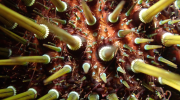
Look closely past the menacing needles of a sea urchin, and you will discover an astonishingly intricate living surface. Interspersed among its defensive spines are translucent tube feet that sway like seaweed, gentle skin gills absorbing oxygen from the currents, and a hidden army of microscopic caretakers called pedicellariae. These tiny, three-jawed pincers act as the urchin’s personal grooming mechanism, tirelessly snapping at drifting debris to keep its elegant, symmetrical dome immaculate.
Because demand is high and harvesting has been intense for decades, Purple Sea Urchin populations have declined in several parts of the Mediterranean. Overharvesting has become such a concern that many countries now regulate collection through seasonal closures, size limits, harvest quotas, or temporary bans.
In Cyprus, recreational collectors occasionally gather sea urchins for personal consumption, but their ecological importance is often greater than their value on the plate. As one of the key grazers of Mediterranean rocky reefs, each sea urchin plays an important role in maintaining the balance between algae and other marine life. Protecting healthy populations helps ensure that Cyprus’s underwater ecosystems remain vibrant for future generations.
Did You Know?
A single large Purple Sea Urchin contains only a few spoonfuls of edible roe. This is one reason why sea urchin roe is considered a luxury seafood and can command surprisingly high prices in Mediterranean fish markets.
For wildlife enthusiasts, many divers would argue that a living Purple Sea Urchin grazing peacefully on a Cypriot reef is worth far more than one served on a plate.
The Gardeners of the Seabed
Purple Sea Urchins play a vital ecological role in Cyprus.
They are herbivores, spending much of their time grazing on algae that grow on rocks. By doing so, they prevent algae from overwhelming coastal habitats and help maintain balance within marine ecosystems.
However, when predator numbers decline or environmental conditions change, sea urchin populations can sometimes become very large. Excessive grazing may then create barren rocky areas with little vegetation, known as “urchin barrens.”
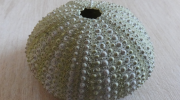
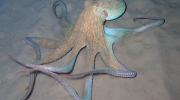
Natural predators in the Mediterranean include certain fish, octopuses, and large crabs. These predators help keep sea urchin populations under control.
The species is also considered an indicator of environmental health. Changes in sea urchin numbers often reflect broader changes occurring in coastal ecosystems.
Look closely past the menacing needles of a sea urchin, and you will discover an astonishingly intricate living surface. Interspersed among its defensive spines are translucent tube feet that sway like seaweed, gentle skin gills absorbing oxygen from the currents, and a hidden army of microscopic caretakers called pedicellariae. These tiny, three-jawed pincers act as the urchin’s personal grooming mechanism, tirelessly snapping at drifting debris to keep its elegant, symmetrical dome immaculate. © Titouan Gelez inaturalist.org
Why It Still Matters Today
Modern Cyprus depends heavily on healthy coastal waters for tourism, fisheries, and recreation. The Purple Sea Urchin contributes to this health by helping regulate algae growth and supporting the balance of marine communities.
Scientists monitor sea urchin populations to better understand the effects of climate change, pollution, overfishing, and invasive species in the Mediterranean.
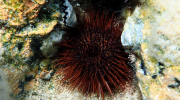
As sea temperatures continue to rise, researchers are paying close attention to how native species such as the Purple Sea Urchin adapt to changing conditions.
Where to See Purple Sea Urchins in Cyprus
Purple Sea Urchins can be observed around much of Cyprus, particularly along rocky shores and reefs.
Some excellent locations include:
- Akamas Peninsula
- Cape Greco
- Rocky coastlines near Paphos and Limassol
Snorkellers often spot them in shallow water among rocks and seagrass meadows. Their dark purple colour contrasts beautifully with the pale limestone reefs of Cyprus.
When observing sea urchins, it is best to look rather than touch. Their spines can be sharp and fragile, breaking easily if handled.
A Small Animal with a Big Role
The Purple Sea Urchin may not be as famous as dolphins, turtles, or octopuses, yet it is one of the quiet architects of the Mediterranean seafloor. For millions of years, these spiny grazers have helped shape coastal ecosystems, maintaining the delicate balance between algae, fish, and other marine life.
Next time you peer into the crystal-clear waters of Cyprus, take a moment to look among the rocks. You may discover one of the Mediterranean’s oldest survivors–a living reminder that even the smallest creatures can play an enormous role in the natural story of the island.